
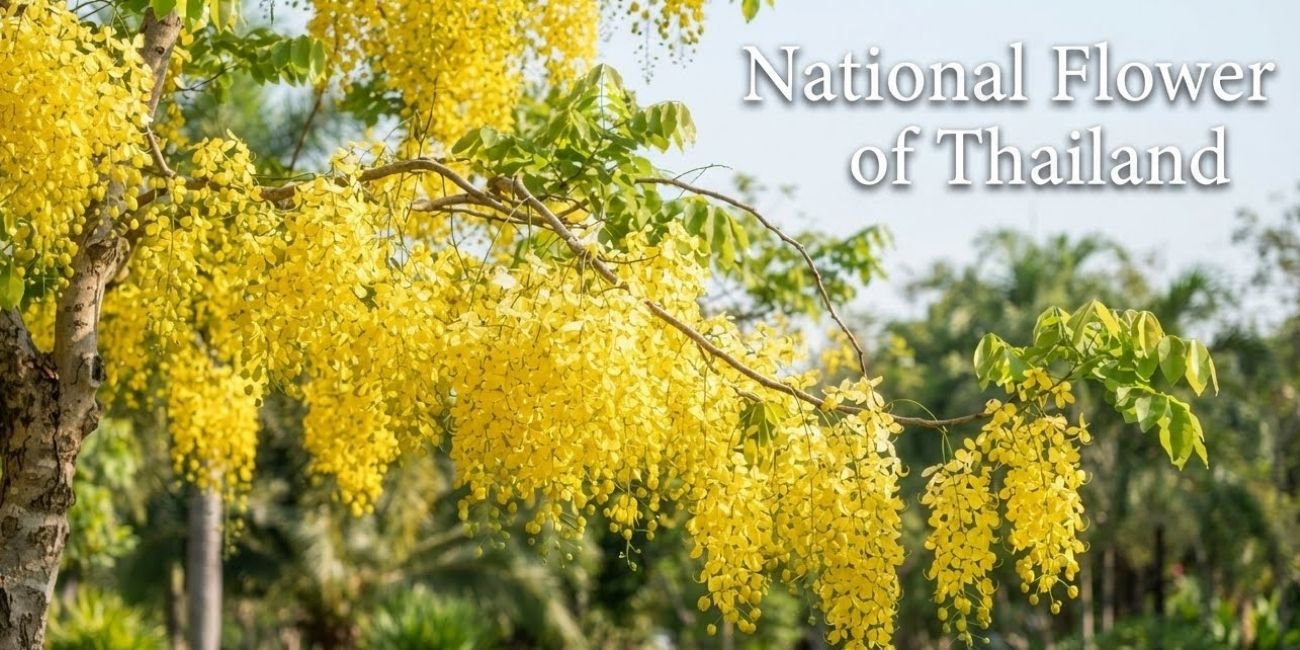
The national flower of Thailand, the Golden Shower Tree (Cassia fistula), is known locally as Ratchaphruek or Khoon. This beautiful tree bursts into life with its bright golden-yellow flowers, often creating stunning displays across the landscape. These flowers are not just a feast for the eyes; they hold a special place in the hearts of the Thai people, symbolizing joy and celebration.
Thailand’s national flower, the Ratchaphruek, represents more than just natural beauty. It is intertwined with the Thai national identity, appearing in festivals and ceremonies that highlight the country’s rich culture. The sight of these golden blooms often evokes feelings of pride and togetherness among Thais, making it a cherished emblem of their heritage.
What is the national flower of Thailand?
The national flower of Thailand is the Golden Shower Tree, scientifically known as Cassia fistula. In Thai, it is referred to as Ratchaphruek and is also locally known as Khoon. This tropical flowering tree belongs to the legume family, Fabaceae, and is native to the Indian subcontinent and parts of Southeast Asia. The Ratchaphruek is celebrated for its stunning golden-yellow flower clusters that hang gracefully from its branches, creating a vibrant display.
Thailand designated Ratchaphruek as its national flower following a Cabinet decision on 2 October 2001. Its golden blossoms have become an important part of the country’s national identity. For anyone asking ‘what is the national flower of Thailand’, the answer is the Golden Shower Tree, not an orchid.
About Thailand
Thailand, located in Southeast Asia, features a diverse geography with northern mountains, expansive central plains, river valleys, and lush coastal regions. The majestic Chao Phraya River, winding through the heart of the country, significantly influences agricultural practices in the fertile plains. This region benefits from a tropical climate characterized by warm temperatures and seasonal monsoon rainfall, fostering an array of varied natural habitats.
These geographical features create the perfect conditions for rich plant diversity. With its unique ecosystems, Thailand is home to an impressive variety of flowering plants, enhancing its reputation for remarkable floral diversity. From the cool mountain slopes to the vibrant coastal areas, Thailand showcases a stunning array of Thai flowers, each contributing to the country’s lush natural beauty.
What is Cassia fistula (Golden Shower Tree)
The Golden Shower Tree (Cassia fistula ) is part of the legume family, Fabaceae. This deciduous tree can reach heights of about 10 to 20 meters, depending on where it is grown. Its leaves are compound, consisting of smaller leaflets that are arranged in pairs along a central stem. Typically, each leaf contains around 3 to 8 pairs of oval to oblong leaflets.
Additionally, the tree produces long, cylindrical pods that can measure about 30 to 60 centimeters in length. As the pods mature, they turn a dark brown or black color and do not open on their own. Inside, you’ll find many seeds separated by thin, papery barriers.
What Does the National Flower of Thailand Look Like?
The Golden Shower Tree (Cassia fistula) is notable for its elongated, pendulous bunches of vibrant yellow blossoms. These clusters, scientifically termed racemes, typically reach lengths of 20–40 cm and contain numerous flowers along a descending stem. Each flower measures about 4–7 cm in diameter and consists of five yellow petals surrounding ten stamens of varying lengths. A few stamens feature curved filaments, contributing to the flower’s unique shape.
When in full bloom, the flowers envelop the branches, forming a cascading effect of gold intertwined with the tree’s green leaves. The clusters dangle like golden chains, making the tree identifiable from afar. This floral display is a key characteristic of Thailand’s national flower and provides insight into the English designation of the Golden Shower Tree.
When Thailand Turns Gold: The Blooming Season
The Golden Shower Tree (Cassia fistula), the national flower of Thailand, usually flowers from March to May, with April and May often showing especially bright blooms. This flowering time happens during the hot season in Thailand, just before the rainy season sets in. The specific timing can differ based on the region and local weather, such as temperature and rainfall.
Before it blooms, the tree often loses many of its leaves, making the yellow flowers easier to see against the branches. The number of flowers can also change each year, depending on how well the tree grows. When there is a lot of blooming, these golden flowers light up roadsides, parks, and gardens across Thailand, creating a familiar seasonal scene.
A Tree of Gold and Kings
The national flower of Thailand, the Golden Shower Tree, is closely tied to the monarchy and the nation’s identity. In Thai, it is called Ratchaphruek, a name linked to royalty and often translated as “royal tree.” Thailand designated the Golden Shower Tree as its national flower in 2001. Its bright yellow blossoms have become a well-known emblem of the country’s royal traditions and cultural heritage.
This tree has a unique bond with King Bhumibol Adulyadej (Rama IX), who was born on Monday, 5 December 1927. In Thai culture, each day is associated with a specific color, and yellow represents Monday. This link made the tree’s yellow blooms particularly special during celebrations honoring the King. Yellow color also holds religious and cultural significance in Thailand, enhancing the flower’s importance.
The tree’s royal connection gained international recognition during the Royal Flora Ratchaphruek 2006, a significant horticultural event that took place in Chiang Mai from 1 November 2006 to 31 January 2007. This exhibition celebrated King Bhumibol’s 60 years on the throne and looked forward to his 80th birthday in 2007. Named after the national flower, the event combined horticulture, tribute to royalty, and national pride.
Today, the Golden Shower Tree continues to be an important Thai flower and a symbol of royal heritage. However, it should not be mistaken for Thailand’s official national emblem, which features the Garuda. The Golden Shower Tree symbolizes the country through its national flower status and cultural ties, not as the official state symbol.
The Sacred Meaning of Khoon and the Promise of Prosperity
In Thai culture, the Khoon, or Ratchaphruek, represents prosperity, honor, dignity, and good luck. It is one of Thailand’s nine lucky trees, linked with qualities like success and power. The tree’s golden blooms symbolize wealth and abundance, making it a sign of hope for a successful future.
Some traditional beliefs in Thailand suggest that planting Ratchaphruek in a specific direction near a house can bring good fortune and honor. Its leaves are also used in certain ceremonies, including those that involve blessed water. These customs reflect cultural beliefs rather than scientific evidence. People may choose this tree for special events because of its positive links to success and prosperity.
As Thailand’s national flower, Ratchaphruek symbolizes royal respect and national pride, along with its traditional meanings of prosperity, dignity, and good luck.
The Golden Shower Tree in Thailand’s National Celebrations
Thailand’s national flower plays a significant role in events that blend gardening, national pride, and royal honor. A key event was Royal Flora Ratchaphruek 2006, an international flower show held in Chiang Mai from November 1, 2006, to January 31, 2007. This event, organized by Thailand’s Ministry of Agriculture and Cooperatives along with the Horticultural Science Society of Thailand, celebrated the 60th year since King Bhumibol Adulyadej became king and his 80th birthday. The event was named after Ratchaphruek, the national flower of Thailand, also known as the Golden Shower Tree (Cassia fistula).
Under the theme “To Express the Love for Humanity,” the show showcased gardens from 32 countries, rare plant exhibits, and cultural performances. The large Thai Tropical Garden displayed a variety of the country’s tropical plants and flowers, while international gardens offered a glimpse into gardening traditions from different nations. The event’s legacy lives on at Royal Park Rajapruek, created from the exposition site, which is still a public space for gardening, education, and conservation. This ongoing link ensures the Golden Shower Tree is part of a shared celebration of Thailand’s royal history and plant diversity.
Quick Facts About the National Flower of Thailand
- Common Name: Golden Shower Tree
- Thai Names: Ratchaphruek (ราชพฤกษ์) and Khoon (คูน)
- Scientific Name: Cassia fistula L.
- Plant Type: Deciduous tropical flowering tree
- Plant Family: Fabaceae (legume family)
- Flower Colors: Bright golden yellow
- Blooming Season: Usually March to May in Thailand
- Native Region: The Indian subcontinent and parts of South and Southeast Asia
- National Status: The national flower of Thailand, officially designated by a Cabinet resolution on 2 October 2001
Growing the Golden Shower Tree in Your Garden
The Golden Shower Tree thrives in warm, sunny environments and is well-suited for gardens large enough to accommodate a medium-sized tree. Commonly found in tropical and subtropical areas, its growth can be hindered by cold temperatures and inadequate drainage. Before planting, assess your local climate and the space the tree will occupy as it grows.
Sunlight and Climate
Select a location that gets full sunlight for the majority of the day. Ample sunlight fosters robust growth and enhances flowering, while excessive shade can limit the number of blossoms. The tree prefers warm conditions and can be vulnerable to frost, especially in its early stages. In colder climates, growing it outdoors may pose challenges without proper protection.
Soil and Watering
This tree adapts to a variety of soil types, including sandy, loamy, and clay, as long as there’s good drainage. Avoid planting in areas where water tends to accumulate around the roots, since poor drainage can lead to root issues.
Young trees should be watered regularly to help establish strong roots, ensuring the soil dries out between waterings. Once the tree is well-established, it can withstand some dry spells. Nevertheless, provide extra water during extended droughts or intense heat, particularly if the tree appears to be water-stressed.
Planting and Propagation
The Golden Shower Tree can be grown from seeds, possessing a tough outer shell that may slow the germination process. Scoring the seed coat gently can facilitate water absorption and enhance sprouting. Plant the treated seeds in a well-draining medium, keep it slightly moist, and ensure ample light once the seedlings begin to grow.
Carefully choose a suitable spot before planting the tree. Under optimal conditions, a mature tree can grow to about 9–12 meters tall and develop a canopy of similar width. Ensure it has plenty of space away from buildings, overhead lines, and neighboring trees.
Pruning and General Care
After establishment, the tree typically requires minimal care. Remove any dead, damaged, or crossing branches as necessary, and perform light pruning to maintain a healthy form. Avoid heavy pruning, especially if you want the tree to produce a good number of flowers. Periodically inspect the leaves for signs of leaf spot or mildew, which can occur under the right conditions.
Flowering is influenced by the tree’s maturity, sunlight exposure, climate, and overall conditions. Newly planted trees may take time to establish themselves before displaying significant blooms, so refrain from expecting flowers right away.
Can You Grow a Golden Shower Tree in a Pot?
A young Golden Shower Tree can be cultivated in a sizable container, and it can also be trained as a bonsai. However, it is difficult to permanently keep a fully grown tree in a pot due to its height and spreading canopy. Plants in containers require excellent drainage, consistent watering, and occasional management of the roots and canopy. For many gardeners, it’s preferable to plant it directly in the ground if the local climate and available space permit.
What Other Flowers Flourish in Thailand?
Thailand’s warm weather and diverse environments encourage a variety of flowering plants, from those that thrive in freshwater ponds to tropical species found in gardens and parks. Together with the Golden Shower Tree, these Thai flowers contribute to the vibrant scenery of both natural and cultivated areas.
Orchids: Thailand hosts numerous native and cultivated orchids. Vanda orchids are well-known for their bright flowers and are often grown for ornamental purposes and the cut-flower market.
Lotus (Nelumbo nucifera): This plant thrives in ponds and shallow freshwater areas. Its flowers and leaves hold significant meaning in Buddhist art and traditions throughout Thailand.
Jasmine (Jasminum sambac): Commonly grown in Thailand, this fragrant shrub features small white flowers typically used to create garlands for religious ceremonies and gifts.
Hibiscus (Hibiscus rosa-sinensis): Recognized for its large blooms and central stamens, hibiscus is a favored tropical plant. Different cultivated varieties display colors like red, pink, yellow, and orange.
Plumeria (Plumeria species): Also known as frangipani, plumeria is frequently seen in tropical gardens and around temples. Its waxy flowers often have white petals with yellow centers, although other colors can be found.
Bougainvillea (Bougainvillea species and hybrids): This plant is popularly grown as a climbing vine or shrub. Its vibrant pink, purple, red, and orange hues come from the colorful bracts that surround small true flowers.
Torch Ginger (Etlingera elatior): This tropical plant displays large, unique flower clusters on sturdy stems. It is often found in tropical gardens and is also appreciated as an edible flower in parts of Southeast Asia.
Water Lilies (Nymphaea species): Water lilies thrive in ponds and still or slow-moving freshwater areas. Unlike lotus plants, their leaves typically float on the water, making them easy to identify when both are present.
The flowering plants of Thailand showcase the diversity of environments across the nation, including forests, gardens, ponds, and wetlands.
Other National Symbols of Thailand
Thailand’s national symbols reflect its rich culture and heritage.
- The national animal of Thailand is the Asian elephant, recognized for its significant role in Thai history and tradition. The Ministry of Natural Resources and Environment outlines its integral connection to the nation, symbolizing strength and endurance.
- The national emblem of Thailand features the Garuda, a mythical bird that serves as a royal and state symbol. Prominently displayed on government documents and structures, it represents power, security, and loyalty to the monarchy.
- The national flag comprises five horizontal stripes, red, white, and blue, with each color having specific meanings. According to the Royal Thai Government, red symbolizes the land and the people; white represents purity and religion; while blue signifies the monarchy, reflecting the nation’s deep reverence for its royal family.
- Thailand’s national anthem, known as Phleng Chat Thai, is played at ceremonial occasions and public events, fostering a sense of unity and national pride among citizens. Additionally, while the national tree of Thailand is officially designated as the rubber tree, it’s essential to clarify that this differs from the Golden Shower Tree, which serves as the national flower but is not categorized as the national tree.
- National Flower and Tree: The Ratchaphruek, or Golden Shower Tree (Cassia fistula), is recognized as both Thailand’s national flower and national tree. Its golden flowers have become closely associated with the country’s identity.
- National Aquatic Animal: The Siamese fighting fish (Betta splendens), known locally as pla kat, was recognized as Thailand’s national aquatic animal in 2019. National Mythological Animal: The Naga, a serpent-like figure in regional religious traditions, is recognized as a national mythological symbol.
- National Architectural Symbol: The Sala Thai, a traditional Thai pavilion, represents the country’s architectural heritage and craftsmanship.
These symbols reflect different parts of Thailand’s identity, from its wildlife and natural environment to its monarchy, religious traditions, and distinctive architecture.
Conclusion
The Golden Shower Tree (Cassia fistula) is an important symbol of Thailand’s natural beauty and cultural heritage. Its golden-yellow blossoms represent national pride, while its connections to royal history and Thai traditions give it a deeper cultural meaning. As the national flower of Thailand, Ratchaphruek remains a familiar part of the country’s identity. Protecting this tree and its natural habitats can help preserve its beauty and significance for future generations.
FAQs
What is Thailand’s National Flower?
The national flower of Thailand is the Golden Shower Tree (Cassia fistula), called Ratchaphruek in Thai and commonly referred to as Khoon. This tree has long, drooping clusters of bright yellow flowers and is a key symbol of Thailand’s national identity.
What is the Traditional Flower in Thailand?
The Ratchaphruek, or Golden Shower Tree, plays a significant role in Thailand’s national and cultural identity. Other flowers, like jasmine, also hold traditional importance, especially in garlands, religious offerings, and ceremonies.
Is Orchid Thailand’s National Flower?
No, orchid is not the national flower of Thailand. The country’s official national flower is the Golden Shower Tree (Cassia fistula). However, orchids are still a vital part of Thailand’s floral diversity and horticultural sector.
What is Thailand’s Official Symbol?
The Garuda, known in Thai as Phra Khrut Pha, serves as Thailand’s official national emblem and appears on government seals and official papers. This is different from the Golden Shower Tree, the national flower, and the elephant, which is a significant symbol in Thai culture and history.
What is the Well-Known Flower of Thailand?
The Golden Shower Tree is among Thailand’s most recognized flowers due to its national status and striking golden blossoms. Thailand is also renowned for its variety of orchids, which are commonly cultivated as decorative plants and featured in floral arrangements.