
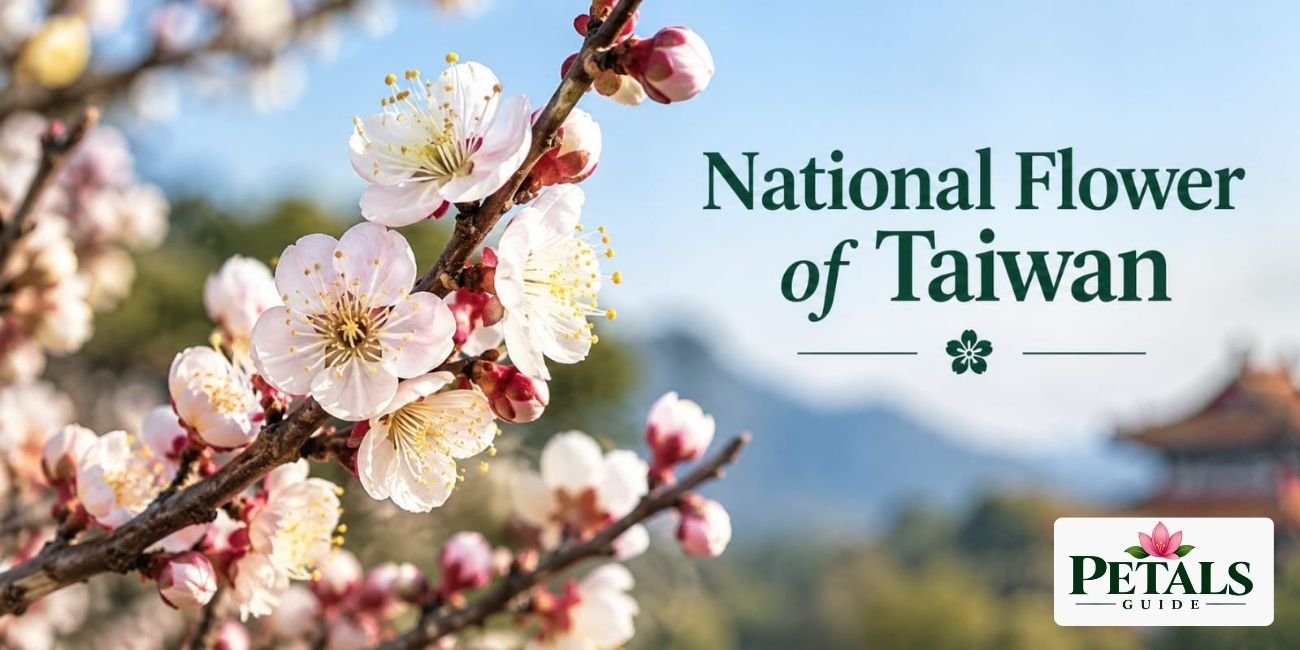
The plum blossom, called meihua (梅花) in Chinese, is the national flower of Taiwan. It belongs to the Prunus mume species and was officially recognized by the Executive Yuan as the national flower on July 21, 1964. Before its official status, the plum blossom was already an important symbol for the nation. It appeared on money, stamps, military badges, and various official items, helping to show its significance to the country’s identity. Its ability to bloom in the cold winter also added to its meaning.
In this article, we will explore the appearance of the plum blossom, its cultural background, the process of becoming the national flower, its symbolic meaning, when it blooms in Taiwan, popular places to see it, and its role in today’s Taiwanese society.
What Is Taiwan’s National Flower?
The national flower of Taiwan is plum blossom, known as meihua (梅花) in Chinese. This small deciduous tree belongs to the rose family, Rosaceae. According to Taiwan’s official botanical documents, Prunus mume is the species that represents the national flower.
The Executive Yuan officially named the plum blossom as the national flower of Taiwan on July 21, 1964. Even before this official recognition, the image of the plum blossom had already been used on national currency, stamps, military badges, and insignia, solidifying its role in the country’s national symbols.
How Does Plum Blossom Look Like?
The plum blossom comes from the Prunus mume tree, which is a small deciduous tree that typically grows between 4 to 10 meters high. Its bark is usually a light gray or greenish-gray, while the younger branches are smooth and green. The leaves are arranged alternately, often oval or elliptical in shape, with pointed tips and finely serrated edges.
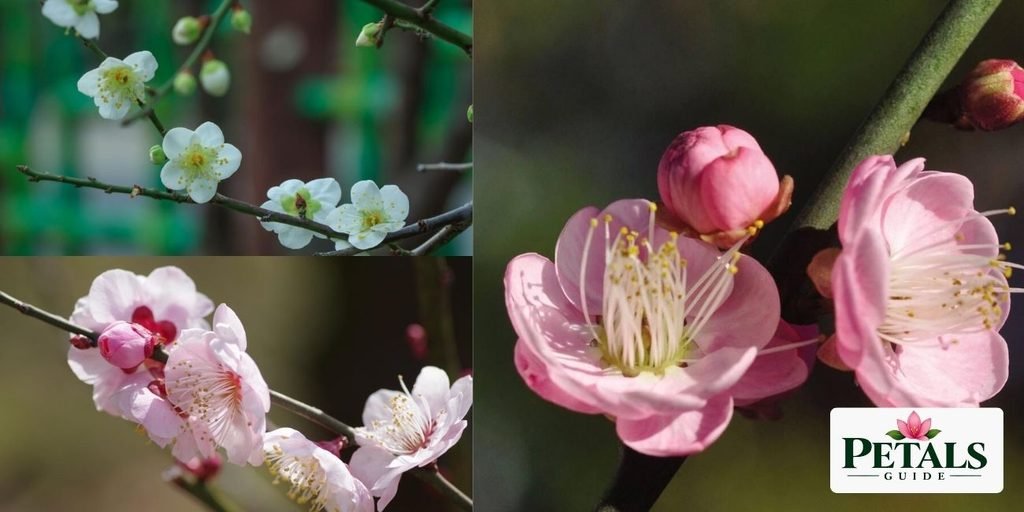
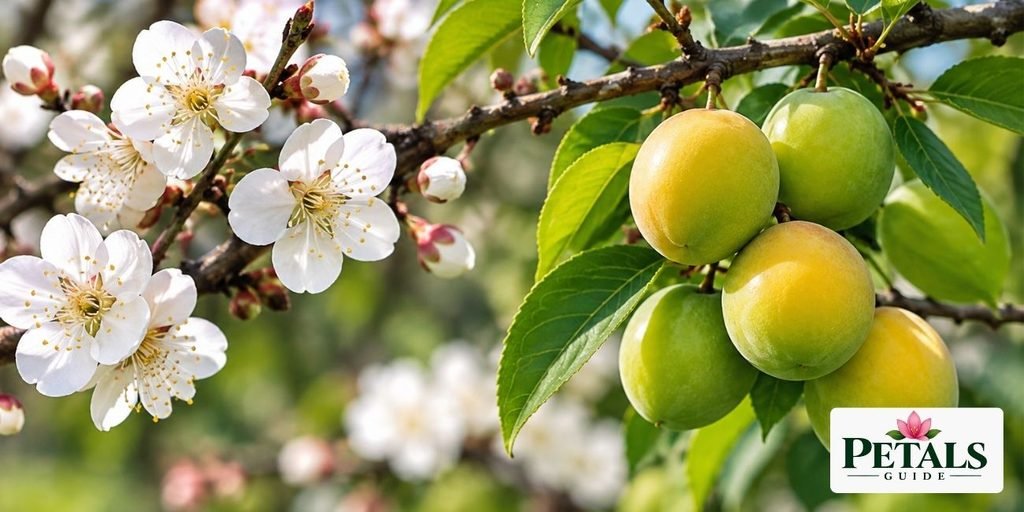
Flowers typically bloom before the leaves appear and can be found either alone or in small clusters. They are fragrant and usually have five sepals and five petals. The color of the flowers can differ based on the variety, ranging from white and light pink to pink, red, and dark red. Some decorative types have more than one row of petals, making not all plum blossoms look the same.
After the flowering period, the tree produces round fruit commonly known as a plum or mei. The young fruit is fuzz-covered and transitions from green or pale green to yellow as it ripens. Inside, it has a hard stone with a shallow groove on one side.
The appearance can differ between fruit-bearing trees and decorative varieties. Different cultivated types have been created with varying flower colors, petal counts, and shapes, resulting in a diverse display of plum blossoms in gardens.
A Bloom With Ancient Roots
The plum blossom has deep roots in Chinese culture, existing long before it became Taiwan’s national flower. Plum trees and their flowers have been significant in Chinese literature and art. Historical documents and artworks reveal that educated scholars cherished this flower for their poetry and paintings. According to the Tokyo National Museum, plum blossoms have been featured in literature since ancient days, and ink paintings of these trees gained special popularity during the Song dynasty.
The plum blossom is also recognized as one of the Four Gentlemen (sijunzi) in traditional Chinese art, alongside the orchid, bamboo, and chrysanthemum. These plants represented the virtues of the cultured scholar in literati art. The National Palace Museum in Taipei possesses historical works illustrating the plum blossom as one of the Four Gentlemen, highlighting its significance in Chinese painting.
Its role in traditional culture ties to the changing seasons. Plum, bamboo, and pine are known as the Three Friends of Winter, while plum, orchid, bamboo, and chrysanthemum represent the Four Gentlemen. These connections elevated the plum blossom beyond a mere garden flower; it became a frequent theme through which Chinese artists and scholars conveyed ideas about character and virtue.
How the Plum Blossom Became Taiwan’s National Flower
In 1929, discussion about choosing a national flower began when the Ministry of Finance was planning a new design for national currency and considered placing a flower on the coins. Government departments favored the plum blossom, and the Central Standing Committee of the Kuomintang later decided to use it as a national symbol in various emblems and decorations. Over the following years, the plum blossom appeared on national currency, postage stamps, military cap badges, and rank insignia, giving it an established place in official symbolism.
On July 21, 1964, the Executive Yuan formally approved the plum blossom as the national flower. By then, it had already been used as a national symbol for decades, so the decision gave official status to a flower that was already well established in the country’s public and institutional imagery.
Why is the Plum Blossom the National Flower of Taiwan?
The plum blossom is Taiwan’s national flower mainly because it can survive tough winter weather. While many plants stop growing during the cold months, the plum tree continues to bloom even when it’s freezing. Taiwan’s Executive Yuan points out that the flower not only survives the cold but keeps blossoming, which makes its strength a key part of its national meaning.
This ability to face harsh conditions symbolizes qualities like strength, stability, and purity. The Executive Yuan mentions that the plum blossom’s resilience represents “jian zhen gang jie,” which means being strong and having moral integrity that people can admire. These characteristics make the flower a great choice as a national symbol rather than just a pretty plant.
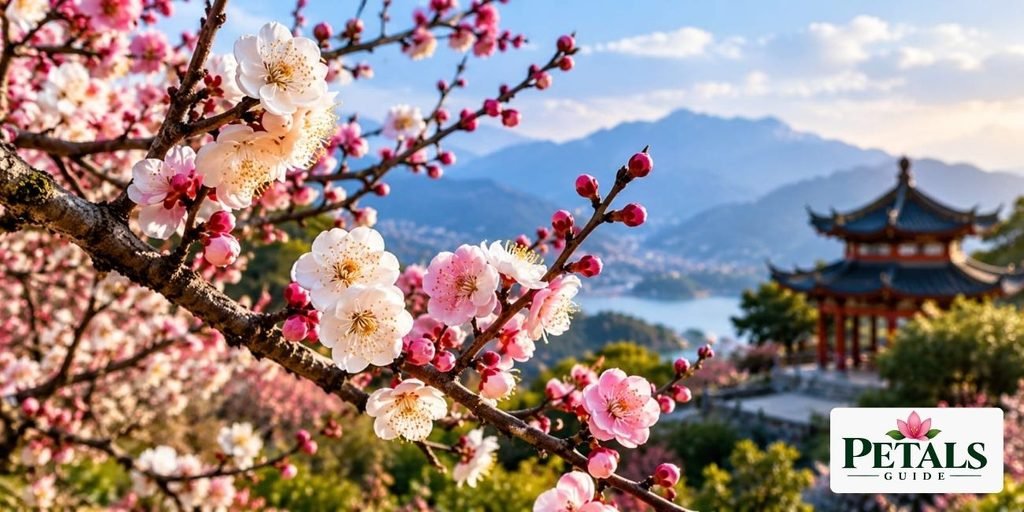
So, the selection of the plum tree connects its natural toughness to the values often linked with the flower. Its ability to bloom in winter clearly shows the idea of staying strong and holding on to your beliefs, even when times are tough.
What Does Taiwan Flower Blossom Symbolize?
The plum blossom holds significant official meaning in Taiwan. Its grouping of stamens, one long and two short, symbolizes Sun Yat-sen’s Three Principles of the People. The flower has five petals that stand for the five branches of the Republic of China government. These interpretations link the national flower to Taiwan’s political and national organizations.
Taiwan National Flower, the plum blossom, signifies firmness, integrity, and purity. Taiwan’s Executive Yuan highlights its three buds and five petals, emphasizing its resilience against cold winter weather. This ability to survive harsh conditions is linked to strong character traits that people can aspire to follow.
Plum Blossom in Art and Literature
The plum blossom has been a prominent theme in Chinese literature since ancient eras and gained particular significance in traditional ink painting. During the Song dynasty (960–1279), ink representations of plum trees became favored among literati artists. The National Palace Museum in Taipei houses historical pieces dedicated to plum blossoms, including artworks from the Ming and Qing dynasties.
Artists have depicted plum branches in various styles, ranging from simple ink sketches to intricate paintings paired with poetry and calligraphy. One notable piece in the National Palace Museum’s collection is a 1948 artwork featuring a plum blossom painting by Wu Zheng, complemented by four regulated Chinese poems from Shen Yinmo. Other historical pieces illustrate plum blossoms alongside birds or as part of seasonal floral depictions. These works demonstrate how the plum blossom became intricately linked with painting, poetry, and calligraphy in East Asian artistry.
When Do Plum Blossoms Bloom in Taiwan?
In Taiwan, plum blossoms start to bloom during the colder months, usually around December or January, depending on where you are. The Siraya National Scenic Area in Tainan mentions that December to January is the peak season for plum blossoms. In the mountainous region of Sinyi Township, the Taiwan National Park Service states that flowering often starts in January.
The blooming time can vary based on altitude and local weather conditions. For instance, in Sinyi, flowers tend to bloom first in lower areas before spreading to higher locations. Also, cold fronts and winter weather can affect when the flowers open. As a result, the plum blossom season doesn’t begin on the same date throughout Taiwan, but winter is generally when these flowers start to appear in many plum-growing regions.
Where to See Plum Blossoms in Taiwan?
One of the top spots for viewing plum blossoms is the Meiling Scenic Area in Tainan. Here, plum trees are found throughout the mountains, allowing visitors to explore various trails. Notable spots for viewing include the Wulong Trail, Meifeng Historic Trail, and Fulai Centennial Plum Garden. The Siraya National Scenic Area also highlights Meiling as a key winter location for enjoying plum blossoms.
Another popular area is Xinyi Township in Nantou County, along the way to Tataka. The Taiwan National Park Service mentions that plum trees can be found in places like Fongguidou, Tongfu, and Guanfong. The blossoms start appearing at lower elevations and then gradually climb higher, providing visitors a chance to see different blooming stages as they wander through the mountains.
Is Plum Blossom the Same as Cherry Blossom?
Plum blossom and cherry blossom can look similar, especially when both are covered with pink or white flowers. However, they are different plants. Taiwan’s national flower is Prunus mume, while cherry blossoms come from several other Prunus species and cultivated varieties. A few simple differences can help you tell them apart.
| Feature | Plum Blossom | Cherry Blossom |
| Scientific name | Prunus mume | Various Prunus species and cultivars |
| Typical blooming time | Winter, often earlier | Usually later, toward spring |
| Flower arrangement | Usually single or in small groups | Often grows in clusters |
| Fragrance | Usually noticeable | Generally weaker |
| Petal shape | Usually rounded | Often has a small notch at the tip |
| Flower stalk | Flowers attach closely to the branch | Flowers usually grow on slender stalks |
The easiest clues are often the flowering time, flower stalk, and scent. Plum flowers usually appear earlier and sit closely against the branches, while cherry blossoms are commonly carried on slender stalks. Plum flowers are also more noticeably fragrant. These features can make the two flowers easier to distinguish when they bloom in the same season.
Taiwan’s Plum Blossom and Other East Asian Floral Symbols
The plum blossom in Taiwan is distinct from many floral symbols of East Asia because it holds official national recognition. The Executive Yuan designated the plum blossom as the national flower on July 21, 1964. By then, it had already been featured in official items such as national currency, postage stamps, military badges, and rank insignia.
The comparison with China is particularly noteworthy. The plum blossom has significant cultural meaning in Chinese tradition, yet China does not have an officially designated national flower. The tree peony is often regarded as a national favorite and received the most votes in an unofficial 1994 poll about selecting a national flower. Thus, while the plum blossom carries cultural importance in China, it does not have the same formal national status there as it does in Taiwan.
Japan faces a similar situation. There is no officially recognized national flower of japan. Chrysanthemums have a close association with the Imperial Family, while cherry blossoms are commonly regarded as an unofficial national flower because of their cultural importance and role in spring celebrations.
Cultivating Plum Blossoms Today
Successfully growing Prunus mume involves providing sufficient sunlight, appropriate soil, and suitable winter conditions.
Sunlight: Plum trees thrive in bright, sunny spots. Ample light also helps the tree produce flower buds.
Soil: Opt for deep, fertile, and well-drained soil. Avoid heavy or poorly drained areas where water might pool around the roots.
Water: Young trees require regular moisture while they are getting established. Once established, plum trees shouldn’t face prolonged drought, but it’s important to prevent overly wet soil and standing water.
Winter Chill: The chilling requirement varies among plum varieties. If a variety doesn’t get enough cold during winter dormancy, it may fail to bloom or grow properly. This is particularly crucial in Taiwan’s warmer, lower-elevation areas.
Pruning: Pruning helps enhance light within the tree’s canopy and removes any crowded, crossed, damaged, or weak branches. Taiwan’s agricultural guidelines also suggest pruning to maintain the tree’s shape and promote better flowering.
A unique challenge in Taiwan is that many plum types introduced from Japan and mainland China have higher chilling needs. These varieties may find it hard to bloom properly at lower elevations due to insufficient winter cold. To address this, Taiwan’s agricultural researchers have developed low-chill ornamental plum varieties, like Tainung Flowering Plum No. 1, to make attractive plum trees better suited for warmer, low-elevation areas.
The Plum Blossom in Modern Taiwan
The plum blossom remains significant in Taiwanese life today, particularly during its winter flowering season. Various plum blossom events take place across the country, blending flower viewing with local tourism and cultural activities. In Tainan, for instance, Meiling hosts an annual plum blossom season that draws visitors to its mountain paths and gardens. The 2026 event featured special viewing areas, walking paths, and transport options for guests.
This flower is also highlighted in cultural events and exhibitions. In Taipei, the National Chiang Kai-shek Memorial Hall organized a Plum Blossom Season showcasing pottery, stone carving, wood sculpture, calligraphy, and photography inspired by the blossom. The event included guided tours for flower viewing, tea culture, performances, and products made from plums.
Chunghwa Post has kept the national flower in its stamp collection. It issued National Flower Postage Stamps in 1979 and released another set in 2011, with the later design depicting blooming plum branches and ink-wash paintings of the blossoms. These stamps illustrate how the flower remains present in official visual culture and seasonal celebrations.
Taiwan National Flower and Other National Symbols
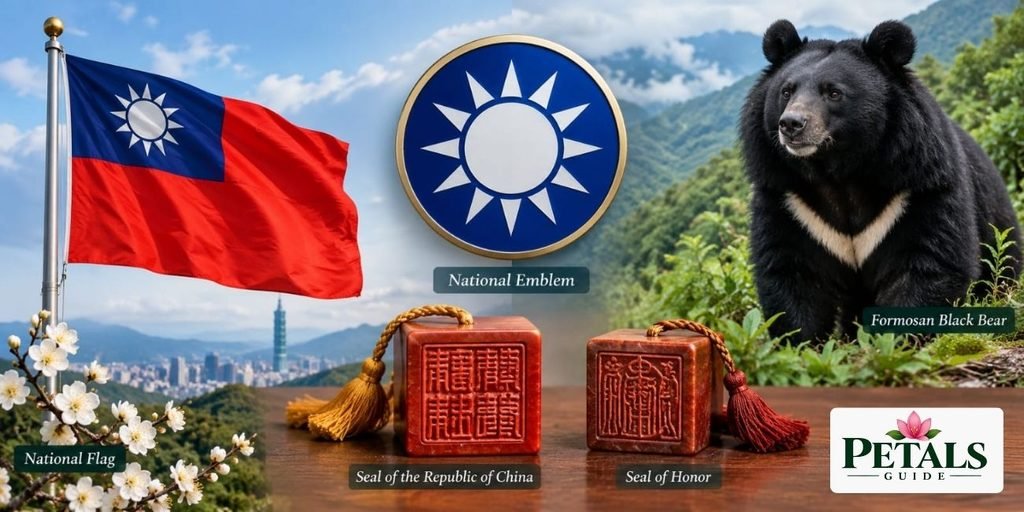
The plum blossom is one of several important national symbols associated with Taiwan. Each symbol has a different role, from representing the nation through its flower to appearing on official flags, emblems, and state documents.
- National Flag: Taiwan’s national flag is the Blue Sky, White Sun, and a Wholly Red Earth flag. Its blue, white, and red elements have specific meanings, including freedom, equality, and sacrifice.
- National Emblem: The national emblem features a white sun with 12 rays on a blue field. The 12 rays represent the 12 months of the year and the 12 traditional two-hour periods of a day.
- National Animal: There is no officially designated Taiwan national animal. The Formosan black bear is widely associated with Taiwan and is often described as an unofficial national animal, but it does not have the same formal status as the plum blossom.
- National Seals: The Republic of China (Taiwan) has two national seals: the Seal of the Republic of China and the Seal of Honor. They are used for official state documents and matters of national importance.
Can You Eat Plum Blossom Fruit?
Yes, you can, but the fruit of Prunus mume is not typically eaten fresh like regular sweet plums. According to Taiwan’s Ministry of Agriculture, fresh Prunus mume is very sour, so it’s usually processed instead of eaten raw. Common forms of preparation include pickled or salted plums, dried plums, juices, syrups, sauces, and other preserved items. Studies on P. mume also show its use as pickled fruit, juice, sauce, and other processed foods throughout East Asia.
In Taiwan, green or immature plums are often picked for processing due to their high acidity. They can be preserved with salt or sugar, dried, or made into drinks and other products. The fruit has a relatively short harvest season, making processing essential for how P. mume is enjoyed.
There’s also an important safety note: the seeds should not be consumed, and Taiwan’s Ministry of Agriculture specifically warns that both the seeds and immature fruit can lead to poisoning if eaten incorrectly. Recent studies have found toxic compounds concentrated in the seeds of P. mume. For this reason, it’s best to eat the fruit as part of properly prepared food and not as raw fruit or its seeds like a regular table plum.
Conclusion
The National Flower of Taiwan, the plum blossom, is more than just a well-known winter flower. As Prunus mume, it has a rich cultural heritage, an official status among Taiwan’s national symbols, and is present in art, public celebrations, gardens, and daily life.
From its early blooms in winter to the various ways its fruit and flowers are valued, the plum blossom is deeply linked to Taiwan. Its official recognition also gives it a unique position among the floral symbols of East Asia, making it a significant part of Taiwan’s cultural identity.
FAQs
What is the national flower of Taiwan?
The plum blossom (Prunus mume) is the national flower of Taiwan. The Executive Yuan officially designated it on July 21, 1964.
What is a famous Chinese flower?
The plum blossom is one of the most famous traditional Chinese flowers. It has a long history in Chinese art, poetry, and culture and is also one of the traditional Four Gentlemen of Chinese painting.
What is the national symbol of Taiwan?
Taiwan has several national symbols, including the national flag, national emblem, national flower, national anthem, and national seals. The plum blossom is its officially designated national flower.
What animal symbolizes Taiwan?
The Formosan black bear is widely recognized as a symbolic representative of Taiwan. It was selected as Taiwan’s most representative wild animal in 1999 and is commonly used to represent Taiwan’s wildlife, although it is better described as a representative symbol rather than an officially designated national animal.
What is the Chinese national flower?
China does not currently have an officially designated national flower. The tree peony is often regarded as China’s national favorite and received the most votes in a 1994 unofficial national-flower survey, but it has not been formally designated as the national flower.