
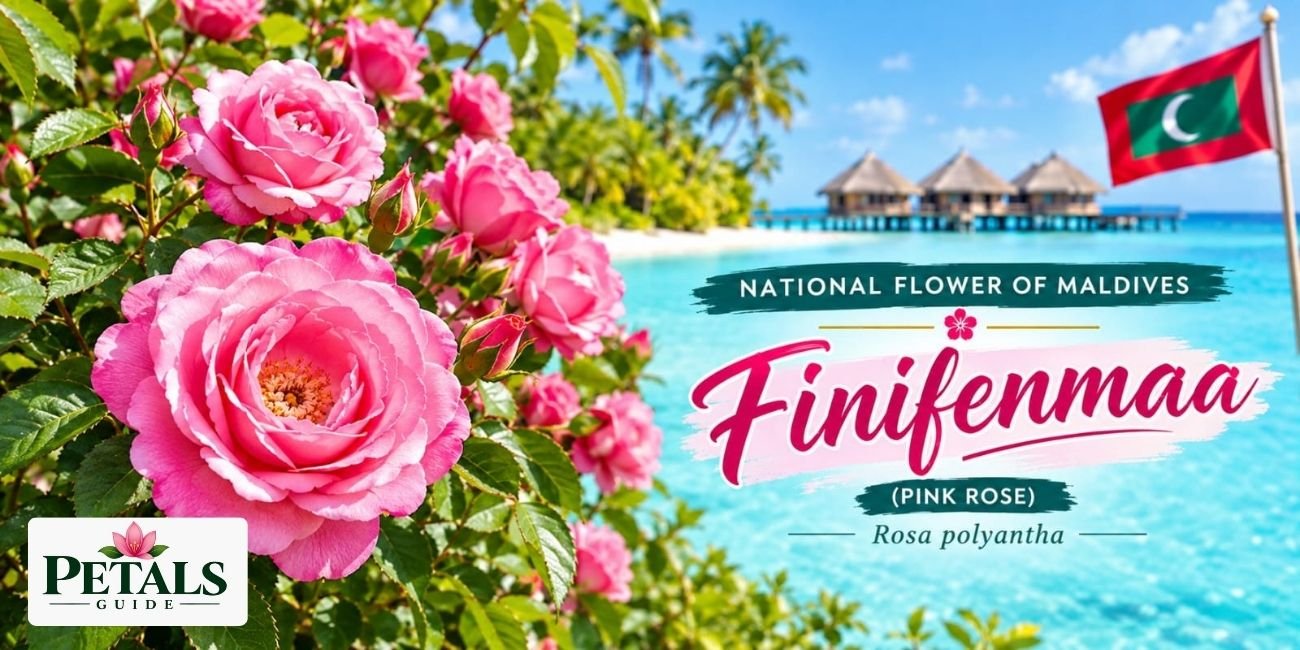
The national flower of Maldives is the pink rose, commonly known as Finifenmaa. The pink rose “Rosa polyantha” was declared the National Flower of Republic of Maldives in 1985. This flower is not just pretty; it tells a story about Maldivian culture and values. Let’s find detailed information about the national flower of Maldives, including why Finifenmaa was chosen, its cultural importance, and the characteristics that make it a meaningful part of the country’s national identity.
What is the National Flower of Maldives?
Rosa polyantha is the national flower of Maldives, locally known as Finifenmaa. This variety of rose is recognized for its delicate pink flowers, which are often clustered together in charming bouquets. Serving as a national symbol, Finifenmaa represents the country’s natural beauty and cultural identity, making it an integral part of Maldivian heritage.
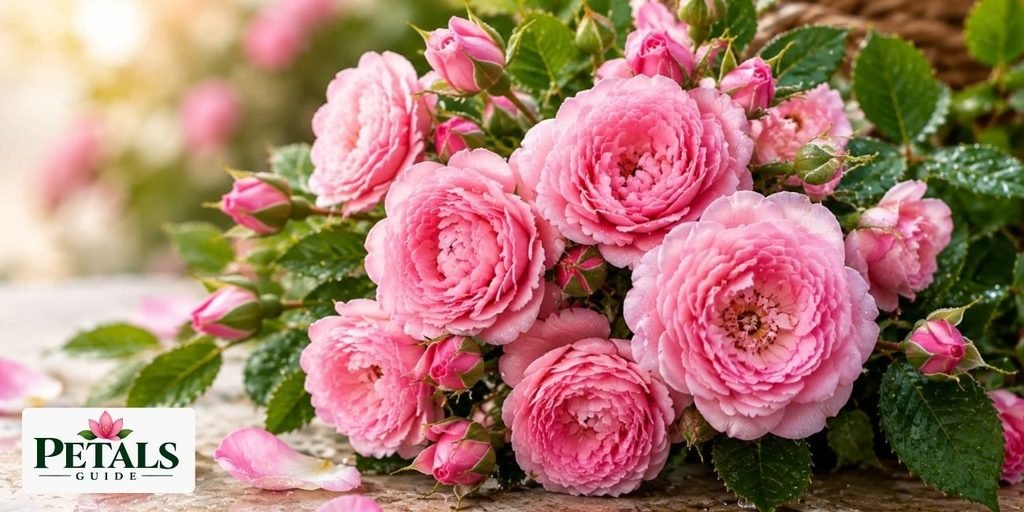
The graceful appearance and vibrant color of Maldives National Flower add to the landscapes of the islands and evoke a sense of pride among the Maldivian people. Its status as the national flower highlights the significance of local flora in representing national character and unity.
History of the National Flower of Maldives
The history of Rosa polyantha, affectionately known as Finifenmaa, is closely connected with the country’s cultural identity. Finifenmaa was officially declared the national flower of the Maldives on 25 July 1985, giving the pink rose an established place among the nation’s symbols. The flower was already held in high regard by Maldivians and was considered well suited to cultivation in Maldivian soil, making it a fitting choice for the country’s floral emblem.
Finifenmaa, or pink rose, has remained associated with Maldivian gardens and local appreciation of flowers. Its recognition as a national symbol in 1985 gave the flower significance beyond its role as a cultivated plant, connecting it with the country’s identity and natural environment. Rather than relying on unverified historical traditions, the documented milestone is its official designation on 25 July 1985, which marked the beginning of its formal status as the national flower.
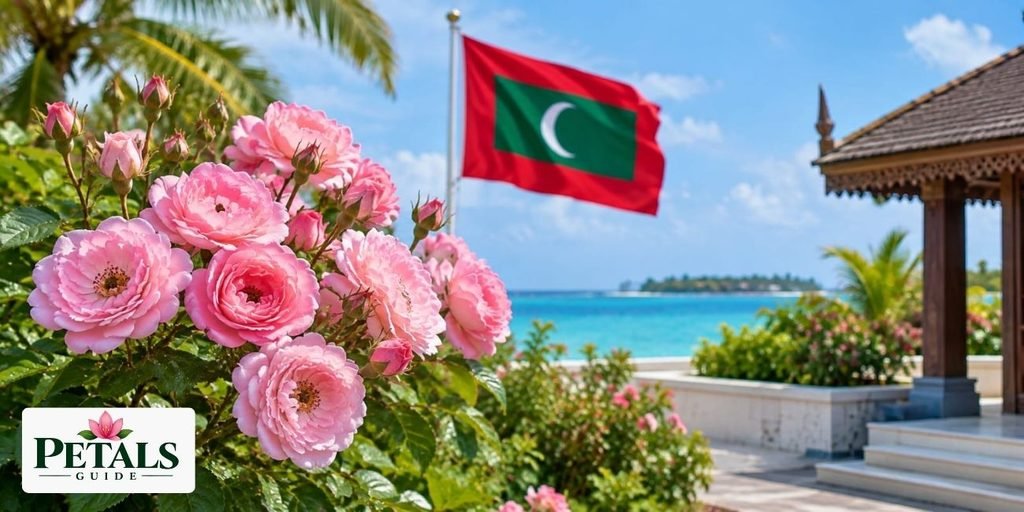
Over time, Finifenmaa has continued to represent an important part of the Maldives’ national identity. Its journey from a highly regarded rose to an officially recognized national emblem reflects the country’s use of natural symbols to express its character and heritage. Today, the pink polyantha rose (Rosa polyantha) remains recognized as the national flower of the Maldives.
Botanical Classification of Rosa polyantha
The name Rosa polyantha identifies the rose associated with the national flower of the Maldives. It belongs to the genus Rosa and the family Rosaceae, a large family that includes many flowering and fruit-bearing plants. In horticultural classification, polyantha roses are considered a group or class of cultivated roses rather than a distinct botanical species, recognized for their particular growth and flowering characteristics.
The term “polyantha” comes from Greek words meaning “many flowers,” referring to the plant’s tendency to produce numerous small flowers in clusters. This characteristic is an important part of its horticultural identity and helps distinguish polyantha roses from other rose groups.
Botanical Facts
- Scientific name: Rosa polyantha
- Genus: Rosa
- Family: Rosaceae
- Plant group: Polyantha roses
- Type: Cultivated rose group
- Key characteristic: Produces numerous relatively small flowers in clusters
What Does the National Flower of Maldives Look Like?
The National flower of the Maldives produces clusters of relatively small rose blossoms that may appear in shades of pink or white. The flowers generally have a rounded form with overlapping petals arranged around the center. Their clustered growth is one of the most recognizable features of polyantha roses, creating groups of blooms rather than a single flower standing alone.
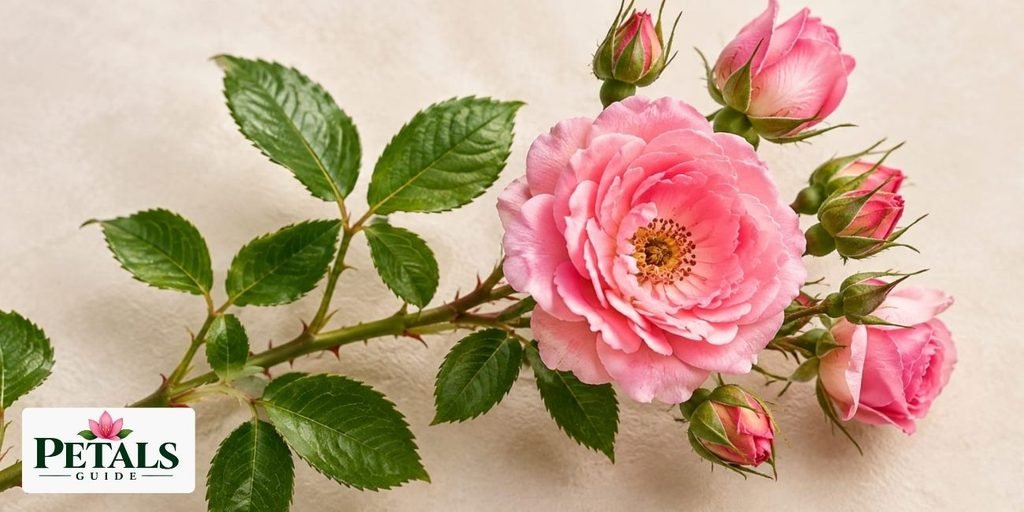
The leaves of Rosa polyantha are generally green and serrated, growing along slender branches that may carry small prickles, as is common among roses. The plant typically develops a compact, bushy form with dense foliage, although its exact appearance can vary among cultivated polyantha varieties. Together, the clustered flowers and green foliage give the plant its characteristic rose-like appearance.
Quick Information about the national flower of Maldives: Appearance
- Flower Color: Commonly pink or white
- Flower Form: Small, rounded blossoms in clusters
- Petals: Overlapping petals arranged around the center
- Leaves: Green with serrated edges
- Stems: Slender branches, often with prickles
- Growth Habit: Generally compact and bushy
Flowering Characteristics of Rosa polyantha
The national flower of the Maldives, Finifenmaa (Rosa polyantha) is known for its abundant flowering habit, producing numerous small blooms in clusters rather than as individual flowers. Polyantha roses are also valued for their repeat flowering, allowing new blooms to develop over an extended period when growing conditions are favorable.
The combination of clustered blooms and repeated flowering gives the plant a longer-lasting floral display, although the exact flowering period and intensity can vary among cultivars and growing conditions.
Where Does the National Flower of Maldives Grow?
Rosa polyantha, the national flower of the Maldives, is primarily a cultivated rose rather than a native wild plant of the Maldivian islands. It can be grown in managed settings such as gardens and landscaped areas, where suitable growing conditions are provided.
Outside the Maldives, polyantha roses have been cultivated widely as ornamental plants. Their presence in the Maldives therefore reflects horticultural cultivation rather than a naturally occurring native distribution.
How Does Rosa polyantha Grow in the Maldivian Climate?
The Maldives has a warm, humid tropical climate with seasonal rainfall, particularly during the monsoon. These conditions can support the cultivation of Rosa polyantha, but excessive heat, humidity, and intense sunlight may create challenges for healthy growth and flowering.
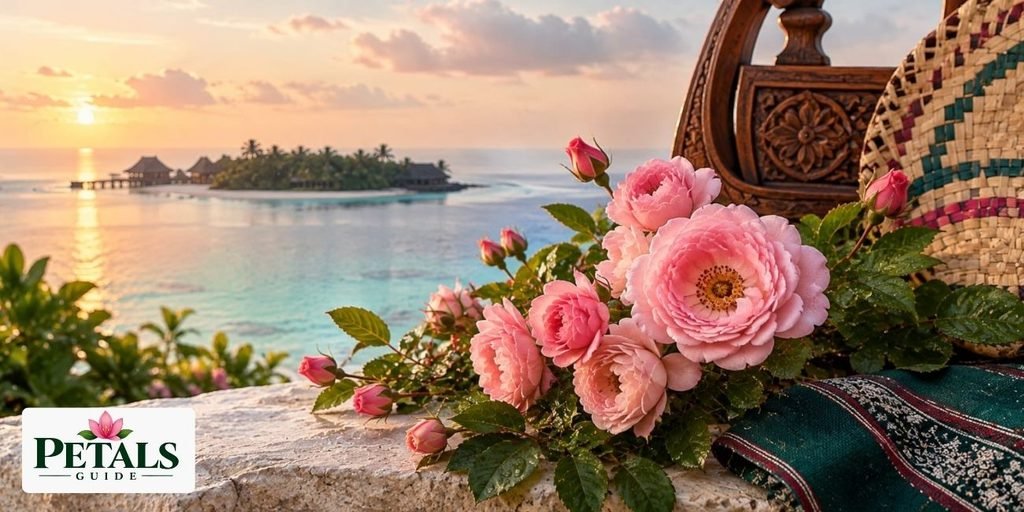
High humidity and heavy rainfall can increase the risk of fungal problems and waterlogged soil, making good drainage important for cultivated plants. Coastal conditions can also expose roses to salt spray, while periods of strong heat may place additional stress on the plant. With proper care and suitable growing conditions, Finifenmaa can continue to produce healthy blooms, maintaining its place as a valued symbol of the national flower of Maldives.
Cultural Importance of National Flower of Maldives
In Maldivian culture, Finifenmaa (Rosa polyantha) holds a cherished place as more than just the national flower. It is appreciated in homes and gardens, where its flowers add color and beauty to everyday surroundings. Its presence in residential spaces reflects the affection many people have for this familiar Maldives national flower.
Finifenmaa is also associated with local appreciation of flowers and the natural environment. Its role in everyday settings extends beyond simple ornamentation, giving it a valued place in Maldivian culture and helping maintain its connection with local traditions and community life.
What Does the National Flower of Maldives Symbolize?
Finifenmaa (Rosa polyantha), the national flower of the Maldives, is commonly associated with beauty, peace, and purity. Its delicate flowers represent the natural beauty appreciated across the islands, while its association with peace reflects the calm and pleasant character often connected with the Maldives. The flower also represents national pride, as its status as a national symbol connects it with the country and its people.
How Is Finifenmaa Different From Other Roses?
Finifenmaa, the national flower of the Maldives, differs from hybrid tea and floribunda roses mainly through its smaller blooms and clustered flower production. Unlike the large individual blooms of hybrid tea roses, Finifenmaa produces numerous petite flowers in dense clusters, while its generally compact, bushy growth adds to its appeal in garden settings. As a polyantha rose, these features give Finifenmaa a distinct character compared with many other rose groups.
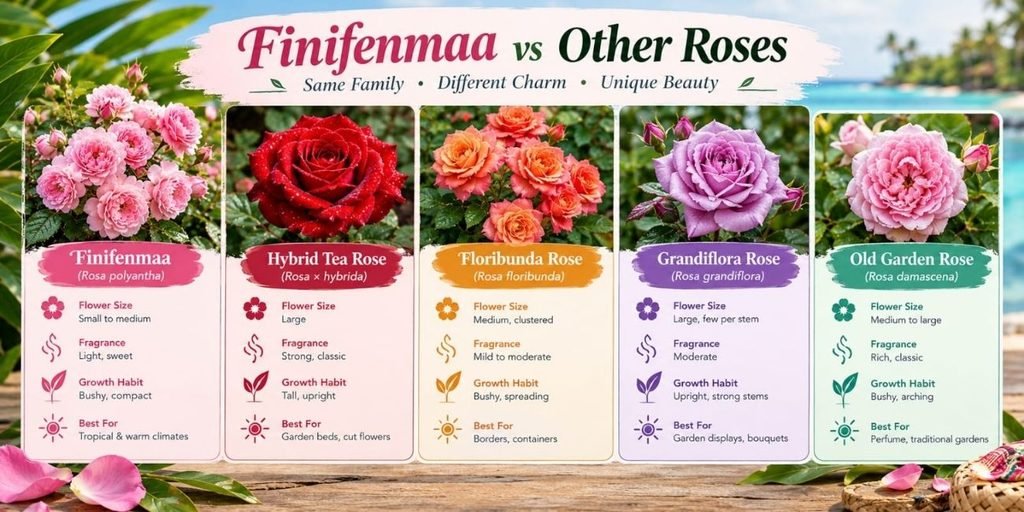
| Feature | Finifenmaa (Rosa polyantha) | Hybrid Tea Rose | Floribunda Rose |
|---|---|---|---|
| Flower Size | Relatively small | Usually large | Medium-sized |
| Flower Arrangement | Dense clusters | Mostly individual blooms | Clusters |
| Growth Habit | Compact and bushy | Upright | Bushy |
| Main Characteristic | Numerous small blooms | Large, individual flowers | Abundant clustered blooms |
| Flowering Habit | Often repeat flowering | Usually repeat flowering | Usually repeat flowering |
Interesting Facts About Rosa polyantha
- Meaning of “Polyantha”: The name comes from Greek roots meaning “many flowers,” referring to the rose’s tendency to produce flowers in clusters.
- Cultivated Rose Group: Polyantha roses are a group of cultivated roses, rather than a single modern rose variety.
- National Flower: Finifenmaa (Rosa polyantha) was officially designated as the national flower of the Maldives on 25 July 1985.
- Maldivian Name: The rose is locally known as Finifenmaa, a name used for rose in Dhivehi.
- Small Clustered Blooms: Polyantha roses are known for producing numerous relatively small flowers in clusters, one of their defining horticultural features.
- Rose Family: Rosa polyantha is associated with the Rosaceae family, which includes many familiar flowering and fruit-bearing plants.
Why Is Finifenmaa Important to Maldivian Identity?
Finifenmaa, the national flower of the Maldives, serves as an important emblem of national identity, connecting the Maldivian people with their homeland and natural environment. As an officially recognized national symbol, the flower represents an aspect of the country’s character and provides a familiar symbol that people can associate with the Maldives.
Its presence also contributes to a sense of national pride and belonging. It serves as a visual representation of the country’s natural heritage and helps highlight the connection between the people and the environment of the islands.
Conclusion
The national flower of the Maldives, the pink rose or finifenmaa, represents beauty and love for the country. This lovely flower is not just pretty but also holds important cultural meanings for the Maldivians. It’s a symbol of their rich history and natural beauty. If you want to learn more about other national flowers around the world, you can check out our article on the following topics.
What is the national flower of the Maldives?
The national flower of the Maldives is the pink rose, known as “finifenmaa.”
What does “finifenmaa” mean?
“Finifenmaa” means “rose” in the local Dhivehi language. It is Maldives national flower name.
What type of rose is the national flower of Maldives ?
The national flower is actually a specific type called Rosa polyantha, which has many small flowers in clusters.
When do pink roses bloom in the Maldives?
Pink roses typically bloom throughout the year, especially during the warmer seasons.
What is the national emblem of the Maldives?
The national emblem of the Maldives prominently displays a coconut palm, a crescent moon, a star, and two crossed national flags. The coconut palm signifies its vital role in the livelihoods of Maldivians, while the crescent and star symbolize the nation’s Islamic heritage.
What is the national fruit of the Maldives?
The coconut is occasionally referred to as the national fruit of the Maldives, although its official designation remains ambiguous. It is extensively used in Maldivian culinary practices and holds significant cultural importance.
What is the national animal of the Maldives?
The yellowfin tuna (Thunnus albacares) is often recognized as the national animal of the Maldives. Tuna is crucial to the nation’s fishing sector, food resources, and cultural identity