
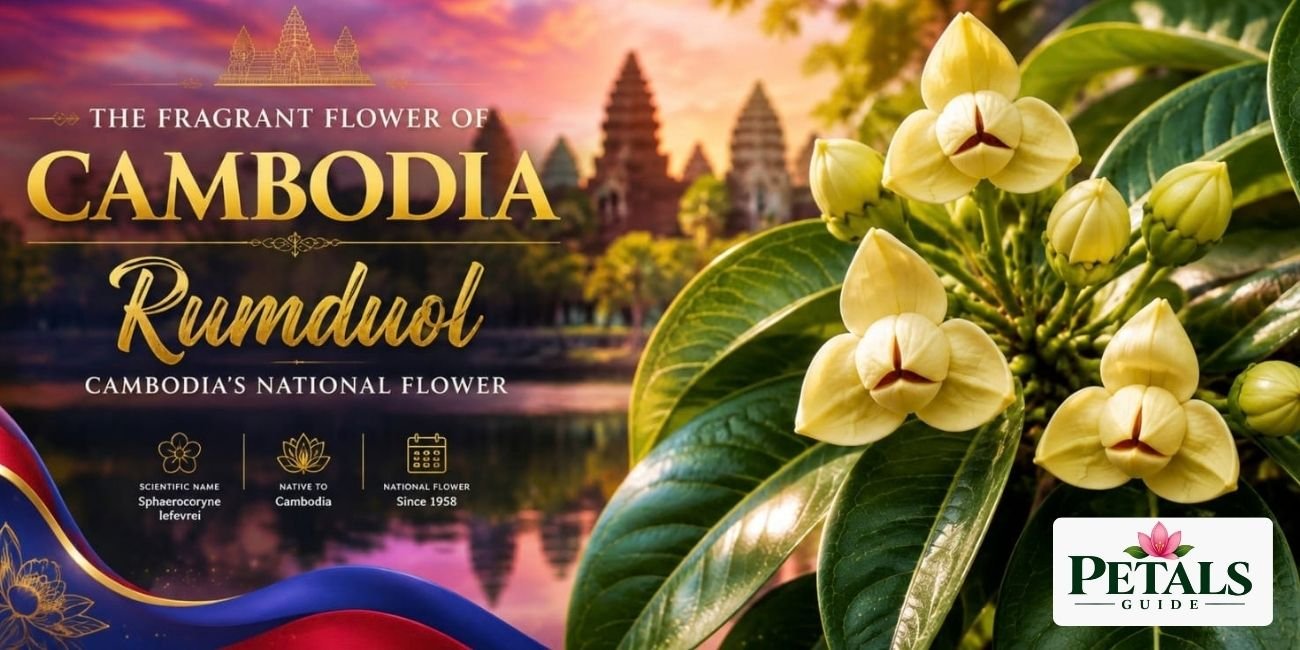
The Cambodia National flower is the Romduol, a fragrant flowering tree that has been part of Cambodian life and Khmer culture for generations. Its small, pale yellow flowers may appear modest, but their sweet fragrance is one of the most memorable features of this native Cambodia Flower. It is also known by several spellings, including Ramdoul and Rumdul.
Romduol was officially declared Cambodia’s national flower in 2005 by royal decree. Since then, it has continued to represent the country’s natural heritage as well as its connection with traditional Cambodian culture. Its presence in gardens, public spaces, traditional products, literature, and other areas of daily life has helped keep this Khmer flower closely connected to the identity of Cambodia.
What Is the Romduol Flower?
Romdoul, the national flower of Cambodia, grows on a small to medium-sized evergreen tree belonging to the custard apple family, Annonaceae. It can grow to around 8 meters tall, although older Cambodian descriptions give a height of about 8 to 12 meters. Its trunk has smooth yellowish-brown bark, while the branches carry simple, oval to oblong green leaves.
Quick Facts About the Romdoul Flower
- Scientific Name: Sphaerocoryne lefevrei
- Plant Type: Evergreen shrub or small tree
- Plant Family: Annonaceae
- Flower Colors: Cream, pale yellow, or yellow-brown
- Blooming Season: Mainly February to April
- Native Region: Cambodia and other parts of mainland Southeast Asia
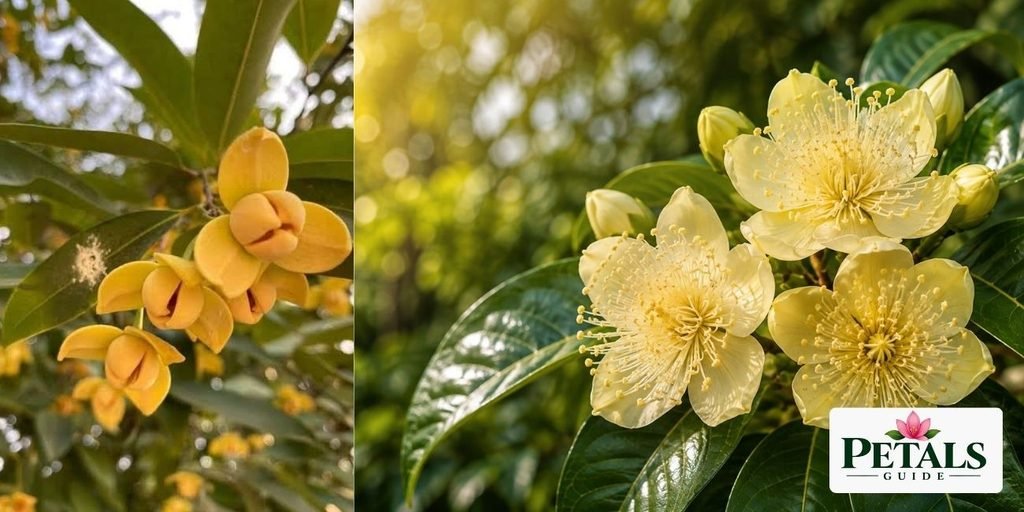
The scientific name needs a little explanation. Cambodia’s 2005 Royal Decree identifies the national flower as Mitrella mesnyi, but modern botanical treatment recognizes Sphaerocoryne lefevrei as the accepted name. Older sources may therefore list the Rumdul flower under Mitrella mesnyi or other names.
The leaves are arranged alternately along the branches and are generally smooth, green, and somewhat leathery. The flowers are small but distinctive, with fleshy cream to yellow or yellow-brown petals. They have three outer petals and three inner petals, with the inner petals curving inward around the center of the flower.
Fragrance is one of the most noticeable features of this Cambodian flower. The flowers release a strong, sweet scent that becomes particularly noticeable in the late afternoon and evening. This evening fragrance is one reason the Romdoul is so easily recognized even when its relatively small flowers are not immediately visible.
After flowering, the plant develops clusters of small fruits. When mature, the individual fruit segments become dark purple to reddish in color and contain one or two seeds. The ripe fruit is edible and has traditionally been collected in parts of Cambodia.
Where Does Romduol Grow in Cambodia?
The Romdoul flower is native to mainland Southeast Asia and occurs naturally in Cambodia, as well as parts of Laos, Vietnam, and Thailand. In natural habitats, it is associated with mixed deciduous forests, where it can grow at relatively low to moderate elevations. Its natural range shows that the plant is not limited to cultivated gardens but is part of the region’s native vegetation.
Within Cambodia, the tree can also be found growing around homes, gardens, and public parks. Its pleasant fragrance has made it a popular ornamental plant, so some trees seen in towns and landscaped areas are intentionally planted rather than growing naturally. This gives the Cambodian flower a presence in both rural landscapes and more developed surroundings.
Romduol generally suits Cambodia’s warm tropical climate. In its natural range, it is associated with forest environments rather than very high elevations, while cultivated trees can grow successfully in suitable gardens and landscaped areas. The combination of its native habitat and long history of cultivation has helped make the national flower in Cambodia familiar far beyond its original forest setting.
What Makes the Romduol Different?
Cambodia National Flower, the Romdoul is not known for having large or brightly colored blooms. Its real distinction is its fragrance. The cream to pale yellow flowers produce a sweet scent that becomes much stronger from the late afternoon into the evening. The fragrance can also travel through the surrounding air, making the tree noticeable even when the small flowers are not easy to see.
Its flower structure adds another small detail that makes the Cambodian flower easy to recognize. Each bloom has three outer petals and three inner petals, with the inner petals curving inward toward the center. Together with the thick petals and soft yellowish color, this gives the flower a simple but distinctive appearance.
The timing of its fragrance is another interesting feature. While many flowers are most noticeable during the day, Romduol becomes especially aromatic as evening approaches. This combination of modest flowers and a powerful evening scent is one of the characteristics that sets Cambodia’s national flower apart.
Why Is Romduol the National Flower of Cambodia?
The National flower of Cambodia was officially designated as Romduol through Royal Decree No. NS/RKT/0305/149, signed on March 21, 2005. The decree was issued by King Norodom Sihamoni and listed Rumdul (Mitrella mesnyi in the decree) among Cambodia’s national plant and animal symbols.
The decision was part of a wider effort to recognize plants and animals that represent Cambodia’s natural heritage. The same decree states that these national symbols were selected to highlight the country’s valuable natural heritage and promote national pride. Romduol was therefore given an official place alongside Cambodia’s national tree, fruit, fish, bird, reptile, and mammal.
The choice also reflected the flower’s established presence in Cambodian life. Its fragrant flowers were already familiar in homes and public gardens, while the plant had practical and cultural uses. This long connection helped make the Cambodia National flower a natural choice for a national symbol rather than simply a decorative flower selected for its appearance.
Cultural Meaning of Cambodia National Flower
In Cambodian culture, the Romduol flower is closely associated with beauty and grace. Its soft yellow flowers and sweet fragrance have given it a special place in Khmer cultural expression, where the flower has often been linked with feminine beauty and elegance. The fragrance is an important part of this connection, as its gentle scent has long been admired in Cambodian life.
The cultural meaning of the Romdoul flower can also be seen in Khmer poetry and other traditional expressions. Writers and artists have used the flower and its fragrance as images of beauty, particularly when describing women. This connection has helped turn the flower into more than a familiar part of the Cambodian landscape; it has become an image that carries ideas of refinement and natural beauty within Khmer culture.
As the Cambodia National flower, Romduol also represents a connection between the country’s natural heritage and its cultural identity. Its long presence in Cambodia, together with its place in traditional expressions, gives the Khmer flower a meaning that goes beyond its physical appearance. It remains a familiar symbol of Cambodia’s connection with its own landscape and cultural traditions.
Romduol in Cambodian Traditions and Daily Life
The fragrance of the Romdoul flower has made it a familiar part of traditional Cambodian life. Long before it became the country’s national flower, people valued the blossoms for their natural scent and found ways to bring that fragrance into everyday routines. The flowers were used in personal grooming, including scented hair and other forms of traditional fragrance, allowing their sweet aroma to remain close to the wearer.
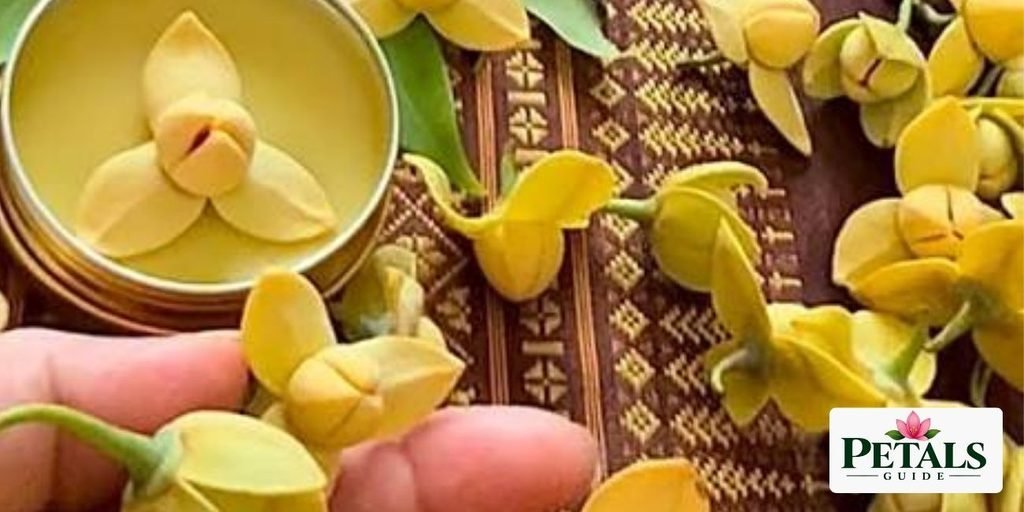
One of the better-known traditional uses was Kramuon Rumduol, a scented lip wax associated with Khmer culture. Romduol was used for its fragrance, adding a distinctive natural scent to a product used as part of personal care. This connection between the flower and traditional beauty practices also helps explain why its fragrance became so familiar in Cambodian society.
The tree itself has also been planted around homes, gardens, and public places, where people could enjoy both its flowers and their scent. Its presence in familiar surroundings allowed the Cambodian flower to become part of ordinary life while remaining connected with older Khmer traditions.
Romduol in Khmer Literature, Music, and Art
The Romduol flower has a long connection with Khmer literature and music. Khmer poets have used the flower when describing feminine beauty, while its name has also appeared in traditional Cambodian songs. Songs such as “Romduol Kratie” and “Romduol Pursat” feature the flower, and the well-known Cambodian singer Sin Sisamouth also recorded “Romduol of the Sangkae River”. These works helped make the Romduol a familiar image in Khmer musical and literary expression.
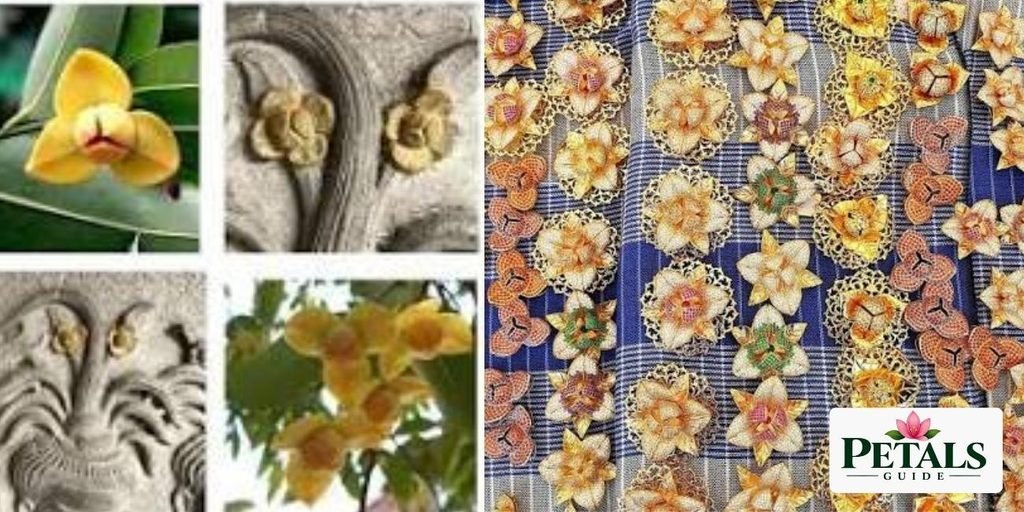
The flower also appears in Khmer artistic traditions. Romduol motifs have been incorporated into Cambodian textile patterns, including traditional brocade and ikat designs. Similar floral forms can be seen in the decoration of older Khmer architecture, including Banteay Srei, where flower motifs appear on architectural details.
Places in Cambodia Named After Romduol
The name of the Romduol flower appears in several Cambodian place names. Rumduol District in Svay Rieng Province is one of the clearest examples, and its name is derived from the Rumduol flower. The name therefore directly connects the Romduol flower with a Cambodian administrative area.
Another example is “Ou Rumduol”, a commune in Phnum Proek District, Battambang Province. The name “Rumduol” is also found in older geographical and historical references, including an Ou Rumduol temple inscription associated with present-day Preah Vihear Province. These examples show that the flower’s name has been used for Cambodian places in different regions and across different periods.
Traditional and Practical Uses of the Romduol Tree
The Romduol tree has been valued in Cambodia for more than its fragrant flowers. Different parts of the tree have traditionally been used for practical purposes, from household materials to ripe fruit and herbal practices.
Traditional Medicinal Uses
The Romduol tree has also been recognized in traditional Cambodian herbal practices. Different parts of the tree have been associated with medicinal use, although these applications come from traditional knowledge rather than modern clinical evidence. For this reason, traditional uses of the Cambodian flower should not be presented as proven medical treatments.
Wood and Household Uses
The Romduol tree is useful beyond its flowers and fragrance. Its wood has traditionally been used for construction as well as for making household tools and other everyday implements. It can also be used as firewood, giving the tree a practical value in communities where it grows.
Edible Fruit and Livelihood
The mature fruit of the Romdoul flower tree is another part that has practical value. People living near forest areas have traditionally collected the ripe fruit and sold it, providing a small source of income during the fruiting season. This use has given the tree an economic role in addition to its place in Cambodian traditions.
Romduol and Cambodia’s Natural Heritage
The Romduol is an important part of Cambodia’s native plant heritage. As a plant naturally found in Cambodia and other parts of mainland Southeast Asia, it represents a piece of the region’s original flora. Although it is now also planted in gardens and public spaces, its natural presence connects the Cambodia National Flower with the country’s forests and native vegetation.
Protecting native plants such as Romduol is closely linked with protecting the habitats where they naturally grow. Cambodia has experienced significant forest loss from activities such as agricultural expansion and other forms of land use, putting pressure on natural ecosystems. Conserving remaining forest habitats can therefore help protect the native plant diversity that forms part of Cambodia’s natural heritage.
Romduol in Modern Cambodia
In modern Cambodia, the Romduol flower continues to find its place in gardens, public spaces, and contemporary cultural life. Its presence in landscaped areas keeps this familiar Cambodian flower connected with everyday surroundings, while newer creative uses have given it a place beyond traditional settings.
One interesting example is Romdoul, a contemporary dance created by choreographer Hang Phumra and presented at the 6th Khmer Cultural Festival in 2019. Inspired by traditional Khmer dance but adapted with a more modern style, the performance was created with younger audiences in mind. The dancers also incorporated movements based on the six-petaled shape of the Romduol flower.
Romduol motifs have also been incorporated into contemporary Cambodian jewelry, textiles, and decorative crafts. The flower has even been brought into modern architecture and landscaping, including the interior landscape of Techo International Airport in Phnom Penh. These newer uses give the Romdoul flower a presence in contemporary Cambodian design without separating it from its cultural roots.
Other Important Flowers in Cambodia
Cambodia is home to many flowers that have an important place in religious traditions, gardens, and everyday life. Alongside the Romduol, several other flowers are familiar parts of the country’s natural and cultural landscape.
- Lotus: The lotus has a strong connection with Buddhism in Cambodia and is commonly used in religious offerings. Lotus flowers can also be seen in Buddhist ceremonies and around temples.
- Jasmine: Known for its small white flowers and sweet fragrance, jasmine is valued as an ornamental and fragrant flower in Cambodia and is also associated with traditional cultural practices.
- Frangipani: Often planted around temples, gardens, and public spaces, frangipani is familiar for its fragrant flowers and attractive appearance.
- Orchids: Cambodia has a wide variety of orchids, including native species found in its forests. Their unusual shapes and colors make them an important part of the country’s floral diversity.
Other Southeast Asian National Flowers
National flowers across Southeast Asia reflect the different plants and traditions associated with each country. The National flower of Philippines is sampaguita (Jasminum sambac), which was officially declared in 1934. Its fragrant white flowers are commonly made into garlands and are also used in perfumery.
Indonesia has a different system, with three flowers designated as national flowers under Presidential Decree No. 4 of 1993: jasmine (Jasminum sambac) as Puspa Bangsa, moon orchid (Phalaenopsis amabilis) as Puspa Pesona, and Rafflesia arnoldii as Puspa Langka. This makes the Indonesia national flower system different from Cambodia’s single national-flower designation.
Interesting facts about Cambodia National Flower
- Romduol became Cambodia’s national flower in 2005 by Royal Decree No. NS/RKT/0305/149.
- The 2005 decree used Mitrella mesnyi, while modern sources accept Sphaerocoryne lefevrei.
- Its sweet fragrance becomes stronger in the late afternoon and evening.
- The ripe fruit turns dark and has traditionally been collected and eaten.
- Romduol appears in Khmer songs such as Rumdul Kratie and Rumdul Pursat.
- In 2019, choreographer Hang Phumra created a contemporary dance called Romdoul.
Conclusion
Cambodia National flower, the Romduol represents the country’s natural heritage and Khmer culture. Its gentle fragrance and simple beauty have given it a special place in Cambodian life. Today, it continues to connect people with their traditions and natural heritage.
FAQs
What is the national flower of Cambodia?
The national flower of Cambodia is the rumduol (Sphaerocoryne lefevrei), a fragrant flowering plant native to Cambodia. It was officially designated as the national flower in 2005.
What is Cambodia’s national fruit?
Cambodia’s national fruit is Chek Pong Moan, also known as the chicken egg banana. It is known for its small size, distinctive shape, and sweet flavor.
What is the most popular flower in Cambodia?
The rumduol is one of the most popular and well-known flowers in Cambodia. Its pleasant fragrance and cultural importance have made it closely associated with the country.
What is the national symbol of Cambodia?
Angkor Wat is one of Cambodia’s most recognized national symbols. The country also has several official national symbols, including the rumduol flower, sugar palm, giant ibis, and giant barb.