
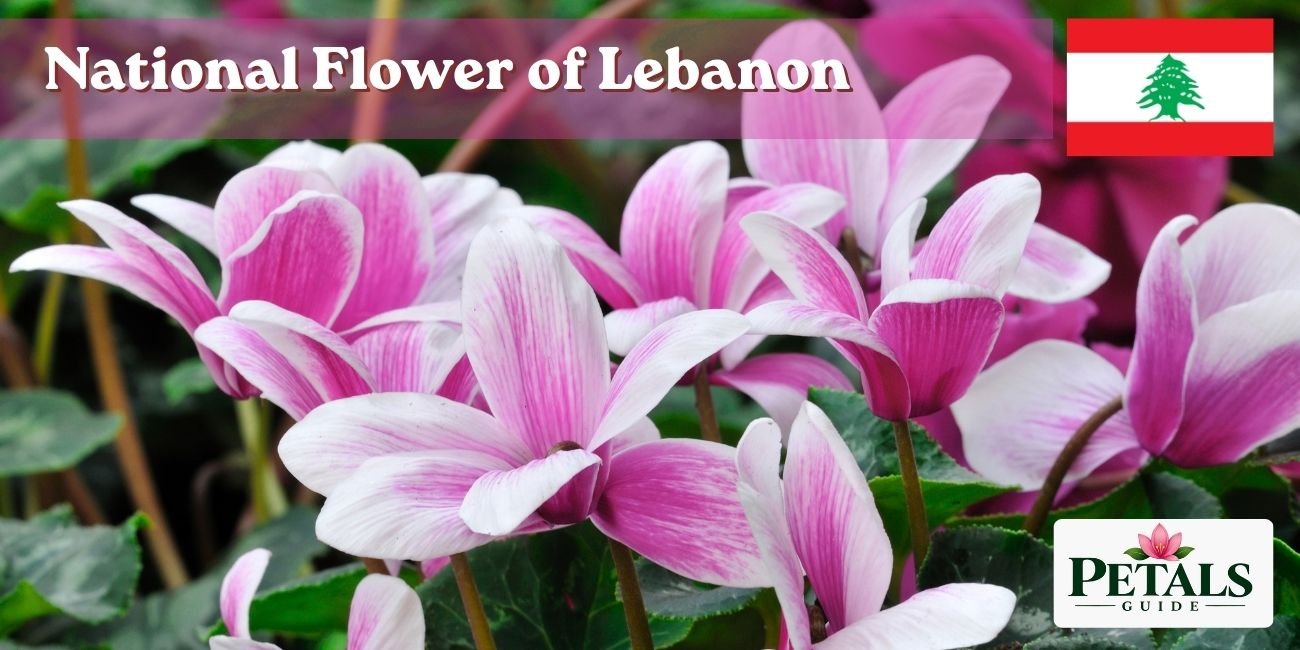
Lebanon is famous for its cedar trees, beautiful mountains, and diverse plant life. One of its notable wildflowers is the Lebanon cyclamen (Cyclamen libanoticum), which is native to the region. Its delicate blooms and unique leaves highlight its role in Lebanon’s natural history.
While many consider the Lebanon cyclamen as the national flower of Lebanon, the country has no officially recognized national flower. Understanding this native plant helps clarify its connection to Lebanon and emphasizes the importance of conserving its natural habitats.
What is the Lebanon Cyclamen, the National Flower of Lebanon?
The Lebanon cyclamen (Cyclamen libanoticum) is a flowering plant that grows naturally in Lebanon. It is part of the primrose family, Primulaceae, and thrives in the mountainous areas of the country. Botanists appreciate it due to its limited natural growth.
Although it is often referred to as Lebanon’s national flower online, there is no formal recognition for that title. The Lebanese American University states that Lebanon does not have a national flower. Thus, the Lebanon cyclamen is better viewed as a native flower closely linked to Lebanon, rather than an official national symbol. Its unique growth area and appearance make it a significant topic when looking into Lebanese flowers and the country’s botanical heritage.
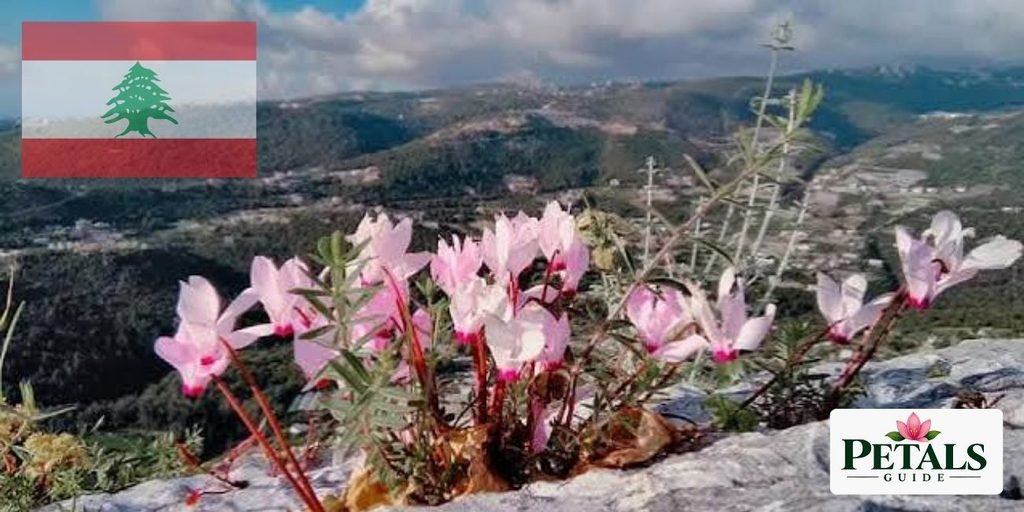
About Lebanon
Lebanon is a small nation situated in the Middle East, positioned on the eastern side of the Mediterranean Sea, bordered by Syria to the north and east. Its capital, Beirut, serves as an important hub for culture, commerce, and tourism. Despite its compact size and high population density, Lebanon boasts a diverse landscape that features coastal plains, rich valleys, and tall mountain ranges. The country’s extensive history and cultural variety have influenced its customs, architecture, cuisine, and connection to nature.
One of Lebanon’s most notable geographical landmarks is Jabal Lubnan, or Mount Lebanon, which is a mountain range that rises steeply above the Mediterranean shoreline. Geographically, this range is also referred to as “al-Jibal al-Gharbiya”, or the Western Mountains. These mountains experience seasonal rains and are home to forests, woodlands, and many native plant species. Their varying heights and local climates contribute to the botanical richness found in Lebanon.
To the east of Mount Lebanon lies the Beqaa Valley, a fertile plateau located between the Mount Lebanon and Anti-Lebanon mountain ranges. The Litani River, Lebanon’s longest river, flows through this valley before heading west toward the Mediterranean. The area is vital for agriculture, while the nearby mountains offer various habitats for local plants and animals. These contrasting landscapes help explain the wide range of wildflowers found in Lebanon, despite its small area.
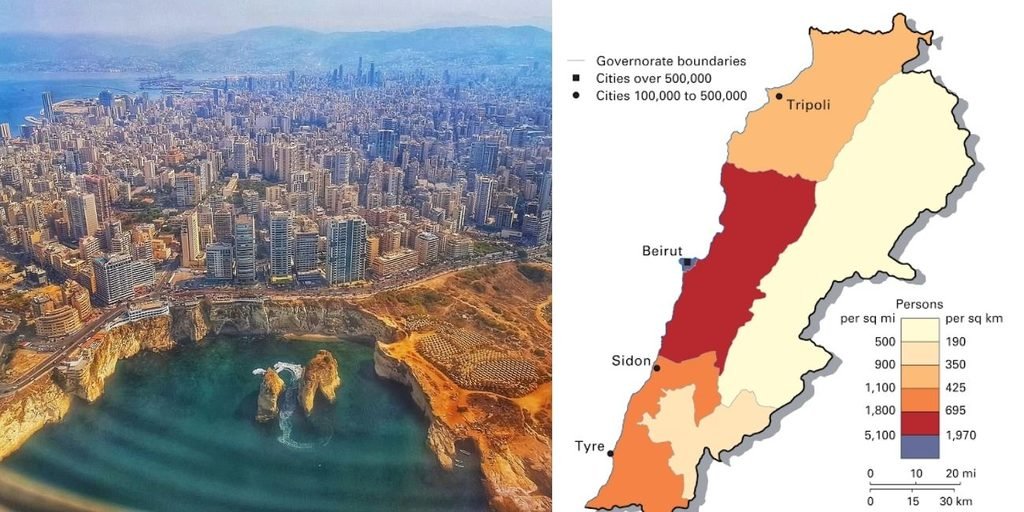
Lebanon’s varied natural settings include cedar forests, oak woodlands, Mediterranean flora, and mountain meadows. These environments host a multitude of plant and animal species, though urban growth, habitat degradation, and climate change increasingly threaten local biodiversity. One notable native plant is the Lebanon cyclamen (Cyclamen libanoticum), a unique wildflower linked to the country’s mountainous regions. Often referred to as Lebanon’s National Flower, the nation does not have an officially recognized national flower. Understanding Lebanon’s geography and plant diversity enriches the appreciation of this flower and its role in the country’s natural legacy.
What Do Lebanon Cyclamen Flowers Look Like?
The Lebanon cyclamen (Cyclamen libanoticum) is a small flowering plant that produces lovely pink and white flowers. Each flower has five petals that bend backward, giving them a special shape. The petals can be light pink or nearly white, often featuring deeper pink or magenta markings at their base. Their twisted shape and open faces allow for easy viewing of the petals from the front.
The leaves of the Lebanon cyclamen are round or heart-shaped, with gently wavy edges and pleasing patterns in shades of green and silver. They grow close to the soil and create a leafy backdrop for the flowers. The blooms rise on thin stems that might have a reddish-brown color, making a nice contrast with the lighter petals and green leaves. These traits highlight the Lebanon cyclamen as an important part of the country’s native flora.
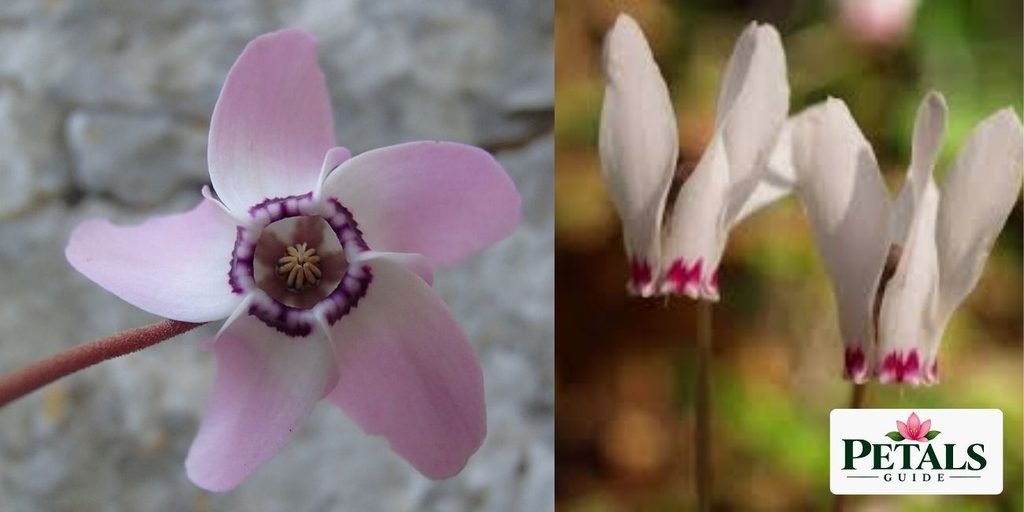
Often referred to as the National Flower of Lebanon, the Lebanon cyclamen is valued for its unique petal shape, contrasting colors, and patterned leaves. However, Lebanon does not have an officially recognized national flower, so it is better described as a wildflower that represents the region.
Where Do Lebanon Cyclamen Grow?
The Lebanon cyclamen (Cyclamen libanoticum), recognized as the National Flower of Lebanon, has a highly restricted natural habitat. It thrives in and around Jabal Moussa, situated in the Nahr Ibrahim Valley, northeast of Beirut. Unlike more widespread species found across multiple countries, this particular cyclamen is endemic to Lebanon, meaning it is naturally found nowhere else. As a result, the specific location and health of its native habitat are of utmost importance.
This plant prefers deciduous and evergreen oak forests, especially on limestone hillsides at elevations ranging from approximately 600 to 950 meters. It tends to inhabit shaded, moist areas, particularly on north and northwest slopes where the combination of surrounding vegetation, moss, and decomposing leaves creates optimal conditions for growth. These forest ecosystems provide the necessary blend of shade and moisture that the Lebanon cyclamen requires for survival in its natural setting.
While Lebanon’s mountainous regions are home to various native flora, the Lebanon cyclamen occupies a considerably narrower ecological niche. Threats from urban development, road construction, quarrying, and other industrial activities can endanger its natural surroundings. Thus, safeguarding its woodland habitat is essential for the conservation of this unique native species.
When Does the Lebanon Cyclamen Bloom?
The Lebanon cyclamen typically flowers in late winter and early spring, occurring from late February through early April within its native region. This blooming season coincides with the cooler and wetter months in Lebanon, providing the ideal conditions for its development. However, the precise timing can fluctuate based on local climate and environmental factors in its mountainous home.
During this flowering phase, the blooms rise above the surrounding foliage, adding vibrant color to the forest ground. Due to its brief flowering duration, the late winter and early spring months are the prime time for observing this rare native species. Among Lebanese flowers, the Lebanon cyclamen is of particular interest due to its restricted natural habitat and unique seasonal growth patterns.
What Does the Lebanon Cyclamen Symbolize?
The Lebanon cyclamen (Cyclamen libanoticum) serves as an emblem of Lebanon’s unique botanical heritage. This rare wildflower thrives in a confined region of the mountains, making it significant for the country’s botanical diversity. While some online references link the flower to concepts of beauty, hope, and resilience, there is a lack of reliable documentation supporting these associations as authentic Lebanese traditions.
Instead of being a widely recognized cultural or historical symbol, the cyclamen’s importance lies in its distinct role within Lebanon’s native flora. Its limited natural distribution underscores the necessity of safeguarding the nation’s wildflowers and their ecosystems. For those interested in the National Flower of Lebanon, the plant provides a valuable opportunity to honor the country’s natural legacy while avoiding unfounded symbolic claims.
What Is the Cultural Importance of Lebanon’s Cyclamen Flowers?
The Lebanon cyclamen holds considerable importance as a unique element of Lebanon’s rich plant diversity. Its limited natural habitat has drawn the interest of botanists and conservation organizations, notably within the Jabal Moussa Biosphere Reserve. Yet, there is scarce evidence to suggest that this flower has a deep-rooted presence in Lebanese folklore, religious practices, or traditional customs. Its cultural relevance is more clearly understood through its ties to Lebanon’s natural heritage rather than through speculative symbolic interpretations.
Conservation initiatives have played a role in raising awareness of this flower among the Lebanese populace. A project highlighted by BirdLife International in 2020 showcased a group of women researchers from Friends of Nature who examined wild populations of Cyclamen libanoticum. They engaged local volunteers, university students, graduates, and scouts in fieldwork aimed at deepening knowledge of Lebanon’s native flora and promoting the safeguarding of plants with limited natural ranges. These initiatives link Lebanese flowers with education in botany, community involvement, and the conservation of biodiversity.
Moreover, the broader efforts at Jabal Moussa intertwine the preservation of nature with cultural heritage and rural livelihoods. The biosphere reserve advocates for environmental education, scientific inquiry, and community-driven activities that enhance understanding of the link between Lebanon’s landscapes and local heritage. For those interested in the National Flower of Lebanon, the cyclamen exemplifies how a native plant can attain significance through academic research and conservation efforts, even in the absence of a well-established symbolic tradition.
What Are the Other National Symbols of Lebanon?
Lebanon boasts several symbols that capture its rich history, unique identity, and cultural legacy. Among the most prominent Lebanese symbols are the cedar tree, the national flag, and the national anthem. These elements signify the nation’s connection to its mountainous terrain, its pursuit of independence, and its collective identity.
The Cedar of Lebanon
The cedar of Lebanon (Cedrus libani) stands as the country’s most distinguished national symbol. This evergreen tree thrives naturally in various regions of the eastern Mediterranean, particularly in Lebanon’s mountainous areas. Its deep-rooted history in this landscape intertwines it with the heritage of the nation. The cedar embodies resilience and a sense of continuity within Lebanese identity, a significance highlighted by its central placement on the national flag.
The National Flag of Lebanon
Lebanon’s national flag features three horizontal stripes: red at the top and bottom, with a white stripe in the center. Prominently displayed within the white band is a green cedar tree, which touches both red edges. This design is codified in Article 5 of the Lebanese Constitution, granting the flag official status as a national symbol.
The cedar tree serves as the flag’s focal point, linking the national emblem to Lebanon’s mountainous scenery. The colors red and white also play significant roles in the country’s national palette. While red is often associated with sacrifice and white signifies peace or the snow-capped mountains, these interpretations should not overshadow the flag’s constitutionally sanctioned layout.
The National Anthem of Lebanon
Lebanon’s national anthem, “Kulluna lil-Watan,” translates to “All of Us, for the Nation” or “All of Us, for Our Country.” The lyrics were penned by Rashid Nakhle, with music composed by Wadih Sabra. This anthem was officially adopted in 1927 following a national competition.
Its lyrics convey a deep commitment to the nation, highlighting its flag, its people, and its landscapes. The verses reference Lebanon’s mountains, valleys, and cedars, reinforcing the connection between the anthem and the natural features integral to the country’s identity. It is performed at official ceremonies and significant national events.
What Is the National Bird of Lebanon?
To date, Lebanon does not have an officially recognized national bird. The country is home to numerous bird species and serves as a transit point for many during their seasonal migrations, reflecting its strategic location along a key Mediterranean migratory path. However, just because a bird is present in Lebanon’s wildlife or enjoys popularity in local culture does not automatically qualify it as a national symbol.
For those inquiring about the national bird of Lebanon or Lebanon national bird, it’s crucial to differentiate between birds that inhabit or migrate through the country and those that have been formally recognized as national symbols.
When examining Lebanon symbols, it’s vital to distinguish between officially recognized emblems and those that carry cultural significance. The cedar tree and the flag enjoy constitutional acknowledgment, whereas other symbols may derive their value from historical context, tradition, or public recognition. Similarly, the Lebanon cyclamen, a flower native to the region, is tied to the nation’s botanical heritage but has not been officially designated as the national flower.
Is the Lebanon Cyclamen Endangered?
The Lebanon cyclamen (Cyclamen libanoticum) is recognized as Endangered (EN) by the Royal Botanic Gardens, Kew. Its restricted natural habitat makes the conservation of this native plant vital for maintaining Lebanon’s botanical diversity.
A Restricted Natural Habitat: The Lebanon cyclamen exists naturally within a limited zone surrounding Jabal Moussa and the Nahr Ibrahim Valley. Any harm to these areas poses a significant threat to its wild populations due to their small geographical range.
Loss of Habitat: Historical botanical records indicate that the clearing of woodlands over centuries may have played a role in the species’ localized distribution. Protecting the remaining natural habitats is essential for its ongoing survival.
Conservation Initiatives: The Jabal Moussa region plays a crucial role in safeguarding native flora and their ecosystems. Ongoing conservation measures, botanical studies, and habitat protection can enhance the prospects for the Lebanon cyclamen alongside other Lebanese flowers.
Limited Population Information: Although sources indicate the species’ limited range and endangered status, there is no recent verified count of individuals in their natural environment. It is advisable to refrain from stating a population number without dependable survey data.
Importance of Protection: The conservation of Lebanon cyclamen,referred to as the National Flower of Lebanon, is significant because it is a native species with a confined natural habitat. Protecting it not only helps maintain Lebanon’s botanical legacy but also emphasizes the need to conserve its indigenous plants.
Lebanon Cyclamen and Other Lebanon Flowers
The Lebanon cyclamen is a distinctive wildflower found in Lebanon’s mountainous regions. Its limited distribution and endangered status make it an important part of the country’s native plant diversity.
Lebanese oregano (Origanum libanoticum) is another native plant, a fragrant subshrub from the mint family. Unlike the Lebanon cyclamen, which grows from an underground tuber, it has a different growth form and belongs to a separate plant family.
The Persian cyclamen (Cyclamen persicum) is more closely related to the Lebanon cyclamen. It grows naturally in Lebanon and other parts of the eastern Mediterranean and North Africa, giving it a broader distribution than Cyclamen libanoticum.
These examples show the diversity of Lebanese flowers, including species with restricted ranges and others found in neighboring regions. Although the Lebanon cyclamen is sometimes called the National Flower of Lebanon, the country has no officially designated national flower. Its botanical significance comes from its distinctive characteristics, limited range, and conservation status.
How to Cultivate the Lebanon Cyclamen in Your Garden
The Lebanon cyclamen thrives best in a shaded and protected area, or in a cool greenhouse setting. It enjoys bright, filtered sunlight and needs well-drained soil, as well as some shelter from harsh direct rays. While it can be grown outdoors in the right climates, using containers gives you more control over its care.
To create a suitable growing medium, mix loam with leaf mold and grit to boost drainage. Water it moderately during its growing phase, ensuring the soil stays lightly moist but not soggy. As the leaves start to fade after blooming, cut back on watering. In the dormancy stage, keep the soil slightly damp, avoiding complete dryness.
Growing the Lebanon cyclamen can be tricky as it doesn’t tolerate too much sunlight or improper watering. Providing a sheltered spot with good airflow and steady moisture can help it grow well. It’s better to obtain nursery-grown plants or those grown from seeds rather than digging up tubers from the wild.
Conclusion
The Lebanon cyclamen (Cyclamen libanoticum) reflects the diverse natural heritage of Lebanon. While commonly linked to the National Flower of Lebanon, the nation has yet to declare an official national flower. Safeguarding this rare wildflower alongside other native plants is essential for maintaining Lebanon’s plant diversity and the unique natural scenery of the country.
FAQs
What is the national symbol of Lebanon?
The cedar of Lebanon (Cedrus libani) is the country’s best-known national symbol. It appears on the national flag and represents Lebanon’s natural heritage.
What is Lebanon’s native flower?
The Lebanon cyclamen (Cyclamen libanoticum) is a wildflower native to Lebanon. It is sometimes associated with the country’s national identity, but Lebanon has no officially designated national flower.
What is the flower of Lebanon mentioned in the Bible?
The Bible mentions the cedar of Lebanon, which is a tree, not a flower. There is no specific flower officially identified as Lebanon’s biblical flower.
What is the animal symbol of Lebanon?
Lebanon has no officially designated national animal. The striped hyena is sometimes described as a national animal, but this designation is not officially confirmed.
What plant is the symbol of Lebanon?
The cedar tree (Cedrus libani) is Lebanon’s national plant symbol. It appears in the center of the country’s flag and is closely linked to its history and identity.
What do Lebanese flowers symbolize?
The meanings of Lebanese flowers vary by species and cultural context. Flowers may express love, remembrance, or beauty, but there is no single symbolic meaning shared by all flowers in Lebanon.