
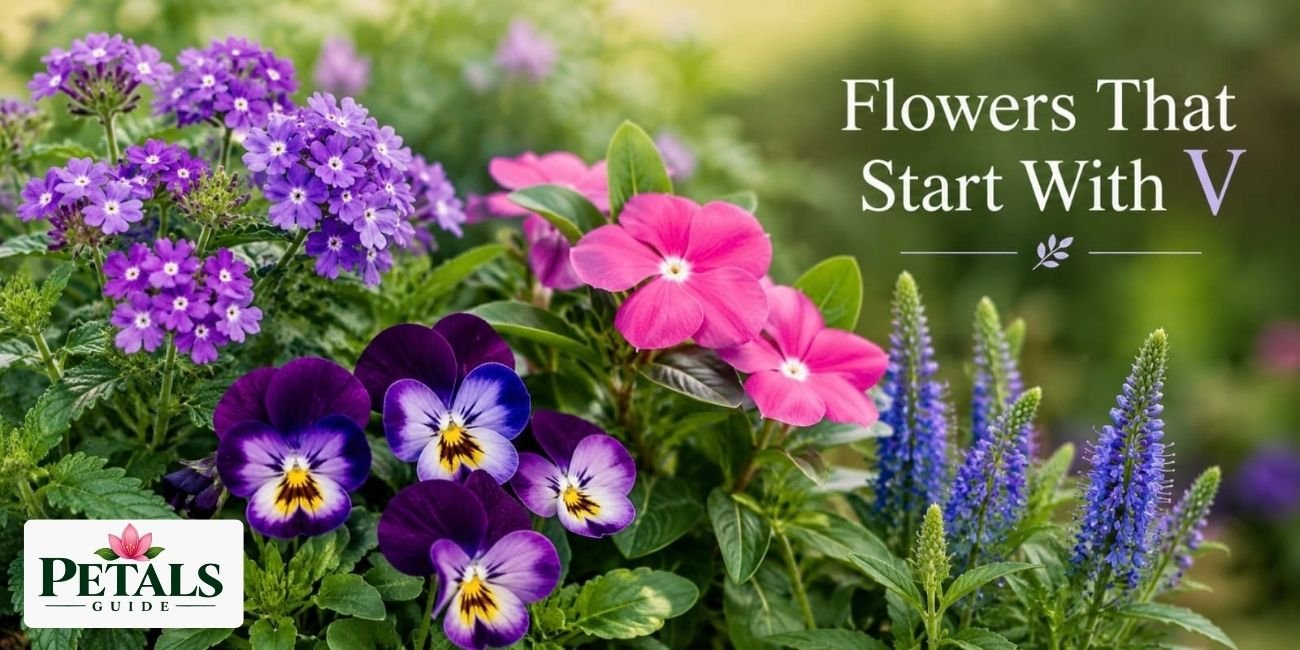
Have you ever thought about how many flowers begin with the letter “V”? You might be surprised to learn that there are quite a few, each with its own unique appeal. This article highlights the top 24 flowers that start with V, helping you discover new types and how they can brighten up your space. By the end, you’ll have some great ideas for flowers to plant or simply admire.
List of Flowers That Start With V
Here is the list of flowers that start with V.
- 1. Verbena
- 2. Viburnum
- 3. Violets
- 4. Valerian
- 5. Vanilla Orchid
- 6. Vanda Orchid
- 7. Vireya Rhododendron
- 8. Virginia Stock
- 9. Vasevine
- 10. Vallota Lily
- 11. Venus’s Looking-Glass
- 12. Verbascum
- 13. Veronica
- 14. Veronicastrum
- 15. Vervain
- 16. Vetch
- 17. Vinca
- 18. Virginia Bluebells/Virginia Cowslip
- 19. Virginia Spiderwort
- 20. Virgin’s Bower
- 21. Viper’s Bugloss
- 22. Vitex
- 23. Vriesea
- 24 Velvetleaf
Verbena
Scientific Name: Verbena spp.
Flower Colors: Pink, red, white, and blue
Blooming Season: Summer to early fall
Native Region: Americas and parts of Europe
Verbena is a lively plant that showcases clusters of small, tubular flowers, appearing in various cheerful colors like purple, pink, and white. Each flower is shaped like a tiny trumpet, adding charm to gardens. The leaves are usually pointed and can be either smooth or slightly serrated, growing in a way that forms a lush green backdrop when the plant is in full bloom.
Typically, Verbena grows to be about 12 to 36 inches tall, thriving in sunny spots with well-drained soil. It prefers a moderate amount of water but is quite drought-tolerant once established. This plant is an excellent choice for flower beds, borders, or containers, making it versatile for many garden designs. Additionally, Verbena serves as a magnet for butterflies and bees, providing food for these vital pollinators and supporting biodiversity in your local area.
Interesting Fact: Some Verbena species have been used in traditional medicine for their calming properties, often referred to as “herb of grace.”
Viburnum
Scientific Name: Viburnum spp.
Flower Colors: White, pink, red, purple
Blooming Season: Spring to early summer
Native Region: Worldwide, primarily in North America and Asia
Viburnum shrubs produce distinctive flower clusters that can take on different forms, such as flat-topped or rounded. These clusters not only add visual interest but also attract a variety of pollinators, including bees and butterflies. The leaves of Viburnum are often glossy and can vary in shape depending on the species. Many have a rich green color in summer and may even change to vibrant hues in the fall, enhancing the seasonal landscape. Depending on the species, *Viburnum* can grow between 3 to 15 feet tall, making them versatile for both small and large gardens.
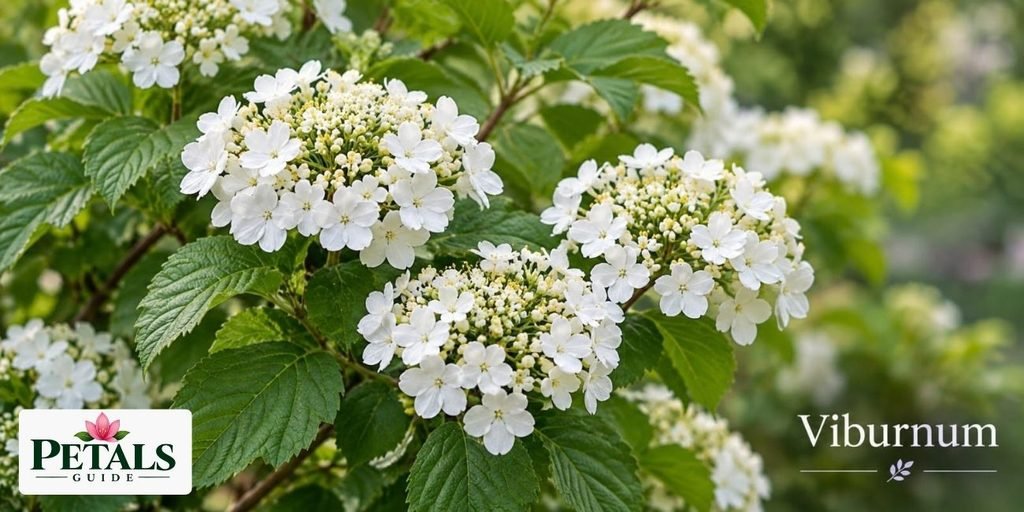
In terms of sunlight and soil conditions, Viburnum thrives best in well-drained, rich soil, with a preference for full sun to partial shade. They usually require regular watering, especially during dry spells. These shrubs are commonly used in landscaping for hedges, borders, or as standalone specimens due to their varying heights and forms. Many Viburnum species also produce clusters of berries, which are not only visually appealing but serve as an essential food source for birds and other wildlife, especially in the fall and winter months.
Interesting fact: Viburnum species known as Viburnum opulus (European cranberrybush) has berries, while not edible for humans, are highly valued by birds and are often used to create wildlife-friendly gardens.
Violets
Scientific Name: Viola spp.
Flower Colors: Purple, blue, yellow, white
Blooming Season: Spring to early summer
Native Region: Worldwide, especially in temperate climates
Violets are charming little plants that often steal the show in spring gardens. They display delicate flowers with petals that can be purple, blue, yellow, or white, typically arranged in five distinct petals. The leaves are heart-shaped and form a lush green carpet that complements the vibrant blooms. When they’re in full bloom, violets create a cheerful display that can brighten up any garden space.
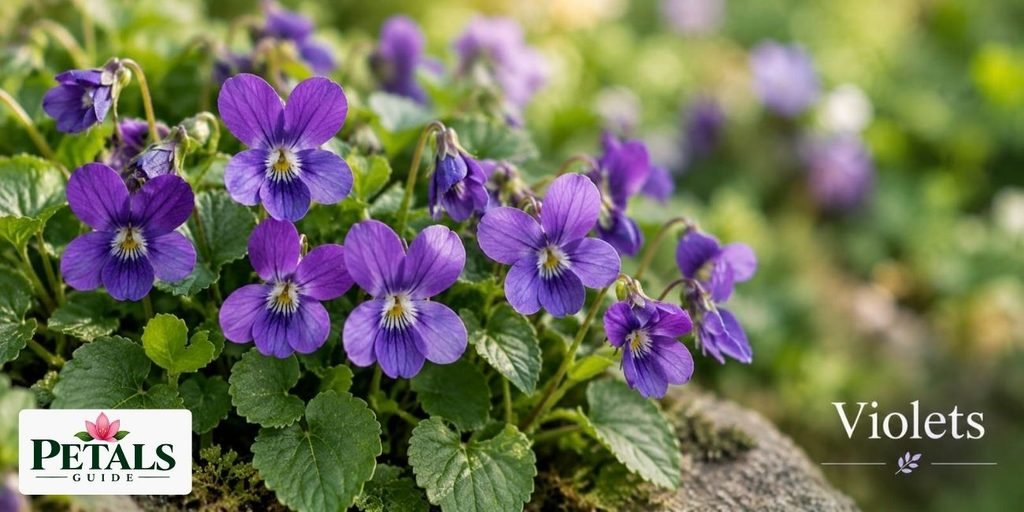
Most violet plants reach a height of around 6 to 12 inches and thrive in partial to full shade. They do well in rich, well-drained soil and prefer to be watered regularly, especially during dry spells. These plants often find a home in flower beds, borders, or even in containers on patios. Violets are not just lovely to look at; they also attract butterflies and other pollinators, making them a valuable addition to any garden.
Interesting Fact: Some species of violets can produce seeds without pollination, a unique process called apomixis, allowing them to thrive even in less-than-ideal conditions.
Valerians
Scientific Name: Valeriana spp.
Flower Colors: White, pink, purple
Blooming Season: Late spring to early summer
Native Region: Europe, Asia, North America
Valerian plants typically feature erect stems that can grow up to four feet tall, making them noticeable in any garden. The clustered flowers sit atop long, slender stalks and provide a delightful display. Its leaves are pinnately compound and grow in a rosette shape at the base, contributing to a lush green look that contrasts well with the delicate flowers.
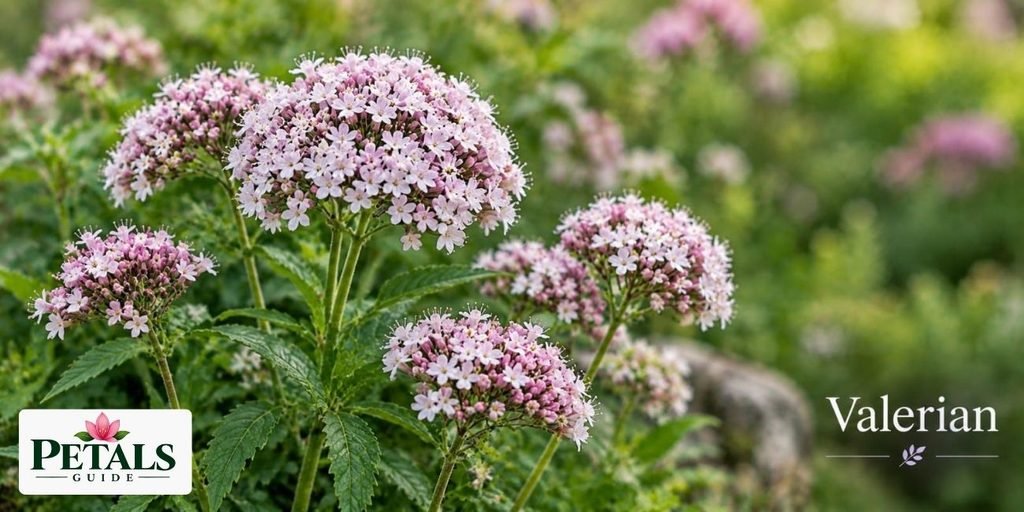
For optimal growth, Valerian thrives in well-drained soil rich in organic matter and prefers full sun to partial shade. Regular watering is essential, especially during dry spells, as the plant enjoys moisture but doesn’t fare well in waterlogged conditions. This hardy perennial attracts various pollinators, including bees and butterflies, making it a great addition to herb or flower gardens where enhancing biodiversity is desired.
Interesting Fact: The roots of Valeriana officinalis, a common species, are traditionally used for their calming properties, often found in herbal remedies for sleep and anxiety.
Vanilla Orchid
Scientific Name: Vanilla planifolia
Flower Colors: White, yellow, green
Blooming Season: Spring to early summer
Native Region: Central America and Mexico
The flower of the vanilla orchid is tubular, measuring about 3 to 5 inches long, with petals that can be white, yellow, or even greenish. Its unique shape allows for efficient pollination by specific insects, particularly the tiny orchid bee. Each bloom has a delicate fragrance that hints at the sweet vanilla flavor we love, making it a favorite among gardeners and chefs alike.
Vanilla orchids grow as climbing vines, often reaching heights of 30 feet or more in their natural habitat. They prefer warm, humid environments, which helps promote their lush growth. The pods that develop after pollination are the source of the vanilla flavor used in everything from ice cream to baked goods.
Interesting fact: While the flowers are stunning in their own right, they often bloom just once for a single day, making the fleeting moment all the more special.
Vanda Orchid
Scientific Name: Vanda spp.
Flower Colors: Blue, purple, yellow, white, and red
Blooming Season: Year-round, with peaks in spring and summer
Native Region: Southeast Asia and tropical regions
The flowers of the Vanda Orchid are known for their unique shape, which can be wide and flat with a slight ruffled edge. They can range in size from 3 to 5 inches across and are often adorned with striking patterns and color combinations. Many species present textured petals that can appear glossy or velvety, with some displaying intricate spots or stripes that offer a burst of visual interest. These distinctive features make them stand out in any garden or indoor setting.
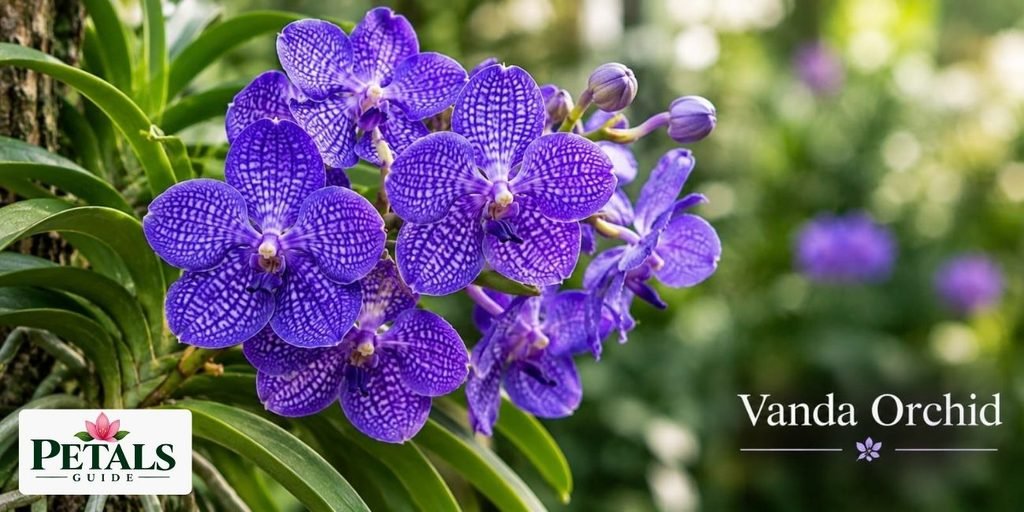
Vanda orchids thrive in bright, indirect sunlight and prefer humid environments, making them ideal for tropical settings. They often develop aerial roots that help them absorb moisture and nutrients from the air, allowing them to grow successfully in the wild. Regular watering and well-draining potting media are crucial to their health, as they do not like to sit in water. Some species, like Vanda teres, are even known for their pleasant fragrance, adding another delightful aspect to their charm.
Interesting Fact: The Vanda coerulea, or blue vanda, is particularly prized for its vivid blue flowers and is often referred to as the “blue orchid.”
Vireya Rhododendrons
Scientific Name: Rhododendron, subgenus, Vireya
Flower Colors: Ranges from bright orange and red to soft pink and white
Blooming Season: Primarily from spring to early summer
Native Region: Tropical regions of Southeast Asia, especially Indonesia and Malaysia
Vireya Rhododendrons are known for their unusual, funnel-shaped flowers that grow in clusters, often displaying vibrant colors like fiery reds and warm oranges. Their leaves are usually narrow and glossy, making them a striking contrast to the bright blooms.
These plants thrive in humid conditions, often requiring careful attention to their watering needs and light exposure to encourage the most vibrant flowering. The sweet, citrus-like fragrance of the blooms adds an extra layer of charm, attracting various pollinators looking for a quick sip.
Interesting fact: One unique aspect of some Vireya species is their epiphytic nature, such as Rhododendron javanicum, which can grow on other trees rather than in soil. This adaptation allows them to capture moisture and nutrients from the air in their native rainforest homes, making them well-suited for their tropical surroundings.
Virginia Stock
Scientific Name: Malcolmia maritima
Flower Colors: Pink, purple, white, and lavender
Blooming Season: Spring to early summer
Native Region: Coastal areas of Europe and North Africa
Virginia Stock, known for its delightful clusters of small flowers, draws attention with a sweet fragrance that fills the air. The blooms, shaped like little crosses, add a lively touch to gardens and landscapes. They flourish in various shades, from soft pinks to vibrant purples, creating a mix that appeals to anyone passing by. This plant grows low to the ground, typically reaching heights of 12 to 18 inches, making it suitable for borders or as ground cover in sunny spots.
The narrow, green leaves of Virginia Stock provide a lovely backdrop to its colorful flowers and contrast nicely with their delicate petals. These plants thrive in well-drained soil and prefer full sun, making them perfect for rock gardens or along paths. Their ability to self-seed means they can keep coming back year after year, adding charm to your garden without much effort on your part.
Interesting Fact: Virginia Stock is known for attracting pollinators like bees and butterflies, making it a great choice for promoting biodiversity in your garden.
Vesvine
Scientific Name: Clematis viorna
Flower Colors: Purple, lavender, and white
Blooming Season: Late spring to early summer
Native Region: Eastern U.S. and Canada
Vasevine is a unique climbing plant known for its stunning bell-shaped flowers, which often dangle gracefully from the vine. This plant is not only beautiful but also attracts various pollinators, including bees and butterflies, making it a favorite among gardeners who want to boost local wildlife. Its ability to thrive in a range of soil types makes it an adaptable choice for many gardens.
Being one of the flowers that start with V, Vesvine stands out due to its ability to climb up fences, trellises, and trees, creating a lush green space. With its striking blooms and vigorous growth, it’s a perfect addition for anyone looking to add a touch of elegance to their garden while supporting the ecosystem.
Interesting Fact: Vesvine gets its name from its vase-like flowers, which are often compared to hanging lanterns in the wild.
Vallota Lily
Scientific Name: Cyrtanthus elatus
Flower Colors: Red, orange, yellow
Blooming Season: Late spring to early summer
Native Region: South Africa
The Vallota Lily, with its vibrant trumpet-shaped blooms, is a true eye-catcher in any garden. These flowers can grow up to 2 feet tall, standing proudly with their thick, glossy leaves. A single flower stalk can carry multiple blossoms, creating a stunning visual display that attracts pollinators and curious onlookers alike.
This beautiful flower that starts with V thrive in well-drained soil and prefer bright sunlight. Their cheerful colors make them excellent choices for borders or in containers, adding a splash of warmth to outdoor spaces. Whether lining a pathway or adding flair to a patio, Cyrtanthus elatus is sure to bring joy to garden enthusiasts.
Interesting Fact: Vallota Lilies are often called “fire lilies” due to their bright, flame-like flowers, making them a standout choice for gardeners seeking bold color.
Venus’s Looking-Glass
Scientific Name: Legousia speculum-veneris
Flower Colors: Blue, Pink, White
Blooming Season: Late spring to early summer
Native Region: Europe and Western Asia
Venus’s Looking-Glass is a delightful little flower that captivates with its unique shape and vibrant colors. The blooms have a bell-like appearance, resembling tiny glass ornaments that catch the light beautifully. They attract various pollinators, especially bees, making them a popular choice for gardeners who want to support local wildlife.
These charming flowers starting with V are often found in meadows and grassy areas, thriving in well-drained soil and full sun. Their delicate beauty makes them great for wildflower gardens or borders, adding a splash of color that brightens any landscape.
Interesting Fact: The name “Looking-Glass” comes from the flower’s reflective, shiny surface that creates a mesmerising effect in the sunlight.
Verbascum
Scientific Name: Verbascum spp.
Flower Colors: Yellow, white, purple, and pink
Blooming Season: Late spring to early fall
Native Region: Europe, Asia, and North America
Verbascum plants are known for their tall, elegant spikes adorned with vibrant flowers that can create striking visual displays in gardens. These flowers attract various pollinators such as bees and butterflies, playing a vital role in maintaining local ecosystems. With their diverse color palette, Verbascum adds a touch of brightness to landscapes, making them a delightful addition to flower beds and borders.
Among the notable species is Verbascum thapsus, or common mullein, recognized for its impressive height and stately form. This plant’s yellow flowers, which bloom in summer, make it one of the most impressive flowers that start with the letter v. Additionally, its leaves have been historically used for various medicinal purposes, showcasing the dual beauty and functional qualities of Verbascum.
Interesting Fact: The ancient Greeks used the flowers of Verbascum spp. in a dye for their wool, showing the plant’s versatility in both nature and culture.
Veronica
Scientific Name: Veronica spp.
Flower Colors: Blue, purple, pink, white
Blooming Season: Spring to summer
Native Region: Worldwide, mainly in the Northern Hemisphere
Veronica flowers, commonly known as speedwell, thrive in various habitats, from gardens to wild meadows. These hardy plants are often low-growing and can spread quickly, making them great for ground cover in both sunny and partially shaded areas. Different species offer a range of vibrant colors and forms, appealing to gardeners looking for both beauty and versatility.
One unique aspect of Veronica is its connection to bees and butterflies. Many species attract these pollinators, playing a vital role in supporting local ecosystems. Additionally, some types, like “Veronica” persica, are often spotted in disturbed areas, showcasing their resilience and adaptability to different environments.
Interesting Fact: The flower petals of “Veronica chamaedrys”, also known as germander speedwell, have been used traditionally in herbal medicine for their potential health benefits.
Veronicastrum
Scientific Name: Veronicastrum spp.
Flower Colors: White, pink, purple
Blooming Season: Summer to early fall
Native Region: North America and parts of Asia
The flowers of Veronicastrum are known for their tall, spiky formations that create a striking vertical accent in any garden. Each stem features clusters of small flowers that can attract butterflies and bees, making these plants a lively addition to any landscape. Their unusual shape allows them to stand out among other blooms, drawing the eyes of admirers eager to discover their unique beauty.
Veronicastrum plants thrive in moist, well-drained soils and often prefer sunny spots, making them an excellent choice for wildflower gardens or naturalized areas. Whether you choose the vibrant purple or the serene white variety, these flowers offer a charming touch to your outdoor space while providing essential nectar for pollinators during their blooming season.
Interesting Fact: The species “Veronicastrum virginicum”, commonly known as Culver’s Root, is popular for its unique habit of self-supporting its stems, which can reach up to four feet tall without the need for staking.
Vervain
Scientific Name: Verbena spp.
Flower Colors: Purple, blue, pink, white, and red
Blooming Season: Spring to fall
Native Region: Americas, Europe, and Asia
Vervain plants are known for their clusters of vibrant flowers that attract butterflies and bees, making them a beautiful addition to gardens and landscapes. Their blossoms range from delicate pastels to bold, eye-catching hues, creating a stunning display from spring until fall. These flowers thrive in sunny spots and well-drained soil, often blooming profusely, which adds color to any space throughout the warmer months.
Beyond their beauty, vervains are historically recognized for their medicinal properties. Various cultures have used them for their calming effects and to alleviate ailments. The lush green foliage complements the flowers beautifully, creating a striking visual contrast, and enhancing the overall charm of any garden setting.
Interesting Fact: Some species of vervain, like *Verbena officinalis*, were even considered sacred in ancient times and were often used in rituals and healing practices.
Vetch
Scientific Name: Vicia spp.
Flower Colors: Often purple, pink, white, or blue
Blooming Season: Typically spring to early summer
Native Region: Widespread across Europe, Asia, and North America
Vetch, a term that encompasses several flowering plants in the Vicia genus, is commonly seen in gardens and wildflower meadows. These plants are known for their delicate, pea-like flowers and are often used in agriculture to enhance soil quality. Their deep roots help fix nitrogen, making them beneficial for crops that follow.
Many species of vetch can thrive in various conditions, from rich soils to dry areas. One popular variety, the common vetch (Vicia sativa), is often cultivated for livestock feed. Vetch flowers are not only pretty but also attract pollinators, playing a crucial role in maintaining balanced ecosystems.
Interesting Fact: Some vetch species, like the hairy vetch (Vicia villosa), are so hardy that they can grow in poor soil conditions, making them excellent cover crops.
Vinca
Scientific Name: Vinca spp.
Flower Colors: Blue, purple, pink, white
Blooming Season: Spring to fall
Native Region: Europe, Asia, North Africa
Vinca, also known as periwinkle, is a charming genus that adds color and beauty to gardens worldwide. These hardy plants are often appreciated for their ability to thrive in a variety of conditions, making them a favorite among gardeners. They can be found trailing along garden paths or creeping through flower beds, creating stunning ground cover.
The glossy green leaves of Vinca provide a nice backdrop for its vibrant flowers, which attract pollinators like bees and butterflies. This versatility allows Vinca to adapt to both sunny and shady spots, enhancing outdoor spaces with ease. Plus, they are low-maintenance, making them suitable for busy gardeners or beginners.
Interesting Fact: Vinca minor has been used in traditional medicine to treat various ailments, showcasing not only its beauty but also its historical significance in herbal remedies.
Virginia Bluebells
Scientific Name: Mertensia virginica
Flower Colors: Blue, Pink
Blooming Season: Spring
Native Region: Eastern North America
Virginia Bluebells are a beautiful sight in spring when they blanket the forest floors with their vibrant blue flowers. These delicate blooms grow on sturdy stems that can reach about 12 to 24 inches tall. Virginia Bluebells produce clusters of bell-shaped flowers that open pink and gradually turn blue as they mature
Aside from their beauty, Virginia Bluebells play a crucial role in their ecosystems. They attract various pollinators, especially bees, which rely on them for food. The flowers gradually fade to pink as they age, adding a unique touch to their life cycle.
Interesting Fact: The flowers can change from pink to blue because their floral pigments shift as the blooms mature.
Virginia Spiderwort
Scientific Name: Tradescantia virginiana
Flower Colors: Blue, purple, and white
Blooming Season: Late spring to early summer
Native Region: Eastern United States
Virginia spiderwort is a unique perennial known for its striking, three-petaled flowers that open in the morning and close by mid-afternoon. This flower thrives in moist, open areas and often forms lush colonies, making it a lovely addition to gardens.
The grass-like leaves add a vibrant green backdrop, enhancing the beauty of its colorful blooms.It can adapt to various soil types and light conditions. This adaptability allows it to flourish in both sunny and partially shaded spots, proving it to be a versatile choice for gardeners.
Interesting Fact: The sap of Virginia spiderwort can cause skin irritation for some people, so it’s wise to handle it with care!
Virgin’s Bower
Scientific Name: Clematis virginiana Flower Colors: White to cream
Blooming Season: Late summer to fall
Native Region: Eastern North America
Clemmatis virginiana is unique not only for its stunning white flowers but also for its climbing habit. Unlike many flowers, it produces fragrant, star-shaped blooms in clusters that can create a dazzling display, attracting pollinators like bees and butterflies. The flowers have a simple yet striking structure composed of four petal-like tepals, which can confuse the untrained eye into thinking there are more petals than there actually are.
In addition to its climbing prowess, Clematis virginiana shows a fascinating reproductive strategy. Its small, fluffy seed heads develop after flowering, turning into fluffy white tufts that resemble dandelions. These unique dispersal methods contribute to the plant’s unique ability to flourish in the wild, and they add to its charm in home gardens.
Interesting Fact: The seeds of Clematis virginiana can float on the wind for great distances, helping to spread this beautiful vine far beyond its original growing location.
Viper’s Bugloss
Scientific Name: Echium vulgare
Flower Colors: Blue, violet, pink
Blooming Season: Late spring to early summer
Native Region: Europe, North Africa, and parts of Asia
The flowers of Viper’s Bugloss are arranged in a unique spiral pattern along the tall, hairy stem, giving it an eye-catching appearance. Each flower starts as a vibrant blue, but as it matures, it often changes to a pink or violet hue. This gradual color shift not only adds to its visual appeal but also signals to pollinators, helping them identify which flowers are most ready for pollination.
Viper’s Bugloss is distinct not just for its color but also for its unusual floral structure. Each flower features five lobes with long, protruding stamens that can give it a slightly wild look, which attracts bees and other pollinators. The plant’s leaves are similarly striking, being thick and rough with sharp edges, making them highly distinctive from other wildflowers nearby.
Interesting Fact: The name Echium comes from the Greek word associated with a viper, partly because the plant’s nutlets were thought to resemble a viper’s head.
Vitex
Scientific Name: Vitex spp.
Flower Colors: Purple, blue, white, pink
Blooming Season: Late spring to early fall
Native Region: Tropical and subtropical regions
Vitex flowers are known for their unique cluster formations, called panicles, which can attract a variety of pollinators, including bees and butterflies. These flowers not only create a beautiful display with their vibrant colors but also have interesting adaptations, such as their ability to thrive in poor soil conditions, making them a resilient choice for gardens.
Another captivating aspect of Vitex is its use in traditional medicine, particularly Vitex agnus-castus, also known as chaste tree. The berries are often used to balance hormones and have been linked to various health benefits, showcasing how the beauty of these flowers is paired with functional value in herbal practices.
Interesting Fact: Vitex agnus-castus is sometimes called the “monk’s pepper” because monks historically used its berries to help suppress sexual desire.
Vriesea
Scientific Name: Vriesea spp.
Flower Colors: Bright yellows, reds, oranges, and pinks
Blooming Season: Primarily summer through fall
Native Region: Tropical regions of Central and South America
Vriesea flowers are known for their striking bracts, which can be vividly colored and serve to attract pollinators. These bracts often overshadow the actual small flowers, creating an eye-catching visual display. The unique shape of the flower spike, towering above the plant, resembles a colorful torch, making Vriesea a standout in gardens and homes alike.
What sets Vriesea apart from other flowering plants is its distinctive flowering pattern. Instead of a single bloom, many Vriesea species feature a dense cluster of small flowers emerging from the bracts, creating a vibrant burst of color. Some species, like “Vriesea imperialis”, possess a funnel-shaped inflorescence that can reach impressive heights, making it look almost like a painted candlestick.
Interesting Fact: The Vriesea gigantea species can produce a flower spike that grows up to three feet tall, making it a dramatic centerpiece in any tropical garden!
Velvetleaf
Scientific Name: Abutilon theophrasti
Flower Colors: Yellow, orange
Blooming Season: Summer to fall
Native Region: North America, primarily the Midwest
The flowers of Velvetleaf are particularly striking because they hang like bells, giving them a unique shape that draws attention. Each flower can grow up to 5 inches across, featuring lush, soft petals that often have a delicate texture. This large size and unusual drooping form set them apart from more common flower types.
Another fascinating aspect of Velvetleaf is its ability to bloom in abundance throughout the warmer months. A single plant can produce numerous flowers, leading to a stunning display when in full bloom. The vibrant yellow and orange hues attract various pollinators, creating a lively scene in gardens and fields. Beyond their beauty, these flowers also play an important role in their ecosystems by supporting local wildlife.
Interesting Fact: Velvetleaf has leaves that are covered in fine hairs, giving them a velvety feel, which is how it got its common name.
Conclusion
Flowers that start with the letter V offer a variety of beautiful colors and shapes. From the cheerful Vinca to the elegant Violet, each flower has its own unique charm. These flowers can brighten up gardens and homes. They also attract helpful pollinators like bees and butterflies. So, if you’re looking to add some new plants to your space, consider picking one of these lovely V flowers!
FAQs
What is the name of the purple flower that starts with the letter V?
The violet is a popular purple flower that starts with V, known for its charming heart-shaped leaves and delicate purple blooms.
What is the V day flower?
The flower most commonly associated with Valentine’s Day is the red rose, but for something unique, consider the violet, which symbolizes love and loyalty.
What are some shrubs that start with the letter V?
Some notable shrubs include the Viburnum and Veronicastrum, both appreciated for their ornamental appeal and vibrant flowers.
What is the prettiest flower name for a girl?
Names like Violet or Violeta are charming and feminine options that draw inspiration from the lovely violet flower.
What is a unique flower that starts with V?
The Vanillia Orchid, aside from its culinary uses, has beautiful, fragrant flowers and is a unique addition to any garden.