
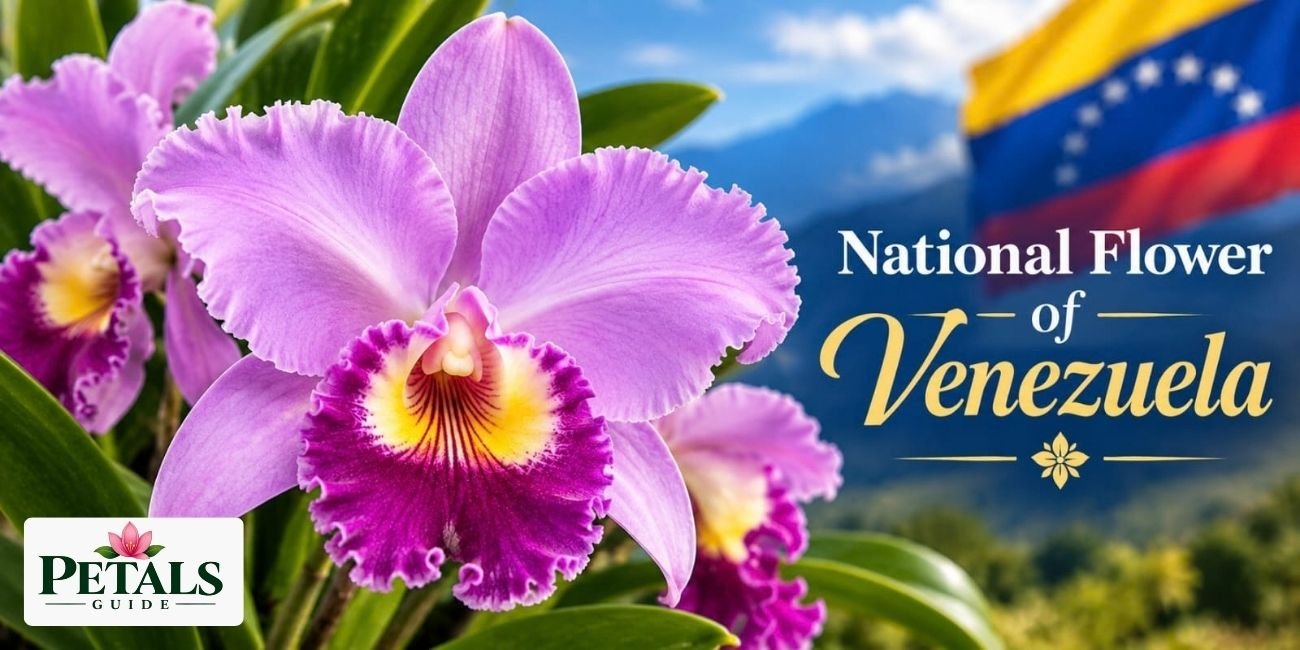
Venezuela is home to a rich variety of landscapes and native plants, including an orchid that has become an important part of the country’s natural heritage. Known as Flor de Mayo, Cattleya mossiae is the Venezuela National Flower, admired for its large, colorful, and fragrant blooms. The orchid is native to Venezuela and grows naturally in the country’s northern mountain regions.
Flor de Mayo was officially declared Venezuela’s national flower on May 23, 1951. Its importance, however, goes beyond its official status. The flower has long been connected with Venezuelan traditions and celebrations, particularly those held during May. Its natural beauty, history, and cultural connections have made Cattleya mossiae an enduring symbol of Venezuela.
What is the Venezuela National Flower?
Flor de Mayo, scientifically known as Cattleya mossiae, is the national flower of Venezuela. It belongs to the Orchidaceae family and the Cattleya genus and is native to Venezuela. The name Flor de Mayo means “May Flower,” a name closely connected with the time of year when this beautiful orchid traditionally comes into bloom.
The journey of Flor de Mayo to becoming Venezuela’s national flower is closely connected with the country’s interest in its native flora. The orchid was officially declared the national flower on May 23, 1951, following work by the Sociedad Venezolana de Ciencias Naturales. Its selection recognized Cattleya mossiae as an important native orchid and gave it a place among Venezuela’s national symbols.
The choice also reflected the qualities that made Flor de Mayo well known in Venezuela, including its large flowers, attractive colors, and natural variation. Over time, the orchid became closely associated with the country’s native plant life and national identity, gaining an important place in Venezuela’s history and cultural traditions.
What is Flor de Mayo Flower?
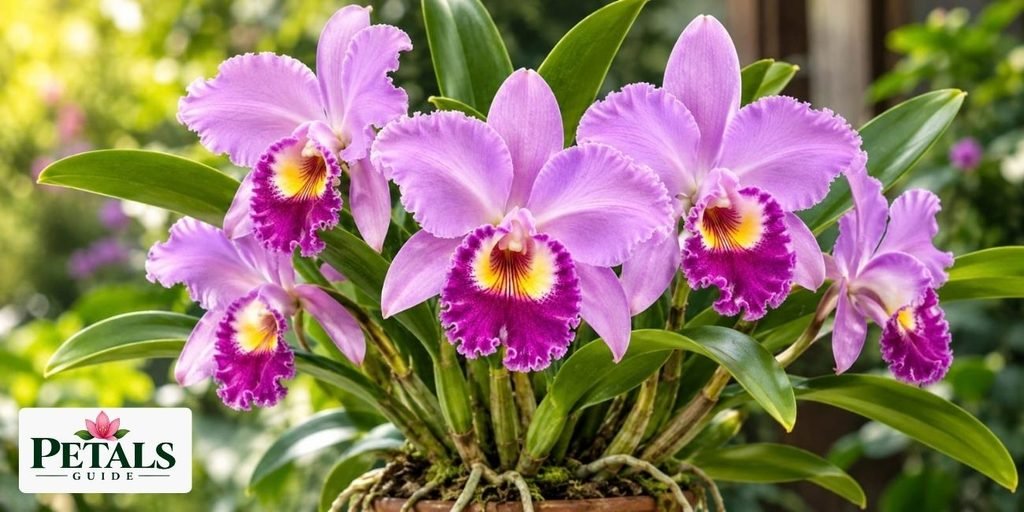
Flor de Mayo,Venezuela National Flower, scientifically known as Cattleya mossiae, is a large orchid with a distinctive structure. It has upright, swollen pseudobulbs that store water and nutrients. Each mature pseudobulb usually produces one thick, leathery green leaf.
The leaves are elongated and firm, forming a simple green background for the flowers. The flower stalk grows from the top of a mature pseudobulb and can carry several blooms, commonly around two to seven.
The flowers are large, often measuring about 12 to 20 cm across. Their broad petals and sepals spread outward, giving the blooms an open, rounded appearance. Flower colors can range from white and pale pink to lavender, lilac, and deeper purple.
The large central lip, or labellum, is one of the most noticeable parts of the flower. It is usually wider than the other flower parts and may have purple or violet markings with yellow or lighter areas near the center. The flowers are also pleasantly fragrant, while their color patterns can vary considerably between individual blooms.
Different Names of Flor de Mayo Flower
Cattleya mossiae is best known in Venezuela as Flor de Mayo, meaning “May Flower,” a name connected with its traditional flowering period. The orchid is also called the Easter Orchid, Easter Cattleya, and Moss Cattleya in English.
These names all refer to the same orchid. Flor de Mayo is the name most closely associated with the flower in Venezuela, while Cattleya mossiae is its scientific name.
Where does the Flor de Mayo Flower Grow?
Flor de Mayo, Venezuela National Flower, thrives in the lush, mountainous regions of the country. This beautiful orchid is mainly found in the northern and central parts of Venezuela, particularly within the Cordillera de la Costa and parts of the Venezuelan Andes. Notable locations where Flor de Mayo Orchid has been documented include Waraira Repano (El Ávila), Henri Pittier National Park, and the Sierra de Aroa, as well as mountainous areas of Trujillo and Mérida.
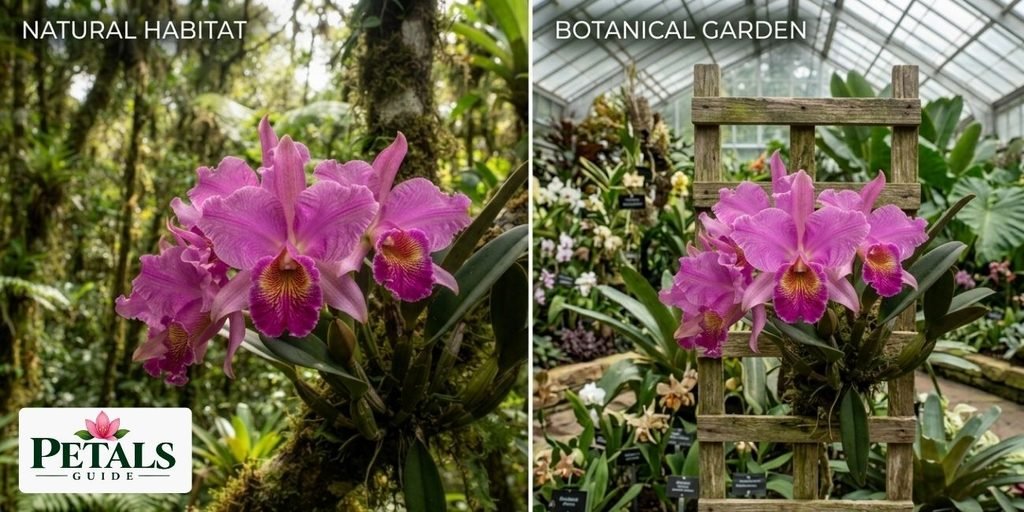
As an epiphytic orchid, Flor de Mayo flower grows on trees rather than directly in the ground. It often attaches itself to branches and trunks, where it receives filtered sunlight through the forest canopy. Its roots can absorb moisture from rain and humid air, while the trees provide support without serving as a source of food for the orchid.
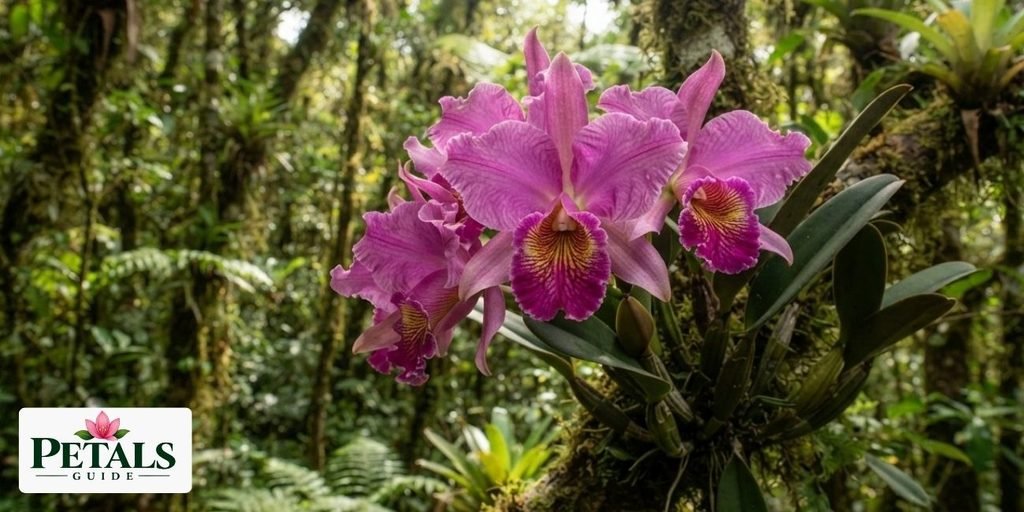
Flor de Mayo Orchid is associated with moist mountain forests and humid woodland environments, where regular rain, high humidity, and good air movement create suitable conditions for growth. It can occur at different elevations across its range, with many records coming from mountainous areas at moderate to higher elevations. The combination of cool mountain air, moisture, and filtered light helps create the natural environment in which this flower of Venezuela grows.
When does the National Flower of Venezuela bloom?
Flor de Mayo, the flower of Venezuela, typically blooms during the spring, April and May being important months for its flowering. The timing can vary somewhat depending on the location and local conditions, particularly in the mountainous areas where the orchid grows. In some places, flowering may begin earlier or continue later than the usual peak period.
The name “Flor de Mayo,” meaning “May Flower,” is closely connected with this flowering period. The orchid’s appearance during May has helped make the name familiar in Venezuela and has also connected the flower with seasonal celebrations held during this time of year.
The flowering period is an important part of the plant’s annual cycle. When the large, fragrant blooms appear, they provide an opportunity for pollinators to visit the flowers and take part in the plant’s natural reproductive process. This seasonal display is one of the reasons Venezuela National Flower has become so closely associated with the month of May.
History of Flor de Mayo Flower
Cattleya mossiae has an interesting botanical history that began with its collection in Venezuela during the 19th century. According to orchid records, material of the species was sent from La Guaira to George Green in England in 1836. The orchid later flowered in the collection of Mrs. Moss, attracting attention because of its large and unusual blooms.
The flowering plant was subsequently described by the English botanist William Jackson Hooker. He named the species Cattleya mossiae, with the specific name honoring Mrs. Moss, whose collection had helped bring the orchid to botanical attention. The formal description helped establish the plant in European botanical and horticultural circles.
The arrival of Cattleya mossiae in Europe also introduced orchid growers to a distinctive species from Venezuela. Its large flowers and natural variation made it of interest to collectors and horticulturists, helping the species become established in cultivation. Its early history is therefore closely connected with both botanical study and the growing interest in orchids during the 19th century.
Cultural Meaning and Importance of Venezuela National Flower
In Venezuela, Flor de Mayo has a long connection with the traditional Cruz de Mayo celebrations. Since the 19th century, people have used the flowers of Cattleya mossiae to decorate the cross during this religious and cultural tradition. This connection is also closely linked with the popular name “Flor de Mayo,” which became associated with the orchid in Venezuela.
The flower’s connection with Venezuelan religious traditions continued beyond the Cruz de Mayo. Venezuelan sources also document its use in decorating religious images, including representations of the Virgin. Its flowering around April and May also places it close to Easter and other important celebrations of the season. Because of this long association with Venezuelan traditions, Flor de Mayo became familiar not only as a native orchid but also as a flower connected with celebrations and religious customs.
How Does Flor de Mayo Grow and Reproduce?
Cattleya mossiae grows as an epiphyte, attaching itself to trees rather than growing directly in the soil. Its roots absorb moisture and nutrients from rain, air, and organic material around the plant, while its pseudobulbs store water and nutrients. New growth develops from these pseudobulbs, producing fresh leaves and eventually flowers.
Reproduction begins when the flowers are pollinated. Bees are among the pollinators associated with Cattleya orchids, carrying pollen between flowers. After successful pollination, the flower develops into a seed capsule containing thousands of tiny seeds.
These seeds are too small to develop on their own because they have very little stored food. They need a suitable fungal relationship to germinate and begin growing. With this help, the seeds develop into young orchids that can eventually form pseudobulbs and mature into flowering plants.
Conservation of Venezuela’s National Flower
Cattleya mossiae depend on healthy forest habitats in Venezuela, while wild collection can also place pressure on orchid populations. The species is included in CITES Appendix II, which regulates international trade in Cattleya orchids. Although current Kew predictions list Cattleya mossiae as not threatened, the assessment has low confidence, making habitat protection and responsible cultivation important for its future.
You can learn about national or states flowers of other countries here.
National Flower of Puerto Rico
National Flower of Russia
Conclusion
Flor de Mayo, scientifically known as Cattleya mossiae, is more than a beautiful native orchid. As the Venezuela National Flower, it represents a strong connection between the country’s natural heritage, cultural traditions, and national identity. Its history, distinctive flowers, and connection with traditions such as Cruz de Mayo have given it an important place in Venezuelan culture.
From its natural growth in Venezuela’s mountainous regions to its long botanical history and cultural importance, Cattleya mossiae remains one of the country’s best-known native flowers. Protecting its natural habitats and appreciating its place in Venezuelan heritage can help preserve the story of Flor de Mayo for future generations.
FAQs
What is the national flower of Venezuela?
The national flower of Venezuela is Flor de Mayo (Cattleya mossiae), a native orchid known for its large, colorful flowers. It was officially recognized as the country’s national flower on May 23, 1951.
What flowers are native to Venezuela?
Venezuela is home to many native flowers, including Flor de Mayo (Cattleya mossiae), Cattleya lueddemanniana, Epidendrum species, Heliconia species, and several native orchids and bromeliads.
What is the national tree of Venezuela?
Venezuela’s national tree is the araguaney (Handroanthus chrysanthus), a native tree known for its bright yellow flowers.
What is Venezuela’s national animal?
Venezuela’s national animal is the Venezuelan troupial (Icterus icterus), a brightly colored bird with orange, black, and blue plumage.