
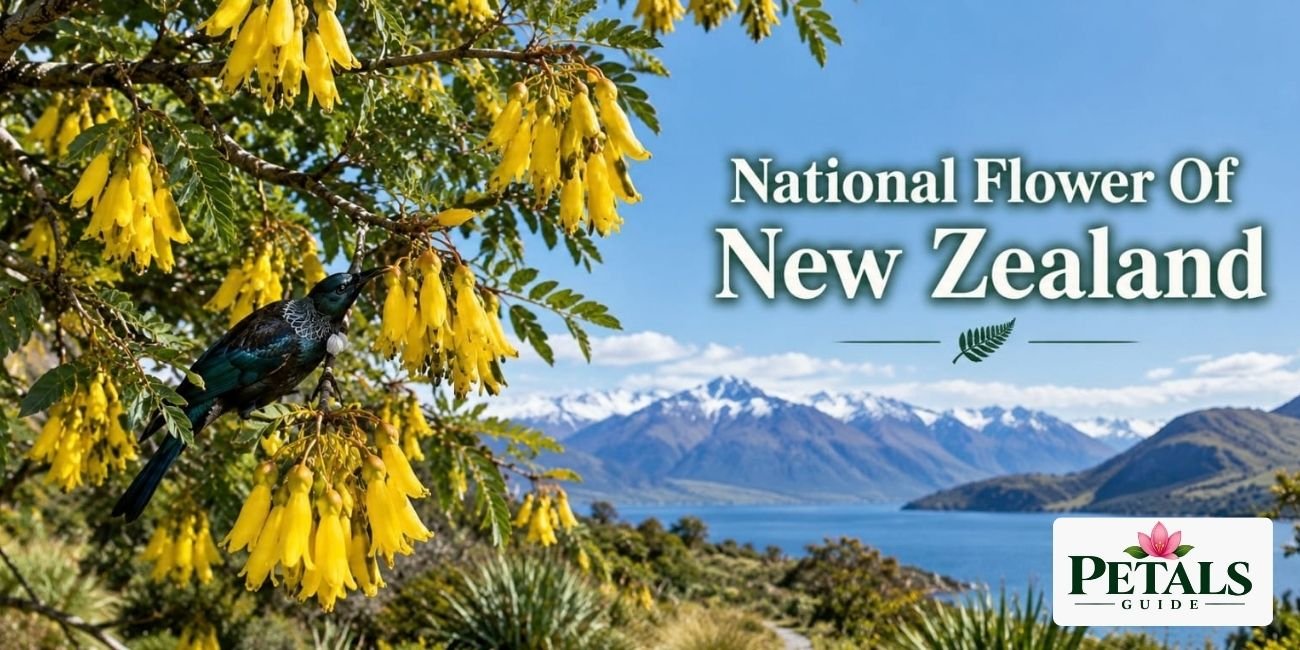
When spring arrives in New Zealand, the bright yellow blooms of the kōwhai flower bring a cheerful touch to the country’s natural landscape. The New Zealand National Flower has a special story and meaning that reflects the country’s culture and unique nature. Known for its eye-catching yellow blooms, the kōwhai flower is closely connected with New Zealand’s identity. In this article, we will explore its features, cultural importance, and where these beautiful yellow New Zealand flowers can be found.
What Is the National Flower of New Zealand?
Kōwhai is widely regarded as New Zealand’s unofficial national flower, despite the country not having an officially designated one. The name kōwhai refers to several native Sophora species, known for their clusters of bright yellow, hanging flowers. These trees usually bloom in spring, when their flowers provide an important source of nectar for native birds and other pollinators.
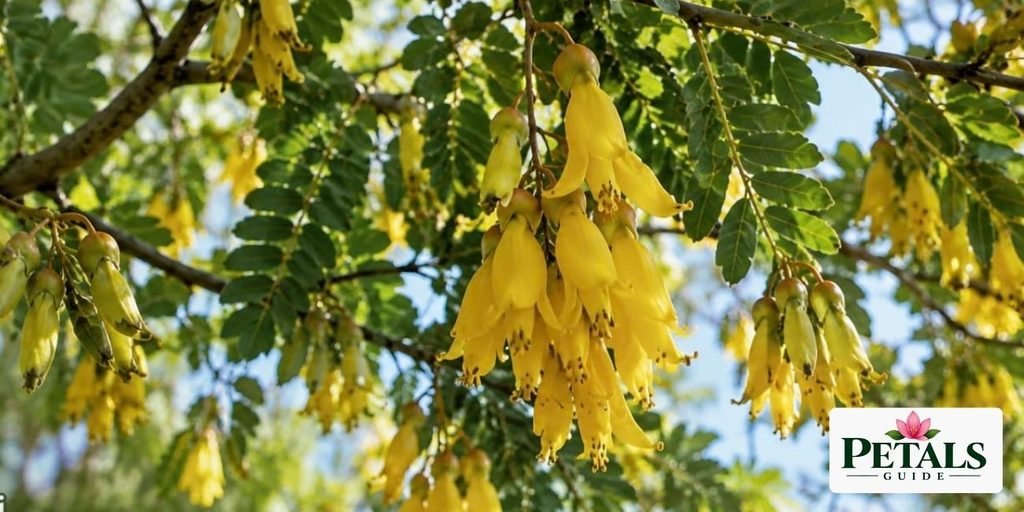
Kōwhai’s connection to New Zealand goes beyond its appearance. The tree has long been important in Māori culture, including traditional uses of different parts of the plant. Its native status, distinctive yellow flowers, and place in Māori traditions have made it a well-known New Zealand flower and an important part of the country’s natural heritage.
Why Everyone Gets It Wrong: Kōwhai vs. Silver Fern
When people think of the national flower of NZ, there’s often some confusion between the striking kōwhai and the iconic silver fern. While the kōwhai is a native flowering tree known for its bright yellow blooms, the silver fern is a distinctive tree fern that is widely used as a national symbol. The bright, drooping flowers of the kōwhai stand out in gardens and natural landscapes, while the silver fern’s fronds have a distinctive silvery-white underside that makes it easily recognizable, especially on sports uniforms and emblems.
The mix-up often arises because both are deeply embedded in New Zealand’s identity. Many people associate the silver fern with national representation and may therefore mistake it for the country’s national flower. However, the silver fern is a national emblem, while the kōwhai is widely regarded as the country’s unofficial flower. This distinction helps explain why both plants are important New Zealand symbols, even though they represent the country in different ways.
What Makes the Kowhai Flower Unique?
Kōwhai, the common name for several native Sophora species in New Zealand, is easily recognized by its bright yellow flowers. These blooms hang in pendulous clusters along the branches, creating a vivid contrast against the tree’s green foliage. Their unusual shape and bright color also make them attractive to native birds such as tūī and bellbirds, which visit the flowers for their nectar.
The Kōwhai is also known for its strong wood and ability to grow in different environments, from coastal areas to mountainous regions. This adaptability, along with its distinctive flowers and importance to native wildlife, gives the tree a special place among NZ native flowers. Its combination of color, form, and natural value makes the Kōwhai one of the most recognizable plants in New Zealand.
When Does the Kowhai Flower Bloom?
The kōwhai, New Zealand’s national flower, typically blooms from late winter through spring. This means that you can see its bright yellow flowers from about August to November, but the exact timing can change depending on the type of kōwhai flower and where it grows in New Zealand. Some regions might see their kōwhai bloom a little earlier or later. During this season, the flowers bring a lively touch to the landscape while also marking the change from winter to spring.
These charming yellow blooms are important for the native birds of New Zealand, such as the tūī and bellbird. These birds rely on the sweet nectar found in the kōwhai flowers for food, helping them thrive as they prepare for nesting season. Watching them gather around these vibrant trees adds a lively touch to the landscape and a close connection between the kōwhai and native wildlife. This seasonal relationship shows how the national flower of NZ supports the local ecosystem while adding color to the landscape.
“For Māori, the flowering of kōwhai was also a useful seasonal sign, traditionally marking the time to plant kūmara.”
Where does the Kowhai grow in New Zealand?
Kōwhai is a beautiful native flower found across different parts of New Zealand, growing in various regions and environments. These trees thrive in places like forests, riverbanks, coastal areas, and open land, although not every species of kōwhai grows in the same habitat. For example, some species prefer the warmer climates of the North Island, while others are better suited to the cooler parts of the South Island. Each type has its own preferred environment, making them well suited to their surroundings.
Beyond their natural habitats, kōwhai trees are often planted in gardens, parks, and public spaces, allowing many people to enjoy their bright yellow blooms, even if they do not encounter them in the wild. This makes the New Zealand flower a familiar sight in urban areas, brightening up landscapes with its cheerful colors. Whether you are wandering through a forest or strolling through a local park, you might just catch a glimpse of these lovely flowers, connecting you to New Zealand’s rich natural heritage.
Cultural Meaning and Symbolism of the Kowhai
The kōwhai tree holds a special place in Māori culture and has been valued for generations for both its beauty and practical uses. Māori used parts of the tree in rongoā Māori, or traditional Māori medicine. The bark was used in traditional preparations for wounds and sore areas of the body, showing the importance of native plants in Māori knowledge and daily life.
Kōwhai is also connected with Māori knowledge of the land and natural environment. Traditional knowledge about native plants was passed down through generations, with plants valued for their uses and their place in the surrounding environment. This long connection has made kōwhai an important part of New Zealand’s cultural heritage, while its place among Maori flowers reflects the wider importance of native plants in Māori culture.
Why does Kowhai Represent New Zealand Today?
Kōwhai holds a special place in the lives of many New Zealanders and is closely associated with the country’s natural landscape. These bright yellow trees are often planted in local gardens and parks, making them a familiar sight in both urban and rural areas. They also provide an important food source for native birds such as tūī and bellbirds, adding to their role in New Zealand’s native ecosystem.
Beyond its environmental importance, kōwhai is closely connected with the cultural identity of New Zealand. Its long history in Māori culture and connection with the land have helped give the tree a special place in the country’s heritage. For many people, seeing a kōwhai can bring a sense of connection to home and the New Zealand landscape, helping it remain a well-known New Zealand symbol today.
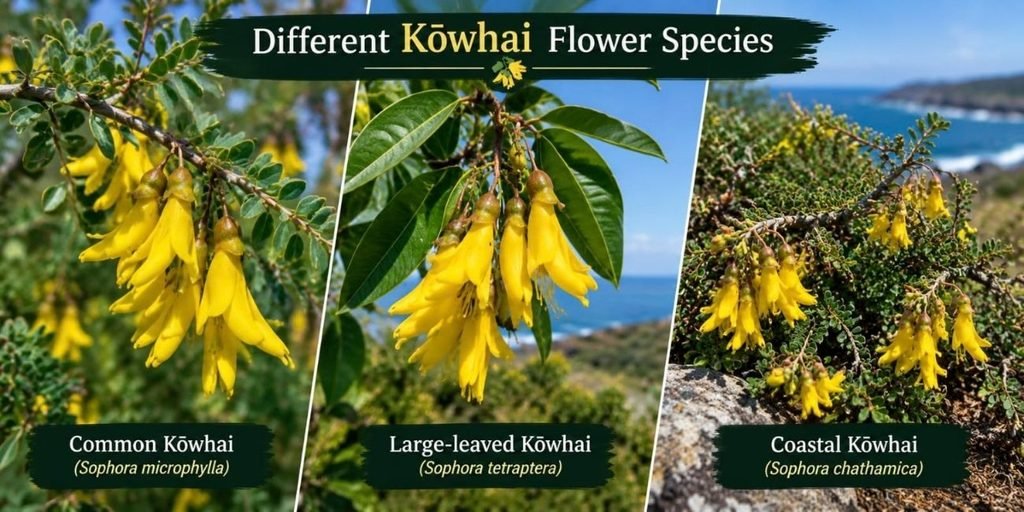
Different Kōwhai flower Species
- Common Kōwhai (Sophora microphylla) – A widely known New Zealand species with bright yellow, hanging flowers.
- Large-leaved Kōwhai (Sophora tetraptera) – Has larger leaves and relatively large yellow flowers.
- Coastal Kōwhai (Sophora chathamica) – A coastal species with yellow flowers and a spreading growth habit.
- Prostrate Kōwhai (Sophora prostrata) – A smaller, unusual species with a low and tangled growth form.
- Molloy’s Kōwhai (Sophora molloyi) – A compact species native to the Chatham Islands.
Interesting Facts About new Zealand National Flower
The New Zealand National Flower has more secrets than its bright yellow flowers suggest. From unusual effects on birds to toxic seeds and Māori traditions, here are five interesting facts about kōwhai.
The Drunken Bird
Kōwhai trees produce sweet nectar that attracts birds such as the tūī and bellbird. The nectar contains natural compounds that can have unusual effects on some animals, which may explain the old idea of birds becoming “drunk” after feeding on kōwhai. Native birds regularly feed on kōwhai nectar without apparent harmful effects, making the tree an important seasonal food source for them.
The Lethal Beauty (Cytisine)
While kōwhai flowers are beautiful, the plant contains toxic alkaloids, including cytisine. The seeds contain some of the highest concentrations of these compounds, so they should not be eaten. Research on New Zealand kōwhai species has found cytisine and other alkaloids in the seeds and other parts of the plant.
The Māori Calendar Tree
For Māori, the flowering of kōwhai was an important seasonal sign. When the trees began to bloom in spring, it indicated that it was time to plant kūmara, or sweet potatoes. This connection between the flowering tree and seasonal food-growing activities shows how closely Māori knowledge was linked to changes in the natural environment.
It’s a Legume in Disguise
Many people might not know that kōwhai belongs to the legume family, Fabaceae. Unlike familiar legumes such as beans and peas, kōwhai grows as a tree or shrub with yellow flowers. It also produces distinctive seed pods containing hard-coated seeds, giving away its connection to the legume family.
The Silver Fern Rivalry
The silver fern is one of New Zealand’s best-known national symbols, especially in sports and national representation. Kōwhai has a different place in the country’s identity and is widely regarded as New Zealand’s unofficial national flower. Both are strongly associated with New Zealand, but they represent the country in different ways.
Other Popular NZ Native Flowers
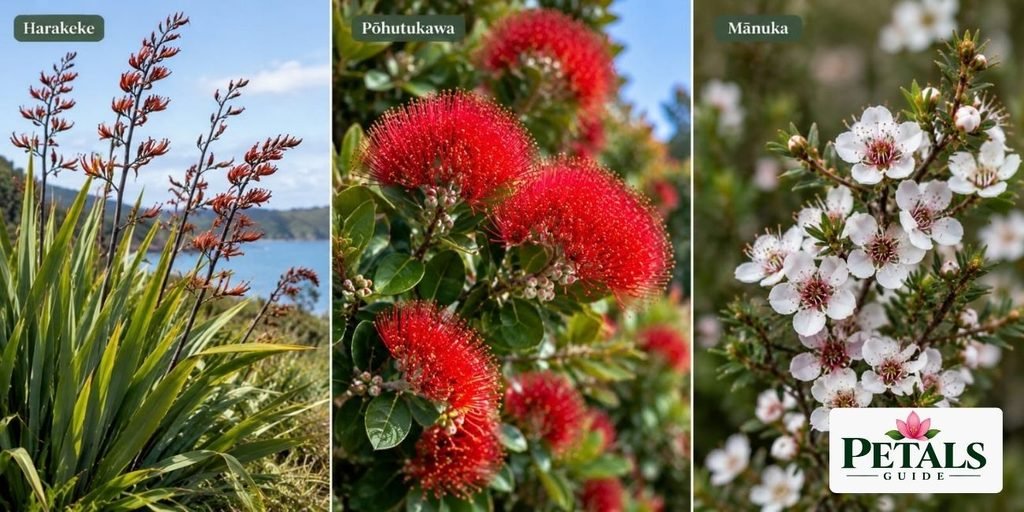
New Zealand is home to a variety of native flowers and plants that are an important part of the country’s landscapes and culture. Among them, Harakeke, Pōhutukawa, and Mānuka are well known for their natural and cultural importance.
Harakeke (New Zealand Flax Flower)
Harakeke is easily recognized by its long, sword-like green leaves and tall flower stalks. Māori have used the strong fibers of harakeke for centuries to make items such as baskets, mats, and ropes. Its flowers also provide nectar for native birds, making it an important part of local ecosystems.
Pōhutukawa (New Zealand Christmas Flower)
Pōhutukawa is known for its bright red flowers, which appear around the summer Christmas season and give the tree its familiar nickname, the New Zealand Christmas tree. It commonly grows along coastal areas and has become closely associated with New Zealand’s summer landscape and holiday traditions.
Mānuka Flower
Mānuka Flower has small white or pinkish flowers and is best known for its connection to mānuka honey. The plant provides an important source of nectar for bees and other pollinators and is found across many parts of New Zealand.
Together, these New Zealand flowers show the variety of plants that contribute to the country’s natural heritage and make the New Zealand flower landscape so distinctive.
Is Kōwhai the Official National Flower of NZ?
New Zealand does not have an officially designated national flower. While kōwhai is often referred to as the country’s unofficial national flower, there is no formal government designation making it the official flower. This can cause confusion because kōwhai is widely recognized across New Zealand and has strong connections with the country’s culture and natural landscape.
Kōwhai is native to New Zealand and is closely associated with the country’s identity, which is why it is frequently called the national flower of New Zealand. The silver fern, on the other hand, has a clearer status as a national emblem. This shows how a plant can become strongly associated with a country through culture and public recognition without having an official designation.
If You’re Visiting New Zealand
If you’re visiting New Zealand, keep an eye out for the kōwhai, an iconic native NZ flower. You can find these trees in places such as parks, gardens, reserves, and forests throughout the country. They are especially easy to notice during their flowering season, from late winter to early spring, when their bright yellow blooms appear against the greenery.
While enjoying the sights, remember to respect New Zealand’s natural environment. Avoid picking flowers or damaging branches, and stay on designated paths in protected areas. Following local conservation rules helps protect these native plants and the landscapes where they grow for future visitors.
Conclusion
The kōwhai flower is widely regarded as the New Zealand national flower and represents the beauty and unique nature of the country. With its bright yellow blossoms and familiar place in the landscape, the kōwhai has a special connection with many people. It also plays an important role in the ecosystem by providing food for native birds and other wildlife.
Learning about the kōwhai helps us appreciate the importance of New Zealand’s native plants and their connection to the land and culture. So, the next time you see a kōwhai flower, take a moment to admire it and remember the story behind this well-known New Zealand Flower.
FAQs
What is New Zealand’s national flower?
The widely recognized national flower of New Zealand is the kōwhai. Known for its bright yellow blossoms, this tree is celebrated for its beauty and cultural significance.
Is kōwhai officially the national flower of New Zealand?
While kōwhai is not officially designated as New Zealand’s national flower by the government, it is affectionately regarded as such by many Kiwis and is a symbol of the country’s natural heritage.
What does the kōwhai flower symbolize?
The kōwhai flower symbolizes growth, renewal, and the arrival of spring, reflecting the cycles of nature. It is often associated with happiness and prosperity in Māori culture.
What birds are attracted to kōwhai flowers?
Kōwhai flowers attract several native birds, particularly the tui and the bellbird, which feed on the nectar. These birds play a crucial role in pollinating the tree, enhancing its ecosystem.