
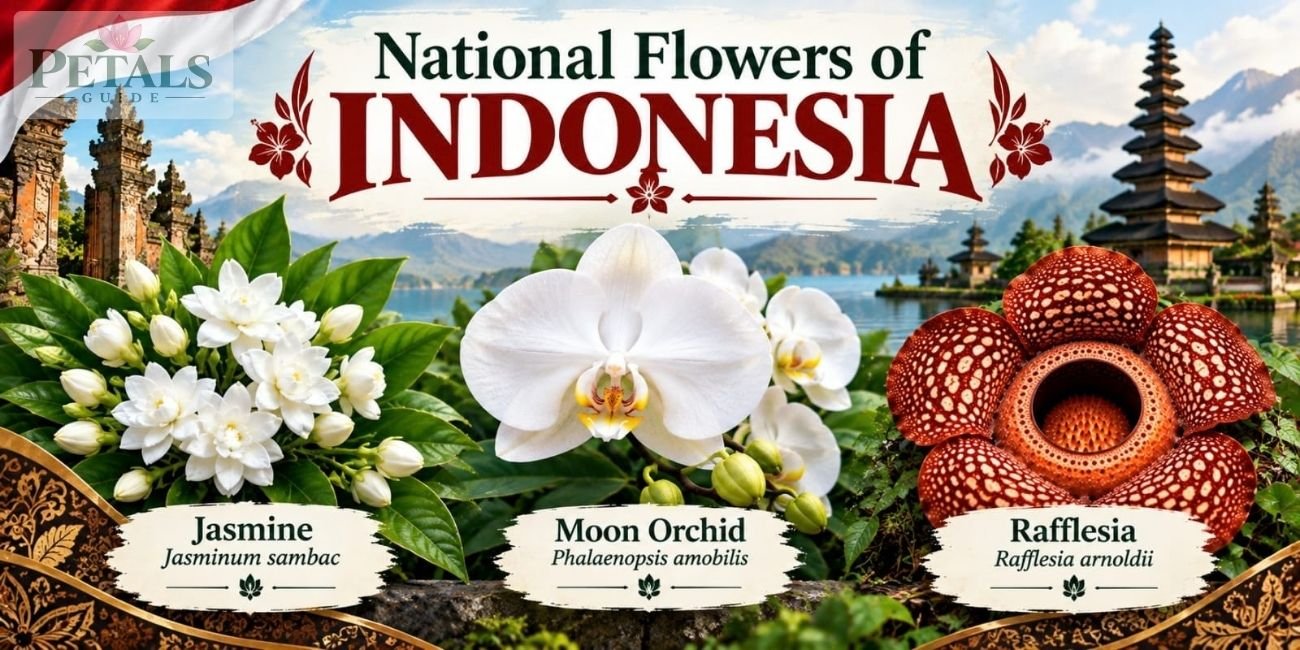
Unlike most countries that have a single national flower, Indonesia is represented by three official floral symbols.When people search for the national flower of Indonesia, they may be surprised to learn that the country recognizes Jasmine (Jasminum sambac), Moon Orchid (Phalaenopsis amabilis), and Rafflesia arnoldii).
Each flower represents a different part of Indonesia’s identity, from cultural values to natural beauty and rare biodiversity. Together, they show what one flower alone could not represent such a diverse nation. In this article, we will explore why Indonesia has three national flowers and the meaning behind each of these important symbols.
What Are the National Flowers of Indonesia?
Indonesia officially recognizes three flowers as national floral symbols, each representing a different aspect of the country’s identity and natural heritage. Rather than choosing just one flower, Indonesia gave three flowers distinct national roles, reflecting their cultural importance, beauty, and rarity.
- Arabian Jasmine, known as Puspa Bangsa or the Flower of the Nation, is associated with purity and simplicity and has an important place in Indonesian traditions.
- The Moon Orchid, designated Puspa Pesona or the Flower of Charm, represents the beauty and appeal of Indonesia’s flora.
- Rafflesia, known as Puspa Langka or the Rare Flower, represents Indonesia’s unusual plant diversity
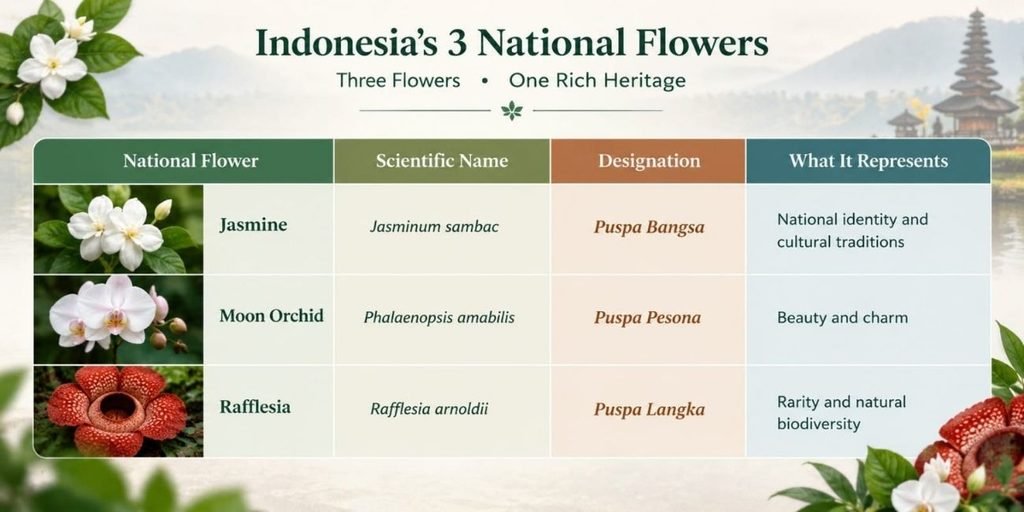
Together, these three flowers show different sides of Indonesia’s floral heritage. Their stories, meanings, and roles in Indonesian culture help explain why the country recognizes three national flowers rather than a single floral symbol.
Why Does Indonesia Have 3 National Flowers?
Indonesia’s decision to adopt three national flowers instead of just one reflects its rich cultural identity and vast natural diversity. Having over 17,000 islands and a multitude of ethnic groups, the nation’s cultural tapestry is as complex as its geography. The flowers each serve a unique purpose under Presidential Decree No. 4 of 1993: Jasmine symbolizes the nation itself, Moon Orchid embodies charm, and Rafflesia stands for rarity. This tripartite system allows for a more nuanced representation of Indonesia’s identity.
In a big country like Indonesia, covering about 1.9 million square kilometers of land, every flower represents a different facet of the nation’s natural and cultural heritage. For instance, Jasmine is closely associated with traditions and ceremonies in Indonesia, while the rare Rafflesia represents the country’s unique natural heritage. By using these three flowers, Indonesia embraces its motto, “Bhinneka Tunggal Ika,” meaning “Unity in Diversity,” showcasing its varied natural beauty and the many cultures that coexist within its borders.
Arabian Jasmine (Indonesia’s Flower of the Nation)
Quick Facts:
- Scientific Name: Jasminum sambac
- Plant Type: Perennial shrub or scrambling plant
- Flower Colors: White
- Blooming Season: Year round, peaking in spring
- Native Region: Bhutan to India, according to Kew
- Official Designation: Puspa Bangsa (Flower of the Nation)
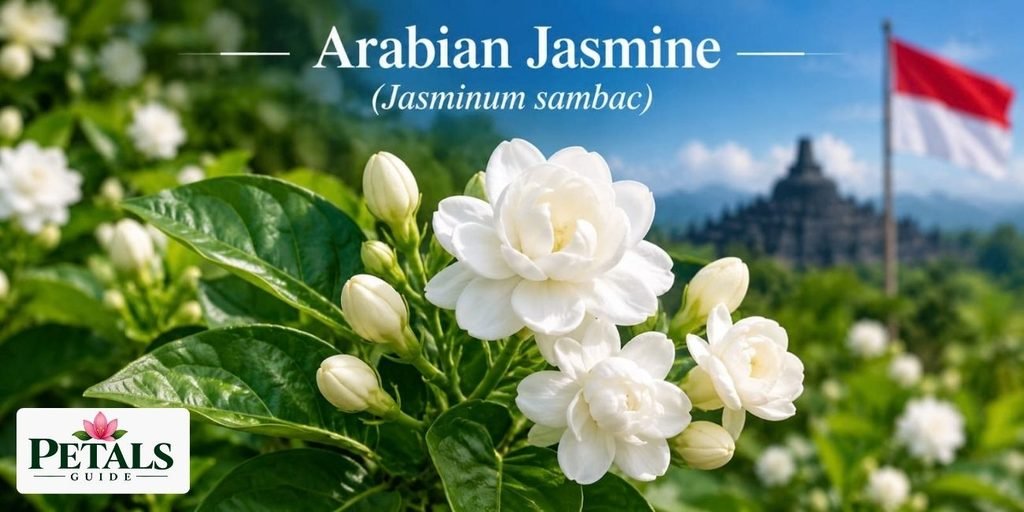
Jasmine (Jasminum sambac) is a small, fragrant flowering plant with white blossoms that may have single or double layers of petals. Its flowers grow in clusters, and the plant has green, opposite leaves. Depending on the variety, the flowers can open from simple five-petaled blooms into fuller, layered forms. The sweet fragrance is one of its most recognizable features, which has made this species popular for floral decorations and aromatic products.
In Indonesia, jasmine has a particularly important place in traditional wedding ceremonies, especially in Java. Unopened jasmine buds are often woven into roncen melati, or jasmine garlands, which are used to decorate the bride’s hair and other parts of the wedding attire. In Javanese and Sundanese traditions, these garlands can be arranged around the bride’s hair bun, while jasmine is also used in decorations associated with the groom.
Jasmine’s cultural use extends beyond weddings. Research on traditional practices in Indonesia has documented its use in ceremonies, including offerings and other cultural events. In some Indonesian traditions, the flower is associated with purity, sincerity, and sacredness, although the specific meaning can vary according to the community and ceremony.
Although jasmine is strongly associated with Indonesia, Jasminum sambac is not native exclusively to the country. Kew identifies its native range as extending from Bhutan to India, while Indonesia is included among the regions where the species has been introduced. It has nevertheless been cultivated and widely used in Indonesia for a long time. Its fragrant flowers are also used in products such as perfumes, soaps, and other aromatic goods, adding an everyday connection to its cultural significance.
Moon Orchid (Indonesia’s Flower of Charm)
Quick Facts:
- Scientific Name: Phalaenopsis amabilis
- Plant Type: Perennial epiphytic orchid
- Flower Colors: White with yellow and red markings in the center
- Blooming Season: Late winter to earlier spring
- Native Region: Malesia to northeastern Australia
- Official Designation: Puspa Pesona, meaning Flower of Charm
The Moon Orchid is an epiphytic orchid that naturally grows on tree trunks and branches in humid tropical forests. It has thick, leathery green leaves, fleshy roots, and long branching flower stems. Its broad white flowers have a yellow and red marked center, and each flower can remain open for several weeks. These features also make it popular as an ornamental plant.
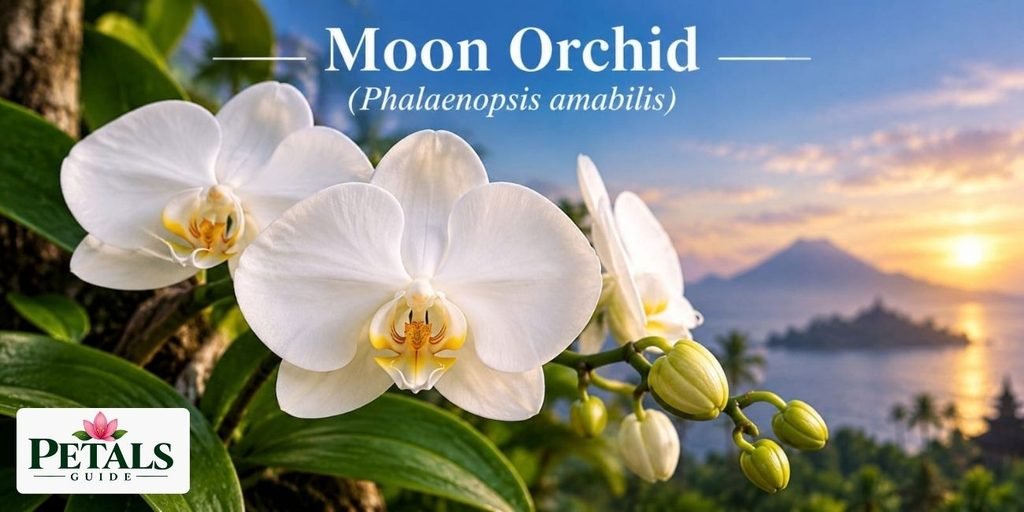
In Indonesia, the Moon Orchid is known as Puspa Pesona, or Flower of Charm. Its graceful white flowers and long-lasting blooms have helped make it a popular orchid for cultivation. The species grows naturally in several parts of Indonesia, including Java, Sumatra, Borneo, Sulawesi, and the Maluku Islands. It is also found in other regions of Southeast Asia, New Guinea, and northeastern Australia.
Rafflesia (Indonesia’s Flower of Rarity)
Quick Facts:
- Scientific Name: Rafflesia arnoldii
- Plant Type: Parasitic flowering plant
- Flower Colors: Reddish-brown with white spots
- Blooming Season: Varies according to location and environmental conditions
- Native Region: Sumatra and Borneo
- Official Designation: Puspa Langka, meaning Flower of Rarity
Rafflesia arnoldii is known for producing one of the largest individual flowers in the world. Unlike ordinary plants, it has no leaves, stems, or roots. It lives inside vines of the genus Tetrastigma, taking water and nutrients from its host. The flower develops from a bud that emerges through the vine’s bark and can grow to around one meter across.
The flower has five large reddish-brown lobes covered with white spots. It also produces a strong smell similar to rotting meat, which helps attract carrion flies that pollinate the flower. Rafflesia flowers remain open for only about a week, making them difficult to observe in the wild. Its short flowering period and unusual appearance have made it one of Indonesia’s most recognized rainforest plants.
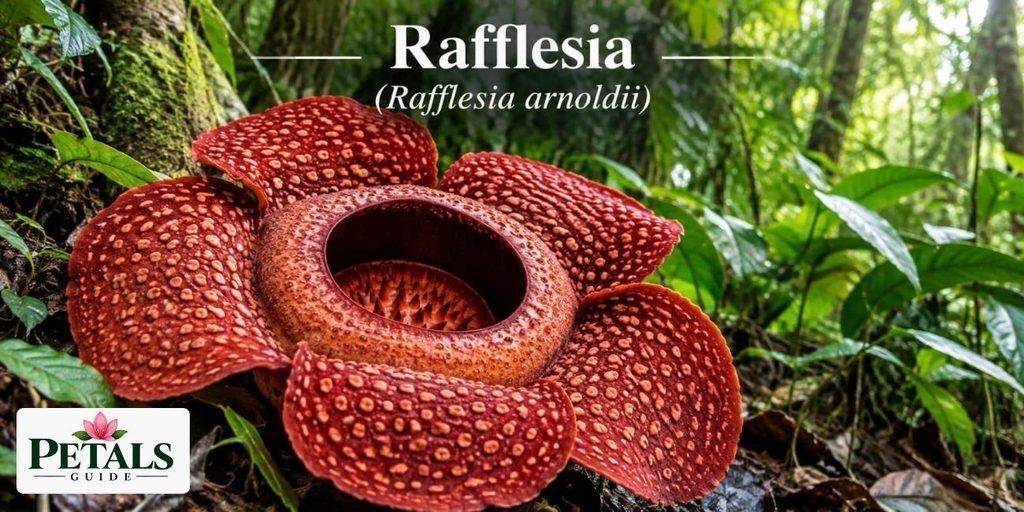
Rafflesia arnoldii grows naturally in tropical forests of Sumatra and Borneo, where its survival depends on the presence of suitable Tetrastigma vines. This close relationship makes the plant difficult to grow outside its natural habitat. Forest destruction and disturbance around flowering sites can also affect its survival, so protecting both the host plant and its surrounding habitat is an important part of conservation.
As Indonesia’s Puspa Langka, Rafflesia represents the country’s rare and unusual plant life. Its presence in tropical forests highlights the importance of protecting natural habitats that support species with highly specific growing requirements. Unlike Jasmine and Moon Orchid, Rafflesia is not commonly grown in gardens, which makes its conservation in the wild especially important.
Beyond Symbolism: A Strategic Environmental Message
Indonesia’s national flower system also reflects the importance of protecting its unique natural heritage. Presidential Decree No. 4 of 1993 explains that the country’s distinctive flora should encourage national pride while supporting protection, conservation, and sustainable use. The decision therefore connected national symbols with a broader responsibility toward Indonesia’s natural resources.
The decree also called for greater public awareness and stronger efforts to protect the ecosystems, habitats, and populations of the designated national flowers. This gives the three-flower system an environmental purpose beyond symbolism. By recognizing plants with cultural importance, beauty, and rarity, Indonesia created national symbols that could also encourage people to value and protect its natural heritage.
Final Words
In conclusion, the national flower of Indonesia includes Jasmine, Moon Orchid, and Rafflesia, each representing a different part of the country’s cultural and natural heritage. From Jasmine’s connection to traditions to Rafflesia’s rare presence in the wild, these flowers reflect Indonesia’s diverse identity. Together, they show the close connection between nature and culture and the importance of protecting these floral treasures for future generations.
FAQs
What is the national flower of Indonesia?
Indonesia has three official national flowers: Jasmine (Jasminum sambac), Moon Orchid (Phalaenopsis amabilis), and Rafflesia (Rafflesia arnoldii).
Why does Indonesia have three national flowers?
Indonesia recognizes three national flowers because each represents a different aspect of the country’s floral heritage. Their official designations were established through Presidential Decree No. 4 of 1993.
What is Indonesia’s main national flower?
Jasmine (Jasminum sambac) is known as Puspa Bangsa, meaning Flower of the Nation. It represents Indonesia as a national floral symbol.
What is the rarest national flower of Indonesia?
Rafflesia (Rafflesia arnoldii) is known as Puspa Langka, meaning Flower of Rarity. It is famous for its enormous flower and unusual growth as a parasitic plant.
Are Indonesia’s national flowers found throughout the country?
No. The three flowers have different natural distributions and growing requirements. Some are widely cultivated, while others, such as Rafflesia, have more restricted natural habitats.