
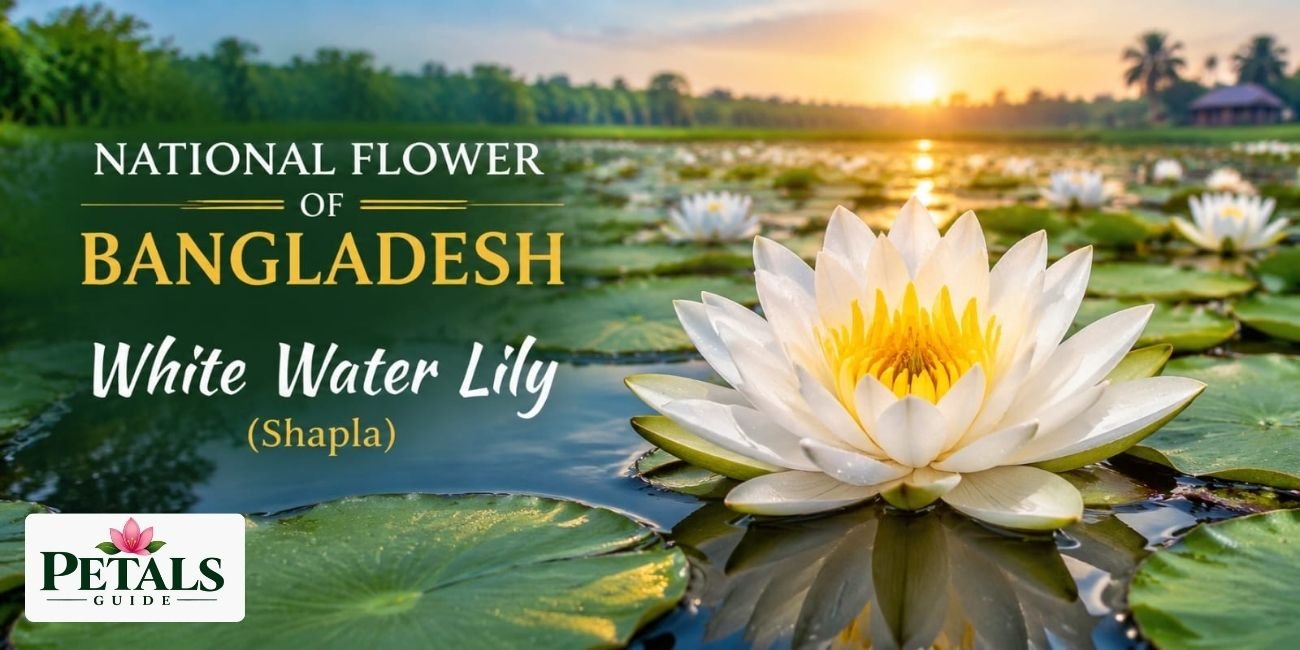
The national flower of Bangladesh, the water lily, is a vibrant reminder of the country’s natural beauty. It symbolizes resilience and unity, making it an important part of Bangladeshi culture. Here, you’ll find out more about this unique flower and what it means to the people of Bangladesh.
What is the National Flower of Bangladesh?
Shapla (শাপলা), commonly known as the white water lily, is the national flower of Bangladesh. Officially identified as Nymphaea nouchali, this aquatic flowering plant thrives in freshwater habitats, particularly in ponds and wetlands that dot the Bangladeshi landscape. Characterized by its large, beautiful circular leaves and stunning flat blossoms that bloom in elegant shades of white and pink, Shapla is not just a visual delight but embodies the essence of the country’s natural beauty.
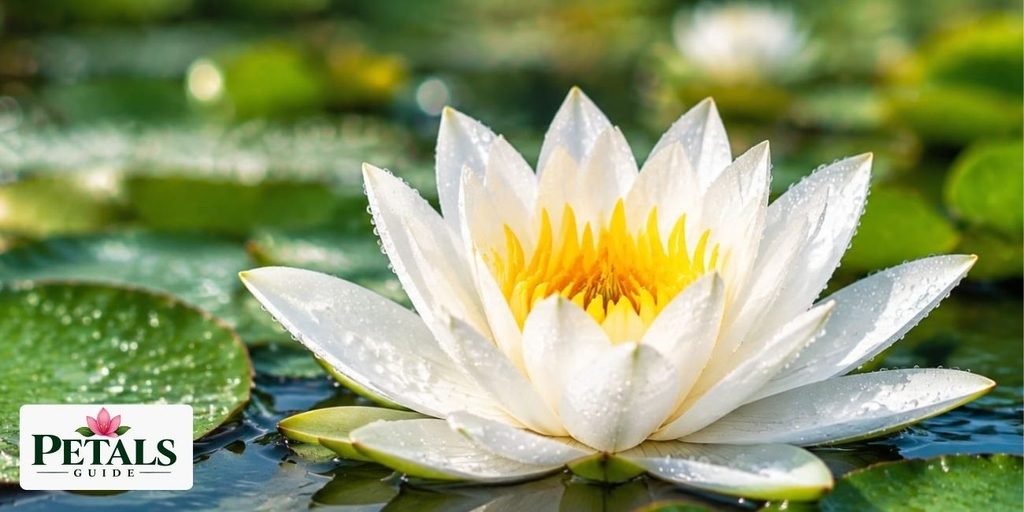
Strongly associated with Bangladesh, Shapla flourishes in the serene waters, symbolizing tranquility and resilience amid the vibrant rural life. These water lilies are often seen gracing the surface of still waters, making them emblematic of the nation’s lush and diverse ecosystems. As a significant national symbol, Shapla represents not only the beauty of Bangladesh but also the cultural and historical richness of its people.
What Does Shapla Look Like?
Bangladesh National Flower, the water lily, has a delicate and distinctive appearance. The Shapla flower typically has a star-like shape with numerous petals arranged around its central yellowish area. The white water lily is traditionally associated with Bangladesh’s national flower, while other water lily species can appear in shades of pink, blue, purple, or other colors. These flowers rise from the water on long stalks, creating a graceful display against the natural setting of freshwater habitats.
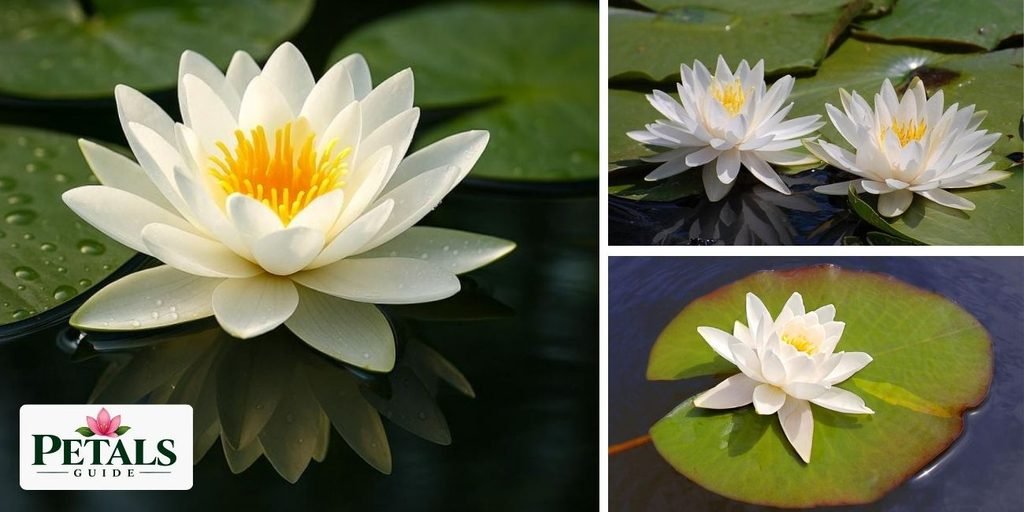
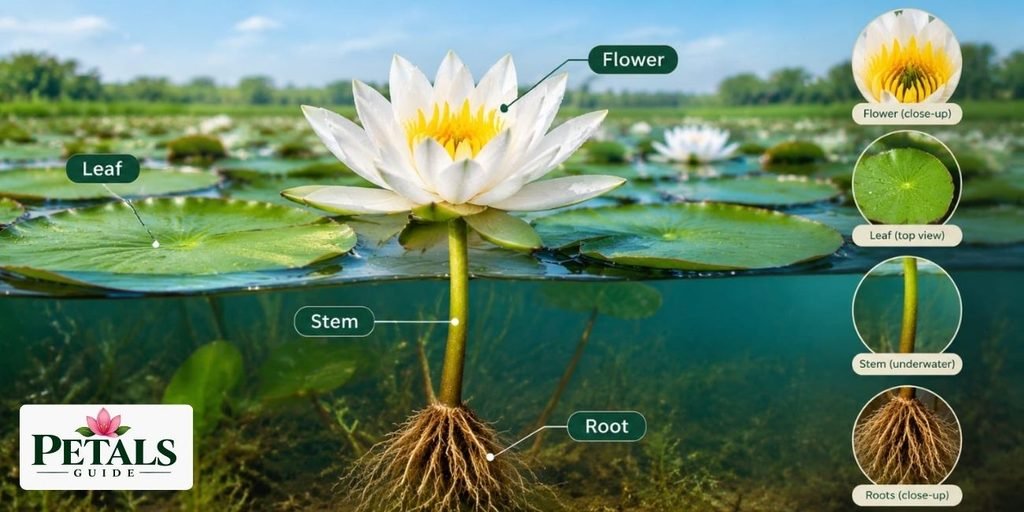
Accompanying the Shapla flowers are its rounded, floating leaves, which spread across the water’s surface. Their broad blades have a distinct notch where the leaf stalk joins the leaf, while their surface is adapted to remain above water. Beneath the surface, the Shapla plant grows from an underground rhizome anchored in the sediment, from which its roots, leaves, and flower stalks develop. Together, the flowers and floating leaves give Shapla its familiar appearance and make it an easily recognized aquatic plant in Bangladesh.
Botanical Facts About Shapla
Shapla,the national flower of Bangladesh, scientifically classified as Nymphaea nouchali, belongs to the genus Nymphaea and the family Nymphaeaceae. This aquatic perennial is noted for its beautiful flowers and distinct growth habit. Shapla features a robust rhizome, which anchors it firmly in the substrate of ponds and marshes, facilitating its survival in varying water levels. The plant’s root system is adapted to its aquatic environment, allowing it to absorb nutrients efficiently while being resilient enough to adapt to seasonal changes.
Reproduction in Shapla occurs both sexually, through the production of seeds, and asexually via the spread of its rhizomes. This dual reproductive strategy enables the plant to thrive in diverse aquatic habitats. While Nymphaea nouchali is widely accepted as the scientific name associated with the Shapla of Bangladesh, some references may also mention older classifications or synonyms. Overall, the plant’s botanical characteristics not only support its survival but also make it a key component of its ecosystem.
Where Does Shapla Grow in Bangladesh?
Shapla, or water lily, flourishes in various freshwater habitats across Bangladesh, including ponds, beels, marshes, canals, and wetlands. These environments provide the shallow or relatively calm water that water lilies need for growth. The plants are commonly associated with areas where their roots can remain anchored in soft sediment while their leaves spread across the water’s surface. Good sunlight is also important because the leaves rely on it for photosynthesis.
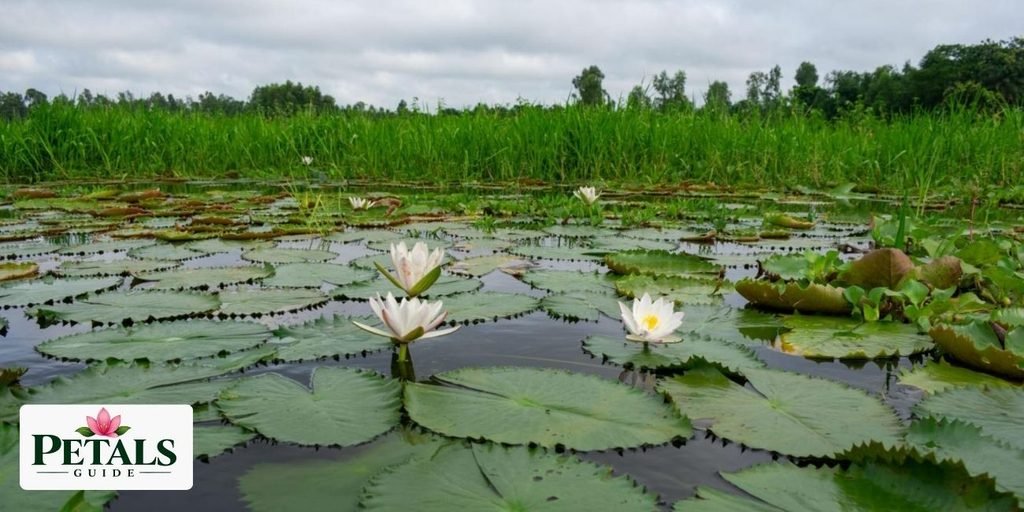
Documented habitats include the haor regions of Sunamganj and Netrokona, where seasonal flooding creates ideal conditions. Additionally, canals and floodplains in areas like the Ganges and Brahmaputra river systems offer suitable ecosystems for Shapla. Because Bangladesh contains an extensive network of rivers, wetlands, ponds, and flood-prone lowlands, it provides many suitable habitats for Shapla and other native water-lily species.
How Shapla Became the National Flower of Bangladesh?
Following Bangladesh’s independence in 1971, the newly established country began developing and formalizing its national symbols, Shapla became the national flower of Bangladesh. Its close association with the country’s freshwater landscape made it a natural choice for a nation where ponds, wetlands, rivers, and floodplains are an important part of the landscape.
Historical documents highlight the Shapla’s pervasive presence in Bengali literature and folklore, further cementing its status as an emblem of national pride. This flower not only thrives in Bangladesh’s wetlands but also embodies the spirit of the people, making it a fitting choice for the nation’s symbol. The decision to recognize Shapla was part of a broader effort to promote national unity and identity in post-war Bangladesh.
Symbolism Rooted in Rural Life and Simplicity
Shapla is closely tied to rural life in Bangladesh, where it grows naturally in ponds, beels, canals, and wetlands surrounded by fishing, farming, and village communities. Its simple form and natural presence have made it a familiar part of the countryside and are often associated with simplicity, rural identity, and Bangladesh’s freshwater landscape.
Its appearance in Bengali literature, art, and traditional imagery has further strengthened these cultural connections. While meanings such as purity and resilience are sometimes linked with Shapla, they are better understood as cultural interpretations rather than officially defined symbolism.
The Meaning Behind Shapla in the National Emblem
In Bangladesh’s national emblem, Shapla, or water lily, is placed at the center of the design, resting on water. The official description identifies it as the national flower of Bangladesh and shows it with an ear of paddy on each side, three connected jute leaves above, and two stars on either side of the leaves. This arrangement places Shapla at the heart of one of the country’s most important national symbols.
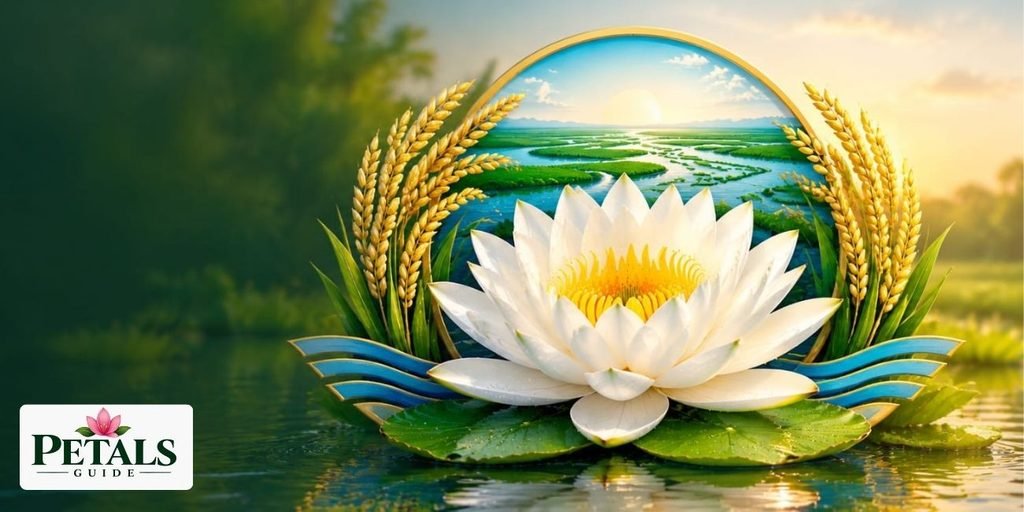
The emblem’s official description does not assign specific meanings such as purity, resilience, hope, or renewal to Shapla. Those ideas may appear in cultural or popular interpretations, but they should not be presented as officially defined symbolism. Its documented significance is that Shapla represents Bangladesh as the country’s national flower, while its position over water also reflects the flower’s natural association with the country’s freshwater landscape.
Shapla’s Declining Presence and Environmental Significance
Recent studies suggest that the National Flower of Bangladesh may be declining in some wetlands and regions of Bangladesh as freshwater habitats change. However, there is no strong evidence that Shapla is disappearing nationwide. Changes in wetland conditions and water quality can reduce suitable places for the plant to grow.
Why Is the Shapla Disappearing?
Shapla depends on healthy freshwater habitats, but changes in these environments have affected its presence in some areas of Bangladesh.
Habitat Loss
The conversion of ponds, wetlands, beels, and other freshwater areas for construction, farming, and other land uses can reduce Shapla’s natural habitat. When these water bodies shrink or disappear, aquatic plants and the organisms that depend on them are also affected.
Water Pollution
Pollution from wastewater, agricultural chemicals, and other sources can change freshwater conditions and make some habitats less suitable for Shapla. Poor water quality may affect aquatic plant growth and reduce the overall health of wetland ecosystems.
Changes in Natural Water Conditions
Changes in water levels, drainage patterns, and sediment buildup can also influence where Shapla can grow. Since the plant depends on specific freshwater conditions, disturbances to wetlands may lead to local declines in some areas.
Positive Sightings Still Exist in Some Places
Despite the challenges faced by Shapla, positive sightings of this aquatic plant still persist in various freshwater habitats across Bangladesh. In regions where water quality and habitat integrity are maintained, such as certain beels and wetlands in the northern and central parts of the country, Shapla continues to thrive. For instance, reports from the Bangladesh Wetland Biodiversity Project indicate that specific wetlands in the Haor region are home to diverse aquatic flora, including healthy populations of Shapla.
Moreover, local conservation efforts in less-disturbed areas have created environments conducive to the growth of Shapla. While some areas may be experiencing a decline, the ongoing documentation of Shapla in protected wetlands serves as a reminder that this species remains an integral part of Bangladesh’s rich biodiversity, highlighting that local declines do not equate to widespread disappearances across the nation.
Why Protecting Shapla Means Protecting Bangladesh’s Natural Heritage
Protecting the national flower of bangladesh is closely connected with protecting Bangladesh’s freshwater ecosystems. The flower grows in ponds, beels, and wetlands that also support many other aquatic plants and animals. Maintaining healthy water habitats helps preserve the natural conditions needed for Shapla while supporting the wider biodiversity found in these environments.
The importance of Shapla goes beyond its role as Bangladesh’s national flower. Its presence reflects the connection between the country’s people and its freshwater landscapes, which have long been part of rural life and local ecosystems. Protecting the habitats where Shapla grows helps conserve not only this national symbol but also the wetlands and biological diversity associated with it.
Shapla vs Lotus: What Is the Difference?
While often mistaken for one another, Shapla (Nymphaea nouchali) and Lotus (Nelumbo nucifera) are distinct species with notable differences. Scientifically, they belong to separate genera within the order Nymphaeales; Shapla is part of the family Nymphaeaceae, while Lotus belongs to the family Nelumbonaceae. This classification reflects their differing morphological and ecological traits.
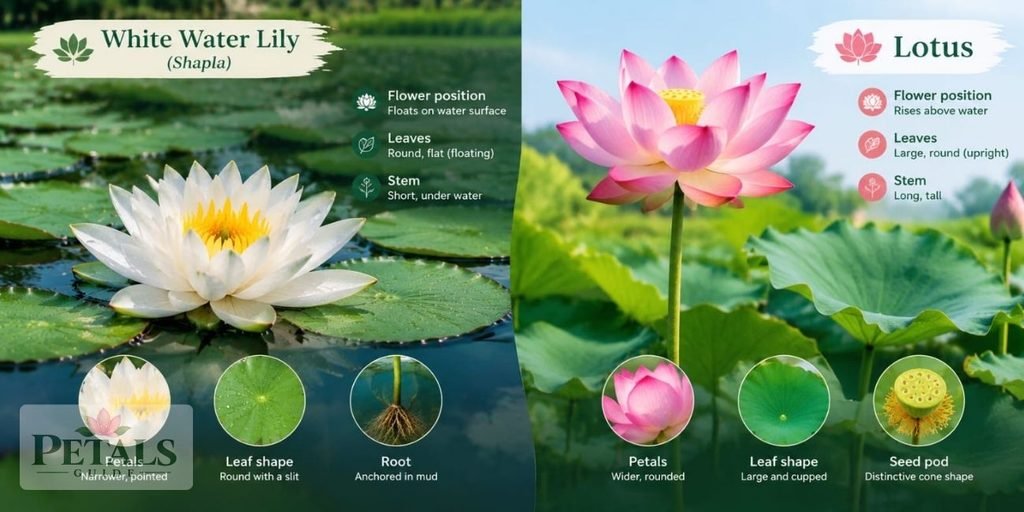
| Feature | Shapla (Water Lily) | Lotus |
|---|---|---|
| Scientific name example | Nymphaea nouchali | Nelumbo nucifera |
| Plant family | Nymphaeaceae | Nelumbonaceae |
| Leaves | Usually float flat on the water surface | Often rise above the water on long stalks |
| Flowers | Float on or remain close to the water surface | Grow above the water on taller stems |
| Roots and stems | Grows from underground rhizomes anchored in muddy soil | Has thick underground stems (rhizomes) that store nutrients |
| Seed structure | Produces seeds within the flower structure | Produces a distinctive round seed pod |
| Typical habitat | Ponds, beels, lakes, and wetlands | Shallow ponds, lakes, and slow-moving freshwater areas |
| National importance in Bangladesh | National flower of Bangladesh | Not Bangladesh national flower |
As for Shapla’s designation as the national flower of Bangladesh, this stems from its widespread presence in local water bodies and significance in indigenous ecosystems. Unlike Lotus, which thrives in a variety of aquatic environments, Shapla is integral to the rivers and ponds of Bangladesh, and its various adaptations contribute to its prominence and symbolic value within the region.
Other National Symbols of Bangladesh
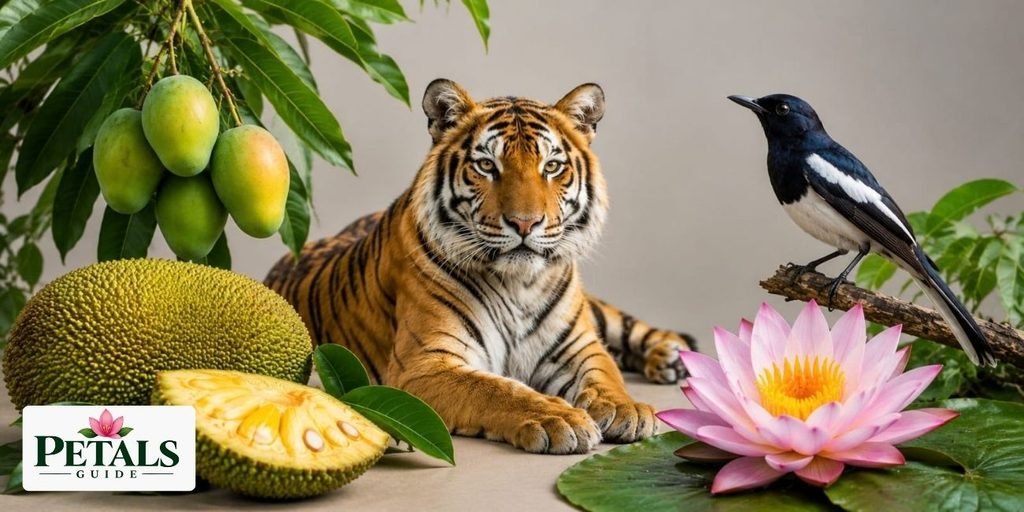
Besides the Bangladesh national flower, the country has several other national symbols that represent its wildlife, agriculture, and natural heritage. These include the national tree, animal, bird, and fruit.
- National tree in Bangladesh: The mango tree (Mangifera indica) is associated with the country’s agricultural heritage.
- Bangladesh national animal: The Royal Bengal tiger is the national animal and is closely associated with the Sundarbans.
- National bird of Bangladesh: The oriental magpie-robin, locally known as Doyel, is recognized for its distinctive song.
- National fruit of Bangladesh: Jackfruit (Artocarpus heterophyllus) is the national fruit and an important part of the country’s food culture.
Together with Shapla, the water lily, these national symbols represent different aspects of Bangladesh’s natural environment and cultural identity.
Different Types and Colors of Water Lilies
Water lilies belong to the genus Nymphaea, encompassing a variety of species rather than a single type. Common flower colors in Nymphaea include white, pink, blue, and yellow, reflecting their diverse ranges.
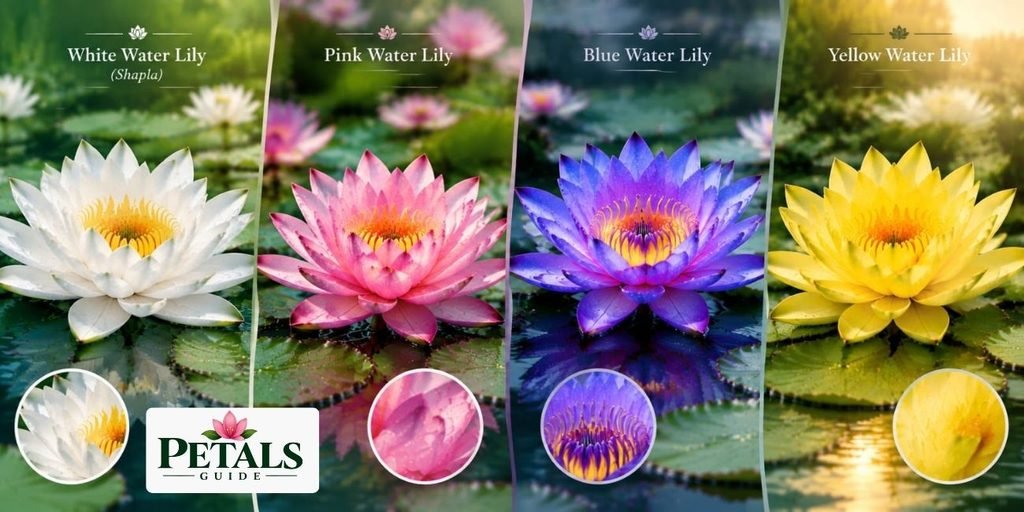
- Nymphaea odorata, or the fragrant water lily, features large white flowers and is native to North America.
- Nymphaea caerulea, known as the blue water lily, is recognized for its striking blue petals, native to Africa.
- Nymphaea alba, the European white water lily, has broad floating leaves and bright white flowers with yellow centers.
- Flower shapes range from flat and star-like in Nymphaea stellata to cup-shaped in the Nymphaea mexicana species.
- Different species can thrive in varied habitats, from still ponds to slower-moving waters, adapting to their environments.
- Nymphaea nouchali, or Shapla, is notable for its vibrant colors and is recognized as Bangladesh’s national flower.
- The distribution of water lilies spans across temperate and tropical regions, showcasing their ecological versatility.
- Some species, like Nymphaea thermarum, are endangered, highlighting a diversity of conservation statuses among the genus.
What People Don’t Usually Know About Bangladesh National Flower?
- Exact Selection Story Not Clearly Recorded: Although Shapla is widely recognized as Bangladesh’s national flower, the detailed process and specific reasons behind its selection are not extensively documented in public historical records.
- A Flower of Rural Bangladesh: Shapla grows naturally in ponds, beels, and wetlands, making it closely connected with everyday village landscapes.
- More Than a National Symbol: Besides its cultural importance, Shapla is part of freshwater ecosystems where aquatic plants and animals live.
- Not Just White: Although white Shapla is widely recognized, water lilies can have different colors, including pink and blue shades.
- A Member of a Large Plant Group: Shapla belongs to the Nymphaea genus, which includes many water lily species found around the world.
Conclusion
The national flower of Bangladesh, the water lily, embodies the spirit and heritage of the nation. Its vibrant beauty symbolizes resilience and purity, thriving in the waters that sustain both life and culture. As a watermark of Bangladesh’s identity, the water lily serves not only as a natural wonder but also as a source of inspiration for art and literature.
Explore more national flowers from around the world, including the Shamrock of Ireland, the , Cornflower of Germany and the Rose of England, to discover the stories and symbolism behind each country’s floral identity.
FAQs
What is the national flower of Bangladesh?
The national flower of Bangladesh is the water lily, specifically the white variety known as Shapla (Nymphaea nouchali).
Why was the water lily chosen as the national flower?
The water lily symbolizes purity, peace, and the resilience of the Bangladeshi people, as it thrives in muddy waters yet blooms beautifully.
When was the water lily declared the national flower?
The water lily was officially declared the national flower of Bangladesh after the country’s independence.
What are some famous flowers in Bangladesh?
Some well-known flowers in Bangladesh include Shapla (water lily), rose, jasmine, beli, krishnachura, shiuli, marigold, and tuberose. They are appreciated for their colors, fragrance, and seasonal blooms.
What is Bangladesh’s national animal?
The Royal Bengal tiger (Panthera tigris tigris) is the national animal of Bangladesh. It is closely associated with the Sundarbans mangrove forest.
What is the most famous flower in Bangladesh?
Shapla, or the water lily, is arguably Bangladesh’s most recognized flower because it is the country’s official national flower.
Which country has two national flowers?
Some countries recognize more than one national flower or floral emblem. Bolivia, for example, officially recognizes two national flowers: the kantuta (Cantua buxifolia) and the patujú (Heliconia rostrata).
Which is Pakistan’s national flower?
Jasmine (Jasminum officinale), commonly called chambeli in Pakistan, is the country’s national flower.