
Finding red flowers that suit your garden, containers, or bouquets can be tricky when so many varieties look alike at first glance. This guide introduces the top 25 types of red flowers, their distinctive qualities, and where each might fit in your plans.
List of the Top 25 Red Flowers
Here is the list of 25 different types of Red Flowers with scientific names.
- 1. Red Rose – Rosa spp.
- 2. Red Tulip – Tulipa spp.
- 3. Red Hibiscus – Hibiscus spp.
- 4. Red Poppy – Papaver spp.
- 5. Red Carnation – Dianthus caryophyllus
- 6. Red Dahlia – Dahlia spp. and garden hybrids
- 7. Red Zinnia – Zinnia spp.
- 8. Red Geranium – Pelargonium spp.
- 9. Red Amaryllis – Hippeastrum spp. and hybrids
- 10. Red Camellia – Camellia spp.
- 11. Red Begonia – Begonia spp.
- 12. Red Chrysanthemum – Chrysanthemum × morifolium
- 13. Red Lily – Lilium spp.
- 14. Red Anemone – Anemone spp.
- 15. Red Ranunculus – Ranunculus asiaticus
- 16. Scarlet Sage – Salvia spp.
- 17. Red Snapdragon – Antirrhinum majus
- 18. Red Celosia – Celosia argentea
- 19. Cardinal Flower – Lobelia spp.
- 20. Scarlet Bee Balm – Monarda didyma
- 21. Red Canna Lily – Canna indica and garden hybrids
- 22. Red Ixora – Ixora coccinea
- 23. Red Fuchsia – Fuchsia spp.
- 24. Red Firecracker Plant – Russelia equisetiformis
- 25. Cockspur Coral Tree – Erythrina spp.
Red Rose – Rosa spp.
Red roses are among the world’s most popular red flowers, known for their rich hues, layered petals, and often sweet fragrance. Their shades range from bright scarlet to deep crimson and velvety red, and their blooms may be single, semi-double, or fully double, depending on the variety. Roses grow as compact bushes, large shrubs, and climbing plants, bringing color to gardens and parks as well as floral arrangements.
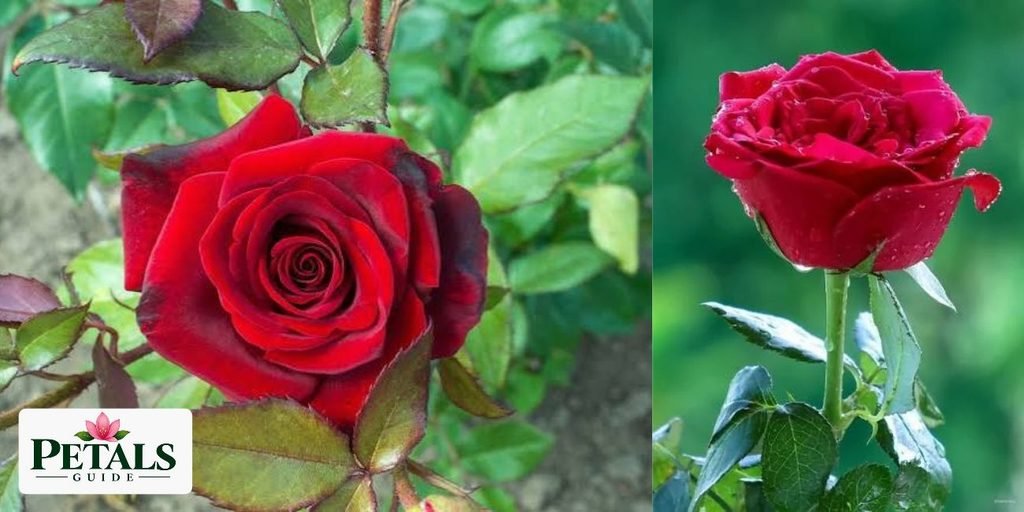
Red roses do not belong to a single species. Several rose species have red-flowered forms, including the China rose (Rosa chinensis) and Moyes rose (Rosa moyesii), which produces deep scarlet blooms. Cultivated favorites include ‘Mister Lincoln’, known for its deep red, strongly fragrant flowers; ‘Chrysler Imperial’, with rich crimson blooms; ‘Ingrid Bergman’, a popular red hybrid tea rose; and ‘Don Juan’, a climbing rose with dark red flowers. Red Rose symbolizes love and romance and is a popular choice for Valentine’s Day and anniversaries.
Red Tulip – Tulipa spp.
Red tulips bring bright color to spring gardens and flower arrangements. Their cup-shaped blooms range from scarlet and cherry red to deep crimson, with petal shapes that vary from broad and rounded to slender and pointed. Red-flowered varieties appear across several tulip species and cultivated hybrid groups.
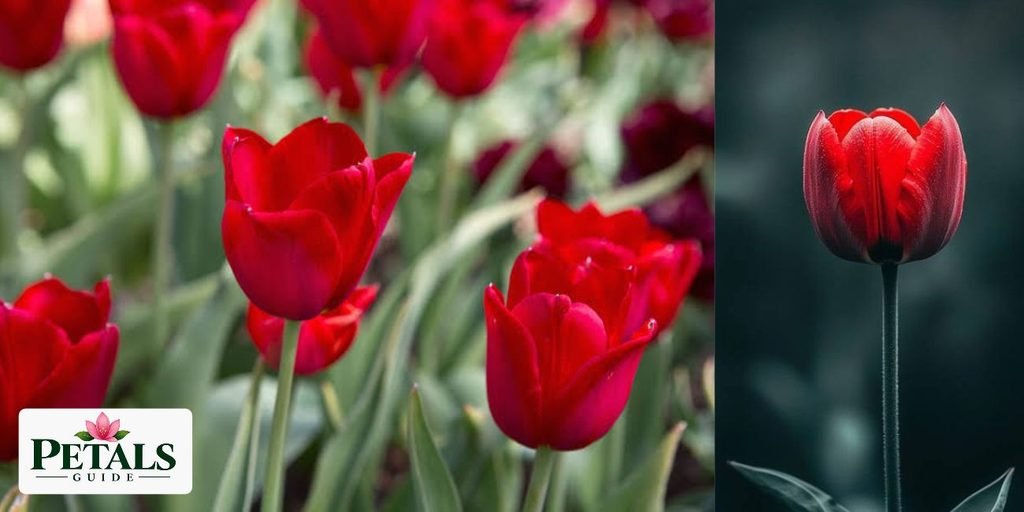
Among them is ‘Madame Lefeber,’ also sold as ‘Red Emperor,’ a Fosteriana tulip with large scarlet-red flowers and a yellow marking near the center. ‘Showwinner’ is another example, a bright red cultivar of the common garden tulip. Tulips grow from bulbs, which are usually planted in autumn for spring blooms. They thrive in full sun and well-drained soil and are commonly used in borders, containers, and bouquets. Red tulips are also associated with love and romance, making them a popular gift choice.
Red Hibiscus – Hibiscus spp
Red hibiscus flowers range from broad, overlapping blooms to striking, star-shaped petals. Chinese hibiscus (Hibiscus × rosa-sinensis) is a tropical shrub with a long central column of stamens. Its cultivated varieties produce bright scarlet or deep-red flowers in single and double forms. Each bloom usually lasts only a day, but the plant continues to form new buds in warm conditions. Grow it in a tropical garden, train it as a flowering hedge, or keep it in a large container.
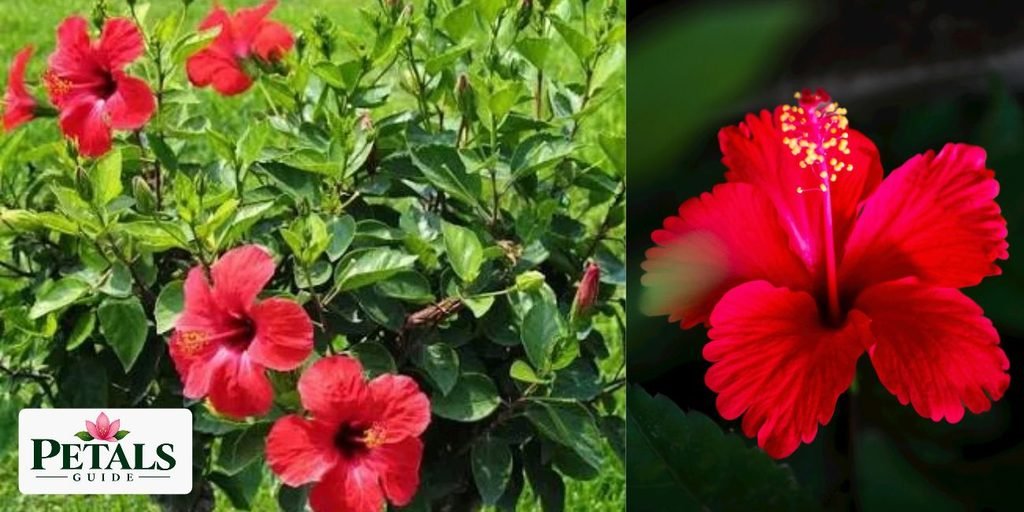
For a different look, scarlet rosemallow (Hibiscus coccineus), also known as swamp hibiscus or Texas star hibiscus, has large flowers with five deeply separated petals. This upright herbaceous perennial grows about 4 to 8 feet tall, making it a standout among tall red flowers. It thrives in moist soil and is often planted beside ponds or in rain gardens; its summer blooms also attract hummingbirds and butterflies. Choose between the two by considering both the flower shape you prefer and the growing conditions.
Red Poppy – Papaver spp
Poppies are familiar red flowers with delicate, often papery petals and prominent centers filled with stamens. Depending on the species and variety, their blooms may be simple and open or large and ruffled. Many red-flowered poppies have scarlet or crimson petals, sometimes with dark spots near the center. The common poppy (Papaver rhoeas) is known for its four bright red petals and dark basal markings. The Caucasian scarlet poppy (Papaver commutatum) has a bold black patch at the center of each flower.
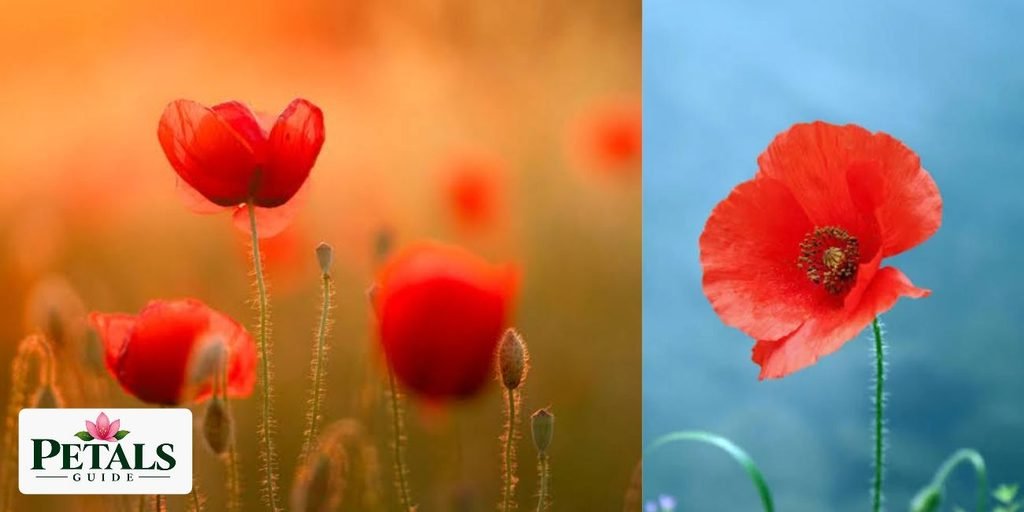
Red poppies include both annual and perennial forms, making them suitable for gardens and naturalized areas. The common poppy grows readily from seed and often appears in open fields and wildflower meadows. Oriental poppies, including red cultivars such as ‘Rembrandt’ and ‘Beauty of Livermere’, produce larger blooms and return each year as herbaceous perennials. They are popular in cottage gardens and sunny borders. The familiar red corn poppy is also widely used as a symbol of remembrance for those who died in World War I.
Red Carnation – Dianthus caryophyllus
Carnations are among the most widely used red flowers in floral arrangements. Their full blooms have finely toothed, frilled petals, with colors ranging from bright scarlet to deep crimson. Standard varieties such as ‘Master’ and ‘Domingo’ produce one large flower per stem, while spray varieties like ‘Red Fuego’ and ‘Red Vital’ carry several smaller blooms on branched stems.
Carnations have slender, gray-green leaves and a spicy fragrance traditionally compared to cloves, though scent strength varies by variety. Modern commercial breeding has often prioritized appearance and vase life, so some carnations have little fragrance. As herbaceous perennials of Mediterranean origin, they are valued for sturdy stems and good keeping quality in bouquets, and garden varieties can also grow in beds and containers.
Red Dahlia – Dahlia spp.
Red dahlias range from simple, open flowers to large blooms with densely arranged petals. Native to Mexico and Central America, the scarlet dahlia (Dahlia coccinea) bears single flower heads with orange-scarlet petals around golden centers; flowers may also be yellow, orange, or dark maroon.
Most large, decorative red garden dahlias are cultivated varieties developed through breeding. The American Dahlia Society recognizes forms including decorative, cactus, ball, and pompon, with petals ranging from broad and overlapping to narrow, pointed, or tightly rolled. Red cultivars include bright red ‘All Directions’ and antique red ‘Adam’s Choice’. Grown from underground tubers, dahlias bloom from summer into autumn and are popular in garden displays and cut-flower arrangements.
Red Zinnia – Zinnia spp.
Red zinnias are available in several species and cultivated varieties, with flowers ranging from simple, daisy-like blooms to full, layered heads. Common zinnia (Zinnia elegans) has many red cultivars, including ‘Benary’s Giant Scarlet’ and ‘Dreamland Scarlet’. Mexican zinnia (Zinnia haageana) also produces red and red-orange flowers, with varieties such as ‘Jazzy Red’ and ‘Old Mexico’. Red-flowered hybrid zinnias are available too, including the compact ‘Profusion Red’.
These annual flowers grow well in warm weather and full sun, producing blooms through summer and often into autumn. Their heights vary from compact plants suited to containers and garden edges to taller varieties that make good cut flowers. Single-flowered zinnias also attract butterflies and other pollinators. With their long flowering season and range of shapes, they are useful choices for adding red flowers to garden beds, borders and bouquets.
Red Geranium – Pelargonium spp.
Red flowers appear across several types of pelargoniums, commonly known as garden geraniums. Zonal geraniums (Pelargonium × hortorum) produce rounded clusters of bright red blooms above upright stems. Ivy-leaved geraniums (Pelargonium peltatum) offer a different look, with trailing stems, glossy leaves and smaller flower clusters. Other species, including Pelargonium tongaense, also bloom in red, while cultivars such as ‘Melody Red’ and ‘Best Red’ provide more options.
Valued for their long blooming season, pelargoniums grow in containers, garden beds and window boxes. Upright varieties bring color to beds and patio containers, while trailing types are well suited to hanging baskets. Most grow best in sunny locations with well-drained soil and can flower throughout the warmer months, making them versatile red plants for patios, balconies and other outdoor spaces.
Red Amaryllis – Hippeastrum spp. and hybrids
Red amaryllis flowers are known for their large, trumpet-shaped blooms, which usually appear in groups of two to six on tall, sturdy stalks. Several Hippeastrum species produce red or reddish flowers, while cultivated hybrids offer a wider range of shades and patterns. Popular red varieties include ‘Red Lion’, with deep crimson flowers, ‘Royal Red’, with dark orange-red blooms, and ‘Minerva’, which has red petals marked with a white star.
These bulbous perennials are especially popular as indoor flowering plants during winter and the Christmas season. Their flowers may be single or double, with some varieties displaying stripes or contrasting centers. Amaryllis bulbs are often grown in pots and can bloom again in following years with proper care. Their bright blooms also make them popular red Christmas flowers for festive indoor decorations.
Red Camellia – Camellia spp.
Camellias are evergreen shrubs with glossy leaves and showy blooms. Red-flowered varieties include Japanese camellia (Camellia japonica), Camellia reticulata and Camellia sasanqua, with flowers ranging from simple to fully double and colors from scarlet to crimson. Popular cultivars include C. japonica ‘Red Red Rose’ and ‘Deep Secret,’ and C. sasanqua ‘Yuletide.’
Often upright or spreading, these bushes with red blooms suit gardens, hedges and shaded borders. C. sasanqua generally blooms in autumn and early winter; C. japonica and many C. reticulata varieties flower from late winter into spring. They grow best in partial shade and moist, well-drained, acidic soil, while their evergreen foliage keeps gardens green between blooms.
Red Begonia – Begonia spp.
Begonias produce red flowers in several forms, from small, delicate blooms to large, showy flowers with layered petals. Wax begonias have compact growth and clusters of small flowers, with red cultivars such as ‘Harmony Scarlet’ and ‘Cocktail Vodka’. Some species, including Begonia boliviensis and Begonia veitchii, also produce red or orange-red flowers. These different forms make begonias an interesting choice among types of red flowers for gardens and indoor displays.
Depending on the type, begonias grow upright, form compact mounds or trail over pot edges. They suit shaded flower beds, containers and hanging baskets, and many varieties pair colorful blooms with foliage in green, bronze or reddish tones. Most prefer bright, filtered light and moist, well-drained soil, though care needs vary among groups, so check the requirements for the specific begonia you choose.
Red Chrysanthemum – Chrysanthemum × morifolium
Red chrysanthemums bring varied forms to autumn displays including decorative, pompon, daisy-like and spider types. Decorative varieties have broad, overlapping petals, while pompons form small, rounded blooms and spider types have long, narrow petals. ‘Bravo’ has dark red decorative flowers; ‘Garnet’ produces bright crimson pompon blooms that mature to bronze; and ‘Salsa’ has red, daisy-like petals around a light green center.
Garden mums are herbaceous perennials commonly grown for their autumn flowers. Depending on the cultivar and growing conditions, they generally reach 1.5 to 3 feet tall. Red varieties suit garden borders and seasonal displays, while long-stemmed florist varieties are used in bouquets and other floral arrangements.
Red Lily – Lilium spp.
Red lilies encompass wild species and cultivated varieties with a range of flower shapes and shades. Lilium pumilum bears small, bright scarlet flowers with strongly curved petals, while Lilium concolor has star-shaped to slightly recurved blooms in scarlet and orange-red. Among Asiatic lily hybrids, ‘Black Out’ is known for its deep crimson flowers. Depending on the type, blooms may face upward, outward, or downward, with prominent stamens at the center.
These bulbous red perennials grow on upright stems lined with narrow green leaves. Most garden lilies flower from early summer into late summer, though timing varies by species and variety. They suit flower borders and containers, and their long stems and large blooms also make them popular cut flowers for bouquets.
Red Anemone – Anemone spp.
Red anemones include several species and varieties with saucer-shaped blooms and dark centers. Poppy anemones (Anemone coronaria) have scarlet or vermilion flowers with dark purple or black stamens. Its red cultivars include ‘Hollandia’, also known as ‘His Excellency’, and ‘Harmony Scarlet’. Another red-flowered species is Anemone hortensis, a Mediterranean plant with red flowers and broad, rounded petals.
Many red-flowered anemones grow from underground tubers or other rootstocks and produce finely divided, fern-like leaves. Poppy anemones usually bloom in spring, while flowering times can vary among species. They grow well in sunny spots with light, well-drained soil and are planted in flower beds, borders and containers. Their long, slender stems and colorful blooms also make them popular red flowers for cut-flower arrangements.
Red Ranunculus – Ranunculus asiaticus
Also known as the Persian buttercup, Ranunculus asiaticus bears rounded blooms with layers of delicate petals. Red-flowered varieties range from bright scarlet to deeper shades, with flowers that may be simple and open or densely double, resembling small roses. Red forms in the popular Tecolote Giant strain are known for their large, showy petals, making this species one of the pretty red flowers often chosen for floral arrangements.
Native to the eastern Mediterranean and parts of southwestern Asia, Persian buttercups grow from claw-shaped underground storage roots. Their finely divided, parsley-like leaves accompany flowering stems that usually bloom in spring. They thrive in full sun, cool weather, and well-drained soil; hot summer conditions cause them to die back and go dormant. Though perennial, they are often grown as annuals in gardens and commercial flower production, where their long stems and layered blooms make them popular as cut flowers.
Scarlet Sage – Salvia spp.
Scarlet sage refers to several red-flowered salvias with tubular blooms on upright stems. Brazilian sage (Salvia splendens) has dense spikes of bright scarlet flowers and prominent red bracts. Scarlet sage (Salvia coccinea) bears smaller, loosely spaced flowers in whorls along slender stems, while pineapple sage (Salvia elegans) has loose clusters of scarlet blooms and aromatic, pineapple-scented leaves. Depending on the species, plants range from compact bedding types to varieties about 3 to 5 feet tall.
Some salvias are tender perennials often grown as annuals; others return in warm climates. Most red-flowered types prefer sunny spots and well-drained soil, flowering from summer into autumn, though bloom times vary. Their upright stems bring color and height to borders, containers and pollinator beds. Tubular flowers attract hummingbirds and butterflies, making many salvias useful tall red flowers for wildlife-friendly gardens.
Red Snapdragon – Antirrhinum majus
Snapdragons are recognized by their upright flower spikes, which carry rows of distinctive two-lipped blooms. Each flower resembles a small dragon’s mouth and opens when gently squeezed from the sides. Red varieties range from bright scarlet to rich crimson. One example is ‘Liberty Classic Crimson’, which produces velvety, deep red flowers on sturdy stems. These blooms grow above narrow, lance-shaped green leaves, and the plants are available in both tall and compact forms.
Antirrhinum majus is a short-lived perennial native to southwestern Europe and the Mediterranean region, but it is commonly grown as an annual in gardens. It prefers cooler weather, full sun and moist, well-drained soil, producing flowers from spring or early summer into autumn depending on the climate and variety. Tall varieties are particularly useful as tall red flowers in garden borders and make long-lasting cut flowers for bouquets. Their unusual blooms also attract bees, which open the flower lips to reach the nectar.
Red Celosia – Celosia argentea
Red celosia, known for its unusual flower heads, brings a range of flower shapes to warm-season gardens. Plume types such as ‘Fresh Look Red’ and ‘Arrabona Red’ form upright, feather-like clusters, while crested ‘Prestige Scarlet’ produces broad, folded blooms with a rooster’s-comb shape. Wheat-type celosias have narrower, grain-like spikes, and flower colors range from bright red to deep crimson.
A tender annual, Celosia argentea grows on upright stems with pointed green or reddish leaves and generally flowers from summer into autumn. Plant it in full sun and well-drained soil; it handles heat better than cool, wet conditions. Compact varieties suit containers and flower beds, while taller types add height to borders. The flower heads also work well in fresh and dried arrangements, retaining much of their color and texture.
Cardinal Flower – Lobelia spp.
The genus Lobelia includes hundreds of species with varied colors and growth habits. Two red-flowered examples are cardinal flower (Lobelia cardinalis) and Lobelia laxiflora. Cardinal flower bears bright scarlet, tubular blooms in tall, upright spikes, with two smaller upper lobes and three larger lower lobes. L. laxiflora has arching stems and narrower, hanging orange-red flowers with bright yellow throats, giving it a distinct look in the garden.
Both are herbaceous red perennials, but their growing needs differ. Native to North and Central America, cardinal flowers grow naturally in marshes, wet meadows, swamps and stream banks. It blooms mainly from summer into autumn and needs consistently moist soil in full sun or partial shade. Its flowers attract hummingbirds, butterflies and other pollinators. Lobelia laxiflora, native from southern Arizona through parts of Latin America, tolerates drier conditions once established. Its spreading rhizomes support blooms from late spring into summer, making it suitable for sunny borders and other well-drained areas.
Scarlet Bee Balm – Monarda didyma
Scarlet bee balm (Monarda didyma), also called Oswego tea and scarlet beebalm, is a North American wildflower known for its bright red, tubular flowers. The blooms have two lips and grow in dense, rounded clusters at the ends of upright, square-shaped stems. The plant typically reaches 2 to 4 feet tall, with opposite pairs of toothed, oval leaves that release a minty fragrance when crushed.
Native to eastern Canada and the eastern United States, this herbaceous perennial grows naturally along stream banks, in moist woodlands and in rich, damp areas. It flowers mainly in summer and grows best in full sun or partial shade with moist, fertile, well-drained soil. Its nectar-rich flowers attract hummingbirds, butterflies and bees, making it a useful plant for pollinator gardens. The aromatic leaves have also been used to prepare herbal tea, traditionally known as Oswego tea, a name associated with the Oswego people of North America.
Red Canna Lily – Canna indica and Garden Hybrids
Red canna lilies (Canna indica and garden hybrids) are prized for their bold red flowers and broad, tropical-looking leaves. Canna indica bears red to reddish-orange blooms, often marked with yellow near the base, in clusters atop upright stems that can reach 2 to 3 meters. Garden hybrids offer larger flowers and more colors; red cultivars include ‘President’, ‘Firebird’ and ‘Red King Humbert’, the last known for bronze-toned foliage.
These plants grow from thick underground rhizomes and thrive in warm weather, full sun and fertile, consistently moist but well-drained soil. They typically flower from summer into autumn, with longer flowering periods possible in tropical climates. Popular in beds, borders and large containers, they create a tropical display. Cannas are herbaceous perennials in warm climates; in frost-prone regions, their rhizomes may need to be lifted and stored.
Red Ixora – Ixora coccinea
Red ixora (Ixora coccinea), also known as flame of the woods or jungle flame, is a tropical evergreen shrub native to India, Sri Lanka, Bangladesh and parts of Southeast Asia. It produces dense, rounded clusters of small, bright scarlet flowers, each with a narrow tube and four spreading petals. These clusters grow at the ends of the branches and contrast with the plant’s glossy, dark green leaves. The shrub has a compact, much-branched growth habit and can flower throughout the year.
Ixora grows best in warm climates, with full sun or partial shade and moist, well-drained acidic soil. Alkaline soil can cause its leaves to turn yellow, so suitable soil conditions are important for healthy growth. Its dense foliage and repeated flowering make it one of the popular red plants used for hedges, borders, screens and ornamental garden displays. It can also be grown in large containers, where its bright flower clusters add color to patios and outdoor spaces.
Red Fuchsia – Fuchsia spp.
Red-flowered fuchsias bring an unusual shape to the garden: slender, tubular petals form a bell-like corolla, often framed by long, outward-sweeping sepals. In many varieties, the sepals are red while the inner petals are purple, pink, or orange-red, creating a striking two-tone bloom. Species such as Fuchsia magellanica and Fuchsia boliviana, along with garden hybrids and triphylla-type fuchsias, offer a range of red shades and flower forms.
Growth habits vary, too. Some hybrids trail gracefully over the sides of hanging baskets and containers, while upright varieties suit pots or garden borders; Fuchsia magellanica can grow as a shrub in favorable conditions. Fuchsias generally bloom from summer into fall, and most do best in partial shade with consistently moist, well-drained soil. With their distinctive flowers and varied forms, they’re a lovely way to add pretty red flowers among other shade-loving plants.
Red Firecracker Plant – Russelia equisetiformis
The red firecracker plant is an evergreen, loose-growing shrub with long, slender branches that arch and cascade, carrying clusters of bright, solid scarlet-red tubular flowers. Native to Mexico and parts of Central America, it blooms most heavily in warm weather, often from spring into fall, and may flower for longer in frost-free climates. Its vivid blooms stand out against the plant’s fine, green, horsetail-like foliage.
Grow Russelia equisetiformis in full sun to light shade and well-drained soil; it tolerates heat and benefits from regular watering while establishing. Its cascading habit suits hanging baskets and containers, while its long flowering branches also bring color to garden borders and landscape plantings. The abundant tubular flowers attract hummingbirds and other pollinators, making this red-flowered plant a lively garden feature.
Cockspur Coral Tree – Erythrina spp.
Coral trees are recognized by clusters of pea-shaped red flowers along their branches. Solid-red blooms appear in species such as Erythrina crista-galli, native to South America, and Erythrina herbacea, native to the southeastern United States. Depending on the species, flower clusters may be upright or spreading, and plants range from thorny shrubs to small trees with leaves divided into three leaflets.
Coral trees generally grow best in sunny locations and warm climates, though flowering seasons vary by species. They’re planted in gardens, parks, and open landscapes for their colorful blooms. Their nectar-rich flowers also attract hummingbirds and other nectar-feeding birds.
What Do Red Flowers Mean?
Red flowers commonly symbolize love, romance, passion, and deep affection. Their vivid color can also convey strong emotions, courage, and admiration. Red roses are a familiar expression of romantic love and devotion, often given for Valentine’s Day, anniversaries, and other special occasions. Red carnations may express affection and admiration, though their meanings vary across floral traditions.
These associations aren’t universal. In the Victorian language of flowers, or floriography, people used blooms and colors to communicate feelings without words. Meanings drew on folklore, literature, religion, and cultural traditions, and could differ between flower dictionaries. Today, red flowers can express love, respect, appreciation, or celebration—the specific flower, occasion, and cultural background all help shape the message.
Different Types of Red Flowers
Red-flowering plants come in many forms, including annuals, perennials, shrubs, trees, and climbing or trailing plants. Each type has a different growth habit and lifespan, so gardeners can choose options suited to their spaces and planting plans. Various kinds of red flowers are here.
Annual Red Flowers
Annuals complete their life cycle in one growing season. Their quick growth and colorful blooms make them useful for seasonal displays. Red-flowered examples include:
- Red zinnia (Zinnia elegans)
- Red celosia (Celosia argentea)
- Corn poppy (Papaver rhoeas)
- Red cosmos cultivars (Cosmos bipinnatus)
Plant annuals in flower beds, borders, and containers, or grow them for fresh bouquets. Their blooms add seasonal color and can attract pollinators.
Perennial Red Flowers
Perennial plants live for several years and may bloom in successive growing seasons. Many become dormant or die back during unfavorable weather, then produce new growth. Examples of red flowers include:
- Scarlet bee balm (Monarda didyma)
- Cardinal flower (Lobelia cardinalis)
- Red lily cultivars (Lilium)
- Red peony cultivars (Paeonia)
Red Perennials suit permanent beds, cottage gardens, borders, and pollinator-friendly spaces. Some are also grown in cutting gardens for floral arrangements.
Red-Flowering Shrubs
These woody plants produce flowers on multiple branches and often form dense bushes. Examples include:
- Red ixora (Ixora coccinea)
- Red tropical hibiscus cultivars (Hibiscus rosa-sinensis)
- Red Japanese camellia cultivars (Camellia japonica)
- Firespike (Odontonema strictum)
You can use red flowering shrubs for hedges, screens, borders, and ornamental landscaping. Many bushes with red blooms with their branching growth add structure to garden spaces while providing colorful flowers that attract visiting pollinators.
Red-Flowering Trees
Some ornamental trees produce abundant red or scarlet flowers across their branches. Examples include:
- Cockspur coral tree (Erythrina crista-galli)
- Indian coral tree (Erythrina variegata)
- African tulip tree (Spathodea campanulata)
These red flowing trees are planted in parks, large gardens, streets, and open landscapes. Their height and colorful branches make them good examples of tall red flowers for spacious outdoor settings. Their broad canopies can also provide shade, while their seasonal blooms create an attractive focal point.
Climbing and Trailing Red Flowers
Climbing and trailing plants have long, flexible stems that can spread across the ground, hang over containers, or grow on supports. Red-flowering examples include:
- Red climbing rose cultivars (Rosa)
- Red mandevilla cultivars (Mandevilla)
- Trailing red petunia cultivars (Petunia)
Grow climbing varieties on trellises, arches, fences, or pergolas. Trailing forms work well in hanging baskets and balcony containers, where they can soften the edges of pots and raised planters.
Popular Red Flowers for Different Occasions
Red flowers are a popular choice for romantic gestures, family celebrations, and special events. From classic roses to cheerful gerberas, many pretty red flowers can make thoughtful gifts and attractive decorations. The best choice often depends on the occasion, the recipient, and the style of arrangement.
Valentine’s Day and Romantic Anniversaries
Red flowers for Valentine’s Day are often chosen to express romantic love and affection. Red roses remain the traditional choice for Valentine’s Day, wedding anniversaries, and marriage proposals. Red tulips offer a simple alternative, while red carnations can add texture and variety to a romantic bouquet.
Wedding Bouquets and Engagement Decorations
Red flowers can bring rich color to wedding decorations, bridal bouquets, and engagement arrangements. Red roses, dahlias, ranunculus, and carnations are popular choices for bouquets and table centerpieces. They can be paired with white flowers and greenery for contrast or arranged in different shades of red for a coordinated look.
Birthday Flowers and Congratulations
For birthdays, graduations, promotions, and other achievements, red gerberas, zinnias, chrysanthemums, and carnations make cheerful gifts. These red-flowered choices work well in mixed bouquets and colorful arrangements. They can also be combined with seasonal blooms to create a lively display.
Christmas Flowers and Festive Arrangements
Red amaryllis is a popular Christmas flower because its large, trumpet-shaped blooms are often available during the winter holiday season. Red chrysanthemums and other seasonal flowers can also brighten festive displays. Pairing them with evergreen foliage, white flowers, or decorative branches creates a traditional Christmas arrangement.
Thank-You Gifts and Everyday Surprises
Red carnations, tulips, and gerberas can make thoughtful thank-you gifts or unexpected gestures. If you are choosing from different red flower names, consider the recipient’s taste and the message you want the bouquet to convey. A simple arrangement of red blooms can brighten someone’s day, even when there is no special occasion.
Top Red Flowers for Bouquets and Floral Arrangements
Red flowers work well in bouquets and floral arrangements because of their attractive shapes, bright colors, and different textures. Use bold blooms as focal points, then add smaller flowers and greenery to create balance and contrast.
- Red Roses: A classic choice with elegant flower shapes and strong stems, roses work well as focal flowers in both simple and elaborate arrangements.
- Red Carnations: Their ruffled petals add texture, and their long-lasting blooms help fill out a bouquet.
- Red Dahlias: Large, layered flower heads make dahlias striking focal points in seasonal bouquets and decorative arrangements.
- Red Ranunculus: Tightly layered petals give these flowers a soft, detailed look in smaller bouquets and mixed arrangements.
- Red Tulips: With smooth stems and simple blooms, tulips suit modern, minimalist, and spring bouquets.
- Red Chrysanthemums: Their full flower heads add volume and texture to mixed bouquets and larger displays.
- Red Gerberas: Broad, daisy-like blooms bring a cheerful touch to casual bouquets and colorful arrangements.
Tips for Arranging Red Flowers
Pair large blooms, such as roses and dahlias, with smaller flowers to create balance.
- Add white flowers for contrast or pink blooms for a softer palette.
- Use fresh greenery to add texture and soften bold red tones.
- Choose flowers with similar vase-life requirements for mixed bouquets.
- Trim stems at an angle, remove leaves below the waterline, and change the water regularly to help cut flowers stay fresh.
How to Choose Red Flowers for Different Garden Styles
Red flowers can bring color to gardens of every size, from containers to broad landscaped areas. Consider each plant’s growth habit and mature size to create a well-proportioned display and avoid overcrowding.
Red Flowers for Small Gardens and Pots
Compact varieties such as red begonias, geraniums, zinnias, and petunias work well in small gardens, on balconies, and in containers. Let trailing petunias spill over hanging baskets, or use upright geraniums to add height to pots. Red hibiscus is another option for a large container, provided it has enough room.
Red Flowers for Borders and Flower Beds
Create depth in borders by arranging flowers at different heights. Plant shorter zinnias and celosia near the front, with taller cardinal flowers and scarlet bee balm farther back. Red perennials can be a good fit for permanent flower beds, as they can return each growing season.
Red Flowers for Cottage Gardens
Cottage gardens favor relaxed combinations of flowers with varied shapes and heights. Mix red roses, dahlias, poppies, and peonies with softer-colored flowers and leafy plants. Planting them in loose clusters helps maintain an informal, natural look.
Red Flowers for Large Gardens and Vertical Spaces
In larger gardens, flowering shrubs and trees such as red ixora, tropical hibiscus, and coral trees can make use of the available space. Climbing red roses and red mandevilla are suited to vertical features such as arches, fences, and trellises. They add height and fill areas that might otherwise be left open.
Conclusion
From familiar roses and tulips to dahlias, zinnias, and less familiar blooms, red flowers offer plenty of ways to bring color to a garden or bouquet. Their range makes them a natural fit for many garden styles, special occasions, and everyday arrangements. Use this guide to narrow down the types of red flowers that suit your setting, then choose a few favorites to explore for your next planting or floral design.
FAQs
What Are the Names of Some Red Flowers?
Some popular red flowers include roses, tulips, hibiscus, poppies, carnations, dahlias, zinnias, gerberas, chrysanthemums, and ranunculus. They come in different shades of red and have varied shapes and growing habits.
What Is a Beautiful Red Flower?
The red rose is one of the most widely admired red flowers. Its layered petals, rich color, and fragrance make it a popular choice for gardens, bouquets, and special occasions. Red dahlias and ranunculus are also beautiful options.
What Are Some Rare Red Flowers?
Some less commonly seen red flowers include the cardinal disa (Disa cardinalis), a South African orchid with brilliant red blooms, and the spiral cyrtanthus (Cyrtanthus spiralis), a rare bulbous plant with red flowers. These species are less familiar in ordinary gardens than roses, tulips, or carnations.
What Are the Top 5 Most Popular Flowers?
Five widely popular flowers are roses, tulips, carnations, lilies, and chrysanthemums. Red varieties of these flowers are especially popular for bouquets, gifts, garden displays, and celebrations.
What Red Flowers Are in Season Now?
In November, red chrysanthemums are a reliable seasonal choice in many parts of the United States, as they are among the main fall-blooming flowers. Red snapdragons are also suitable for fall and winter gardens in milder regions, including parts of the South. Availability varies by region, temperature, and local frost dates.