
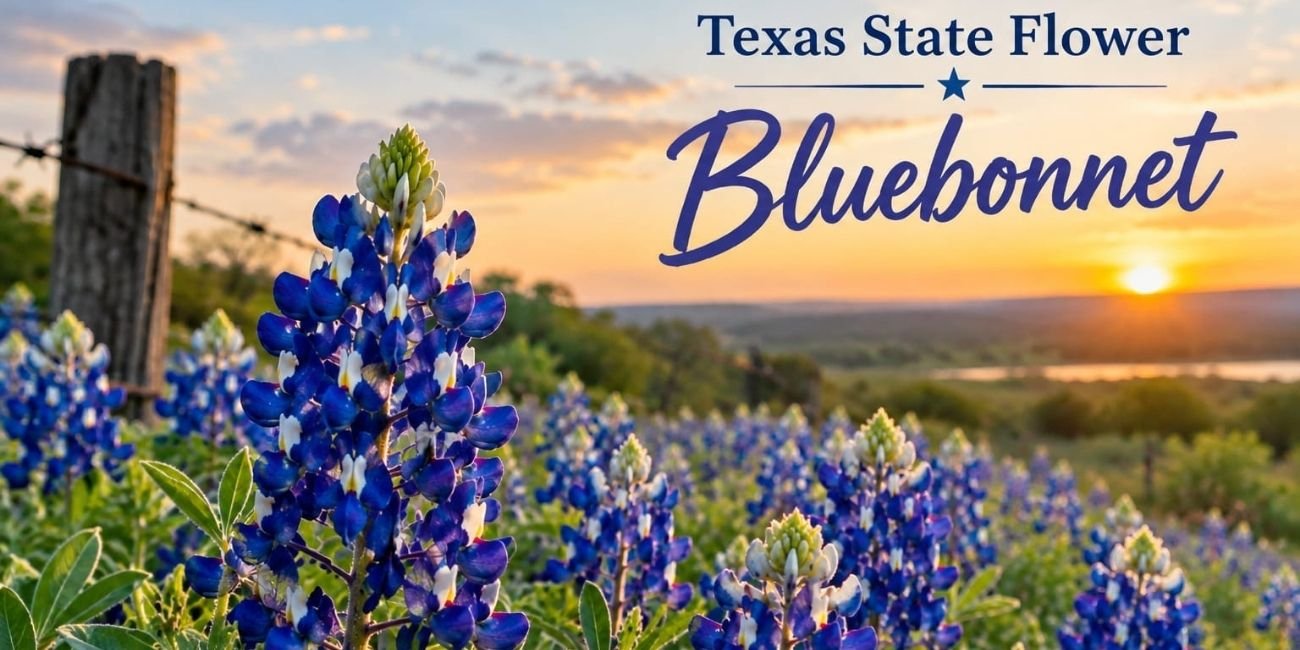
In this article, we’ll explore the vibrant beauty of Texas’s state flower, the bluebonnet, a symbol that captures the spirit of the Lone Star State. These stunning flowers blanket Texas fields every spring, drawing tourists from around the globe. Understanding the significance of the State Flower of Texas connects us to the state’s history and highlights its role in Texas culture.
What Is the State Flower of Texas?
The bluebonnet is the official state flower of Texas. The name refers to several native species in the genus Lupinus, which belong to the pea family. These wildflowers are recognized by their upright flower spikes, usually covered with blue or blue-violet blossoms and surrounded by green foliage.
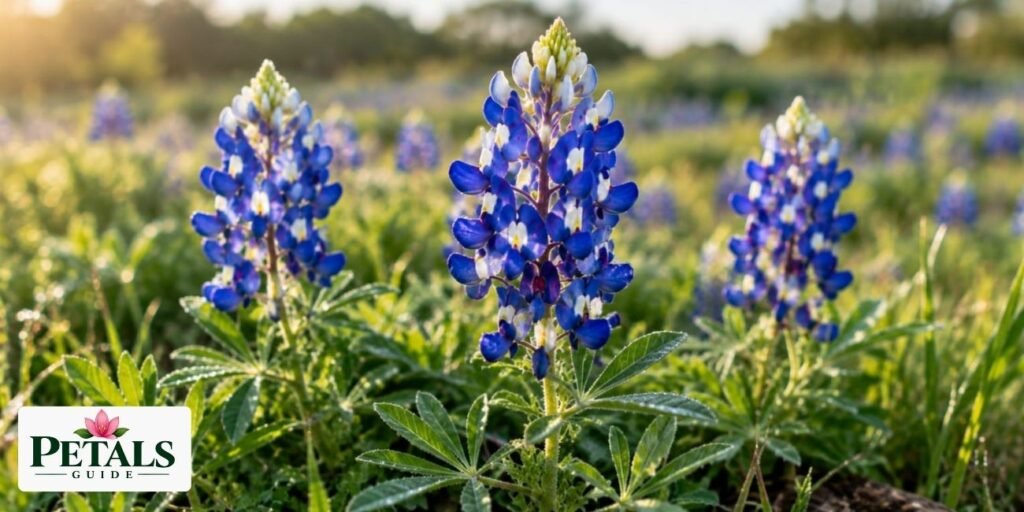
Bluebonnets are native to Texas and grow naturally in open fields, prairies, roadsides, hillsides, and other sunny areas. During spring, they can be found across many parts of the state, where their blue flowers become a familiar part of the Texas landscape.
What Does the Texas Bluebonnet Look Like?
Texas bluebonnets have small, pea-shaped flowers arranged closely along an upright flower spike. The blossoms are usually blue to blue-violet, with a distinctive white marking near the center of each flower. As the flowers mature, this white area can develop a reddish or pinkish tint. The flower spike gradually tapers toward the top, giving the plant its characteristic shape.
The plant has narrow, green leaves divided into several leaflets that spread outward from the stem. Depending on the species and growing conditions, bluebonnets commonly reach about 1–2 feet in height. When growing in groups, their upright blue flower spikes stand above the surrounding green vegetation, making the plants easy to recognize in open landscapes.
Botanical Facts about Texas’s State Flower
The Texas bluebonnet is a flowering plant in the Fabaceae (legume) family. Although Lupinus texensis is the species commonly known as the Texas bluebonnet, Texas officially recognizes several bluebonnet species collectively as its state flower.
- Scientific Name: Lupinus spp.
- Plant Family: Fabaceae
- Genus: Lupinus
- Plant Type: Annual wildflower
- Native Range: Texas, Southern United States
- Typical Height: 8–16 inches
- Soil Type: Well-drained soils, including sandy, loamy, clay, and limestone soils
- Sun Requirement: Full sun
- Water Needs: Low once established; drought tolerant
- Bloom Time: March–May
Bluebonnets are adapted to Texas conditions and can grow in several soil types, although they perform best in well-drained locations with plenty of sunlight. As legumes, they also have the ability to fix atmospheric nitrogen through their root association with beneficial bacteria.
History of the Bluebonnet as Texas State Flower
The bluebonnet became the state flower of Texas on March 7, 1901. The Texas Legislature adopted Senate Concurrent Resolution 10 after the National Society of Colonial Dames of America in Texas requested that a state flower be chosen. The original resolution specifically designated Lupinus subcarnosus, commonly known as the buffalo clover or bluebonnet.
The original designation applied to only Lupinus subcarnosus, but other bluebonnet species were also growing naturally in Texas, particularly Lupinus texensis. In 1971, the Texas Legislature passed House Concurrent Resolution 44, expanding the designation to include Lupinus texensis and other varieties of bluebonnet. This made the state flower a collective designation rather than one limited to a single species.
Today, Texas government sources commonly describe six native Lupinus species as the state flowers of Texas. The flower’s official recognition was further reinforced in 1933, when the Texas Legislature adopted “Bluebonnets” as the official state flower song.
Types of Bluebonnets
The name bluebonnet covers several native Lupinus species found in Texas. The best-known is the Texas bluebonnet (Lupinus texensis), which is widespread across much of central and southern Texas. Other recognized species include the Big Bend bluebonnet (Lupinus havardii), which is associated with the Big Bend region, and the buffalo clover (Lupinus subcarnosus), which was the species originally designated as the state flower in 1901.
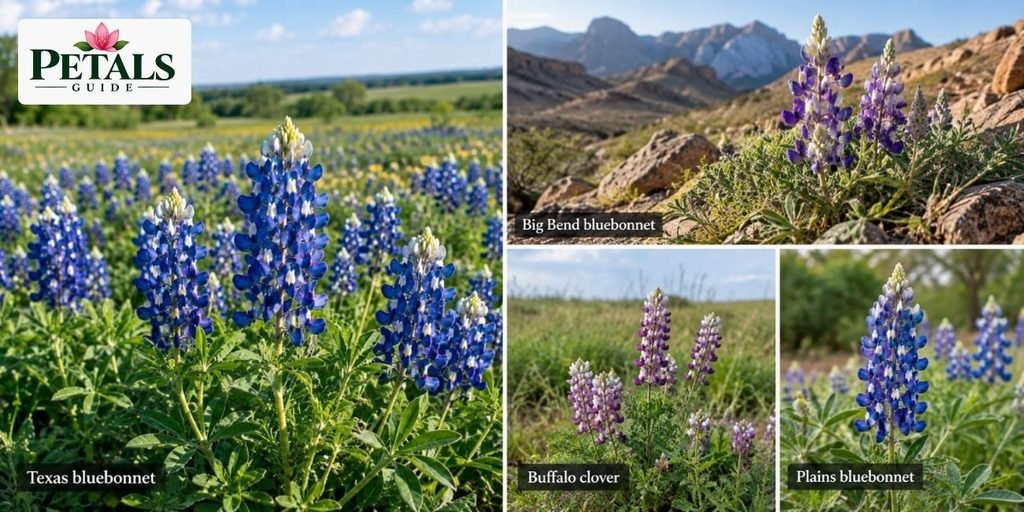
Texas also has Lupinus concinnus and Lupinus plattensis among the bluebonnets included in the state’s official designation. These species differ in their geographic distribution and growth characteristics, with some adapted to particular regions of Texas. In 1971, the Texas Legislature expanded the state-flower designation to include the other recognized varieties of bluebonnet rather than limiting it to one species.
Where and When Do Bluebonnets Bloom in Texas?
Texas bluebonnets grow naturally across much of central and southern Texas, particularly in the Hill Country and Blackland Prairie regions. They commonly occur in open fields, prairies, meadows, pastures, and along roadsides, where well-drained soils and adequate sunlight support their growth.

The flowering season generally begins in March, although blooming can start earlier in southern areas and later farther north. Texas bluebonnets typically reach their main flowering period from late March through mid-April, with some flowers continuing into May depending on local weather and conditions.
In western Texas, the Big Bend bluebonnet (Lupinus havardii) can bloom earlier, with the best viewing period in Big Bend National Park often occurring from February through March.
What Does the Bluebonnet Symbolize?
The bluebonnet is closely associated with Texas pride, heritage, and the state’s natural landscape. Its status as an official state symbol has made it more than a native wildflower; it represents a recognizable part of Texas identity and the diversity of the state’s natural environment.
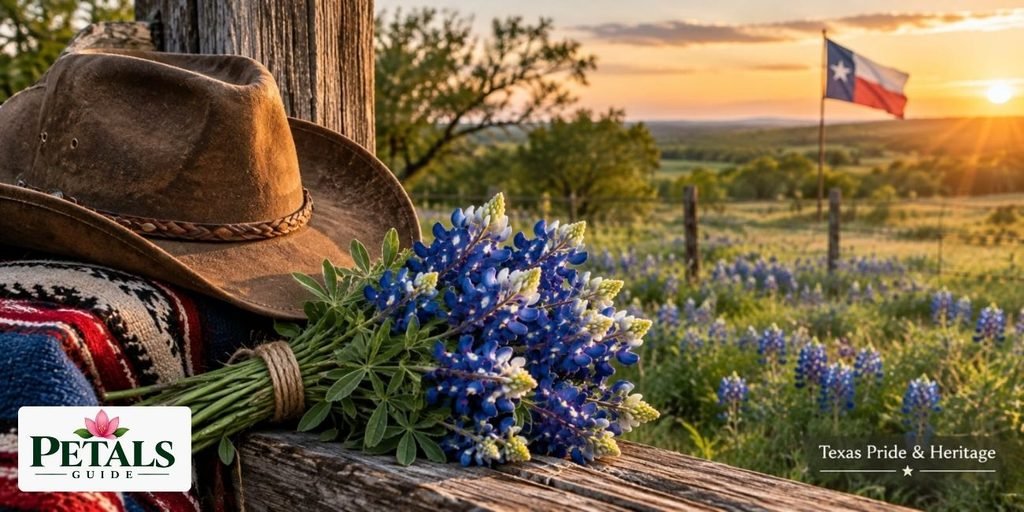
The flower also has a strong place in Texas traditions. Bluebonnets have inspired art, photography, music, festivals, and family springtime activities. The Texas Legislature adopted “Bluebonnets” as the official state flower song in 1933, while bluebonnet festivals and trails continue to celebrate the flower in different parts of the state.
How to Grow Texas Bluebonnets?
Texas bluebonnets are usually grown from seeds, which are best planted in fall so they can develop roots and establish before winter. Choose a location that receives full sun and has well-drained soil. Before sowing, loosen the soil and scatter the seeds over the surface, then press them lightly into the soil rather than burying them deeply.
Keep the soil slightly moist while the seeds are germinating, but avoid excessive watering or standing water. Once the plants are established, they generally need less water and can tolerate dry conditions. Allow mature plants to produce and drop their seeds if you want bluebonnets to return naturally in the following seasons.
Interesting facts about Bluebonnet
- The name bluebonnet comes from the flower’s resemblance to the sunbonnets worn by women in the past. The plant has also been known by other names, including buffalo clover and wolf flower.
- Bluebonnet seeds are small and pea-shaped, and a pound of Lupinus texensis seeds can contain about 13,500 seeds.
- Bluebonnets are not limited to blue flowers. White and pink forms also occur naturally, although their offspring may not always retain the same flower color because bluebonnets are pollinated by bees.
- The Texas Department of Transportation also noticed that bluebonnets are legumes capable of fixing nitrogen, adding an ecological role to their value as native wildflowers.
- Bluebonnets have an official state flower song. Texas adopted “Bluebonnets” as its official state flower song in 1933.
- Bluebonnets became part of Texas highway landscaping. The Texas Highway Department began planting wildflowers along major highways in the 1930s, a program that helped make roadside wildflowers a familiar part of Texas travel.
- The seeds and plant can be toxic. Texas Parks and Wildlife notes that bluebonnets, particularly their seeds, can be toxic to humans and animals, so they should not be treated as edible plants.
If you want to learn about state/national flowers of different countries, then you should read the following:
National flower of Ireland
National flower of Italy
National flower of Honduras
National flower of Paraguay
National flower of Afghanistan
Conclusion
The Bluebonnet, Texas’s official state flower, symbol of beauty and resilience that encapsulates the spirit of the Lone Star State. With its breathtaking blooms that grace the fields each spring, the Bluebonnet serves as a reminder of Texas’s rich natural heritage. Beyond its aesthetic appeal, the state flower of Texas has significant cultural importance, representing the pride and identity of Texans. Efforts to preserve and promote this iconic flower have helped ensure that future generations can appreciate its beauty.
FAQs
Why was the Bluebonnet chosen as the state flower?
The Bluebonnet was designated as the state flower in 1901 due to its widespread beauty and significance in Texas heritage.
When do Bluebonnets typically bloom in Texas?
Bluebonnets usually bloom from late March to early May, depending on the weather conditions.
What colors do Bluebonnets come in?
Though primarily blue, Bluebonnets can also have white, pink, and lavender variations due to different genetic strains.
Why are bluebonnets important to Texas culture?
Bluebonnets are a symbol of Texas pride and heritage, featured in art, literature, and numerous festivals across the state.