
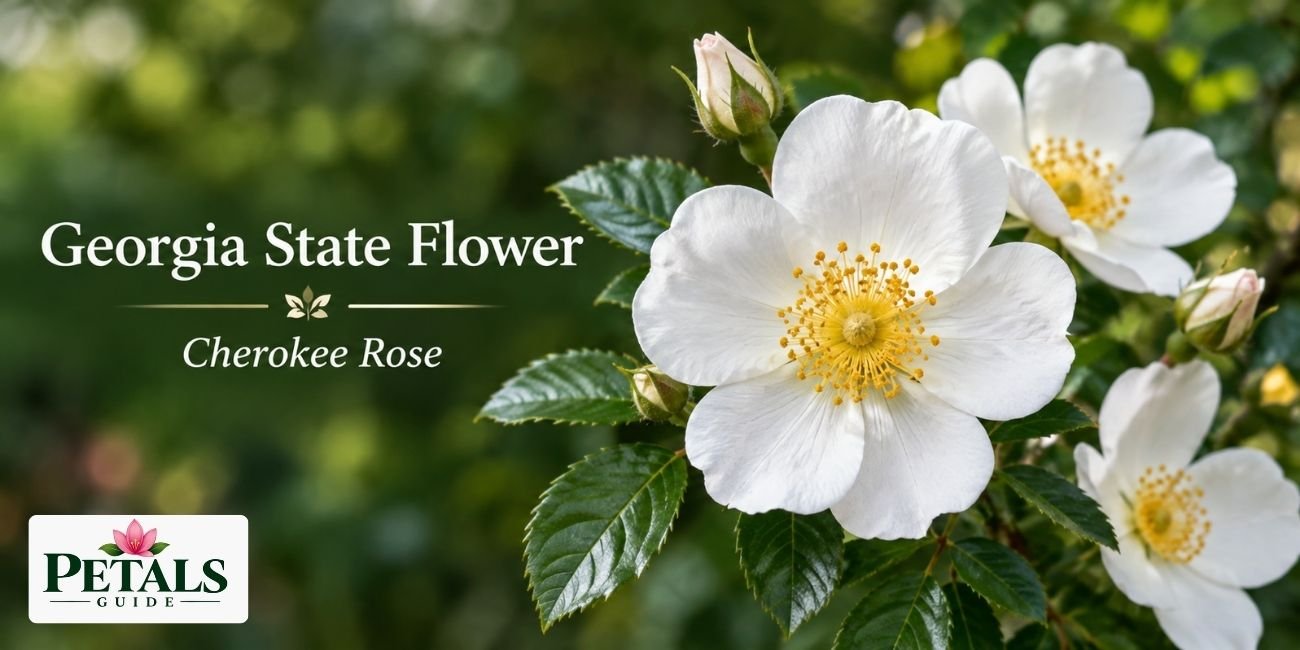
The Georgia state flower, the Cherokee rose, is an important part of the state’s heritage and set of official symbols. This rose, featuring white petals and a bright yellow center, has represented Georgia for over a hundred years. In this article, we will look into the history of Georgia’s state flower, what it symbolizes, its botanical characteristics, when it blooms, how to grow it, and its cultural and environmental significance in the state.
What Is the State Flower of Georgia?
The Georgia state flower is the Cherokee rose (Rosa laevigata). This climbing rose has beautiful white petals that contrast with its bright golden-yellow center. Its glossy green leaves add to its charm. In 1916, it became Georgia’s official state flower, symbolizing the state’s rich history.
Unlike the Cherokee rose, Georgia’s official state wildflower is the native azalea. While both flowers are important to Georgia’s identity, they each have their own unique beauty and story. The Cherokee rose is often linked to the Cherokee people and their history, making it more than just a pretty flower; it represents a connection to the past and the cultural heritage of the region. Seeing these roses bloom is a reminder of Georgia’s natural beauty and the stories rooted in its landscapes.
History of the Georgia State Flower
The history of the Georgia state flower goes back to 1916, when the Cherokee rose was officially adopted as Georgia’s floral emblem. This change wasn’t just a simple decision; it was the result of a dedicated campaign by the Georgia Federation of Women’s Clubs. They worked hard to bring the beauty of the Cherokee rose to the attention of the state legislature, leading to its approval through Joint Resolution No. 42 on August 18, 1916.
At first, many believed the Cherokee rose was native to Georgia, adding to its charm. However, later research found that this lovely flower actually originated in Asia. Still, the Cherokee rose kept its status and became a lasting part of Georgia’s collection of state symbols. In 2026, there was a discussion in the Georgia General Assembly about potentially replacing the Cherokee rose with the native sweetbay magnolia, but this proposal did not pass. As a result, the cherished Cherokee rose continues to symbolize the spirit and beauty of Georgia.
Symbolism of Georgia’s State Flower
The Cherokee rose, as the state flower of Georgia, carries deep meanings tied to loss, love, and survival. According to a well-known story, as Cherokee mothers wept for their loved ones during the harsh Trail of Tears, their tears nourished the ground, allowing beautiful white roses to bloom. In this story, the white petals symbolize those tears, offering a touching reminder of the pain endured. Meanwhile, the golden-yellow center stands for the riches that led to the loss of their homelands, shedding light on the harsh realities of history.
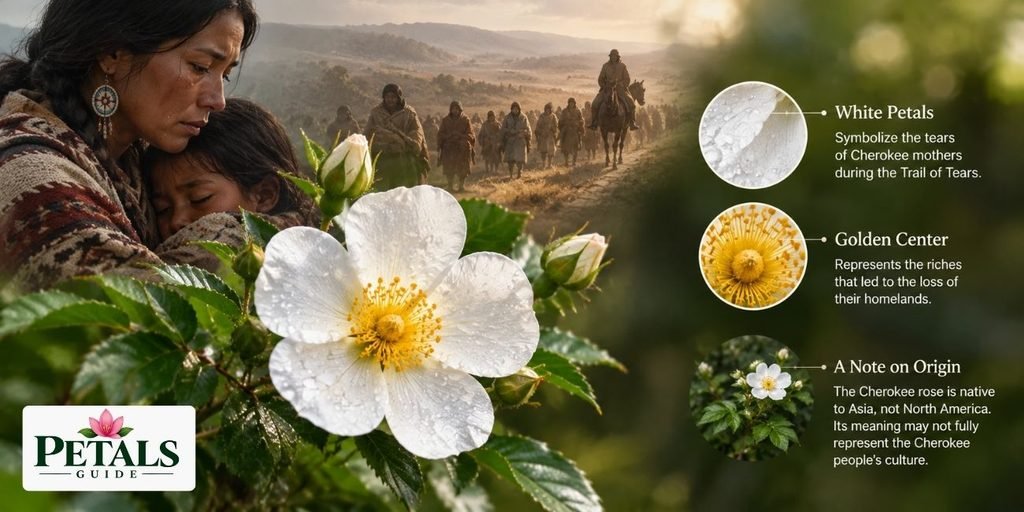
While the legend paints an emotional picture, it’s essential to remember that the Cherokee rose is originally from Asia, not North America. Some members of the Cherokee community feel that this flower’s significance might not fully represent their culture. Understanding this distinction helps preserve the historical context while respecting the Cherokee people’s own cultural heritage and experiences.
Scientific Classification of the Cherokee Rose
The Cherokee rose belongs to the rose family, Rosaceae. Its scientific name is Rosa laevigata, and its classification helps identify its place in the plant kingdom.
| Classification | Details |
| Common Name | Cherokee Rose |
| Scientific Name | Rosa laevigata Michx. |
| Kingdom | Plantae |
| Phylum | Streptophyta |
| Order | Rosales |
| Family | Rosaceae |
| Genus | Rosa |
| Species | Rosa laevigata |
| Plant Type | Shrub |
| Native Range | Central and southern China, Taiwan, and Vietnam |
What Does the Georgia State Flower Look Like?
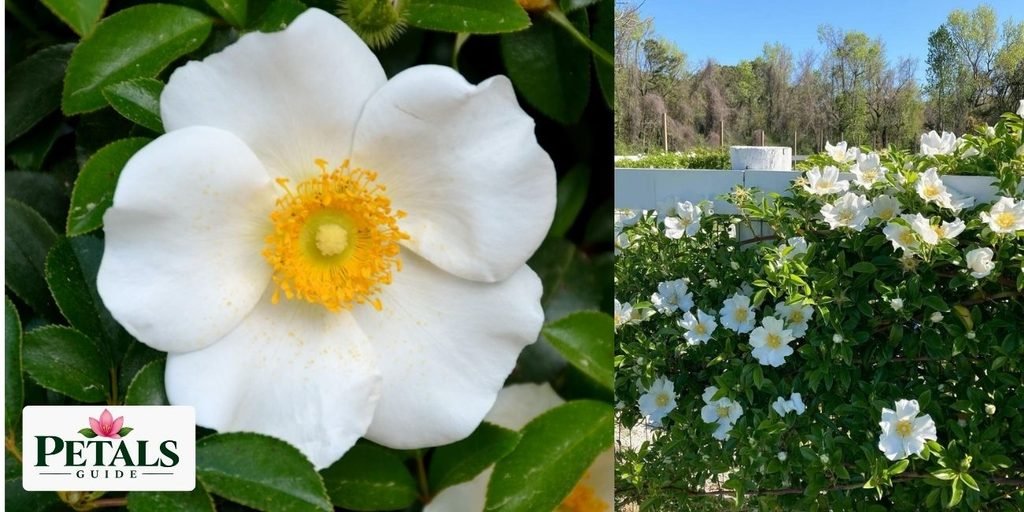
The Georgia state flower, the Cherokee rose, is a single white flower that has five broad petals. These petals surround a cluster of bright golden-yellow stamens, creating a cheerful sight in gardens. Each flower measures about 2 to 4 inches across and has a mild, sweet smell that many people find lovely. With their bright colors and pleasant fragrance, the blooms are easy to notice.
The leaves of the Cherokee rose are dark green and glossy, typically divided into three leaflets with edges that are finely toothed. The plant’s stems are long and arching, making it perfect for climbing over fences or shrubs. However, be careful! The stems are covered with hooked prickles that can snag your skin. After the flowers fade, the plant produces a unique oval to pear-shaped rose hips that turn orange-red as they ripen, adding another layer of interest to this beautiful flower.
Where Does the state flower of Georgia Grow?
The Cherokee rose, known as the official Georgia state flower, has its roots in central and southern China, Taiwan, and Vietnam. It was introduced to the southeastern United States during the colonial period and later became established in Georgia and neighboring states. In this region, it thrives along roadsides, fence rows, and in pastures, often taking over areas where the land has been disturbed. Its ability to climb and spread allows it to create dense thickets, especially in spots that offer good growing conditions.
It is essential for gardeners to be cautious as aggressive growth can overshadow native plants, leading to competition that may disrupt local ecosystems. Before planting, it’s wise to check local guidelines to ensure that this non-native species doesn’t harm the natural landscape. Understanding its behavior helps maintain balance in gardens and surrounding natural areas.
Georgia State Flower Blooming Season
Georgia’s state flower, the Cherokee rose, begins to bloom in early spring, with the best display seen in March and April. As the weather warms up, you can often spot these beautiful white flowers on their long, bending stems. The exact time for blooming depends on how warm it gets and other weather changes.
Usually, the Cherokee rose puts on its main show just once a year. Sometimes, if the conditions are just right, you might see a few extra blooms later on, but it doesn’t bloom repeatedly like some other roses. To help these flowers thrive, they love plenty of sunshine, so getting a spot with full sun is key. If you keep an eye on the weather, you’ll start to notice the first blooms popping up as spring unfolds.
Growing Requirements of the Cherokee Rose
The Cherokee rose can grow in various soil types, but selecting a proper spot and allowing enough space is necessary for this strong climbing shrub. While it is linked to Georgia, gardeners should understand its growth patterns and spreading potential before planting.
Sunlight and Location
This rose does best in full sun, ideally getting at least six hours of direct sunlight each day. It can handle some shade, but it flowers better in brighter spots. Because its long stems need space, a sturdy support like a strong trellis or fence is helpful.
Soil and Watering
The Cherokee rose can grow in different soil types, such as clay, loam, and sandy soil. The key is to ensure good drainage, as waterlogged soil can harm the roots. Water new plants regularly until they are established. After that, water deeply during dry spells and add mulch around the base to keep the soil moist.
Pruning and Maintenance
The Cherokee rose has long, arching stems with many hooked thorns. Pruning keeps its size in check and clears pathways and surrounding plants. Late winter is a good time to prune before new growth starts. Wear thick gloves and protective clothing when handling the stems.
Space and Spread
The Georgia state flower can grow around 15 to 33 feet long when climbing. Its strong growth can cover fences and shrubs, but it might also create dense thickets and compete with other plants. Since the Cherokee rose is invasive in some areas of the southeastern U.S., check local advice before planting it near natural spaces.
Cultural Importance of Georgia’s State Flower
The Cherokee rose, named after the Cherokee people, holds a special place in Georgia’s culture. As the official state flower of Georgia, it appears in many books and talks about Georgia’s symbols. Traditionally, people used its thick, thorny branches to create hedges around their homes and farms, helping to keep animals in and mark property lines. Even today, many gardeners in Georgia love to plant it for its beauty and the history it represents.
However, it’s important to remember that just because the flower has “Cherokee” in its name doesn’t mean it originally belonged to the Cherokee people. The Cherokee rose actually comes from Asia, and while there are stories connecting it to the Trail of Tears, this doesn’t validate it as a true symbol of Cherokee culture. By understanding this difference, we can enjoy the flower’s beauty while also respecting its origins and the rich heritage of the Cherokee Nation.
Environmental Impact of the Cherokee Rose
The Cherokee rose (Rosa laevigata), known as Georgia’s state flower, has both positive and negative effects on the environment. Its beautiful flowers attract bees and butterflies looking for pollen, which is essential for their survival. After blooming, the rose produces rose hips, a tasty treat for various animals. This makes the plant a good food source for wildlife.
On the other hand, the Cherokee rose is a non-native plant that can spread quickly in the southeastern United States. Its strong growth can create thick bushes that take over spaces where native plants used to thrive. This crowding changes the balance of local habitats, making it harder for native species to survive. Because birds and mammals can carry its seeds to new places, the rose can establish in areas where it shouldn’t. Because of these issues, gardeners should check guidelines before planting it near natural areas and consider using other plants that better support the native ecosystem.
Where to See the Cherokee Rose in Georgia
If you want to see the Georgia state flower up close, a good place to go is the Plains Visitors Center in Plains, Georgia. The center has the Cherokee rose along with other flowers and shrubs, making it a helpful stop for anyone interested in this flower.
Plains Visitors Center, Plains
This center is located at 1763 Highway 280 West, about a mile east of Plains. It covers 17 acres and has a pond, picnic spots, and butterfly gardens. You can enjoy the outdoors and also learn about Georgia’s parks, historic places, and attractions.
The center is usually open Tuesday through Saturday, from 9 a.m. to 5 p.m., and it’s closed on Sundays and Mondays. Since the flowers bloom based on the weather and plant health, it’s a good idea to call the center before you go, especially if you want to see the Cherokee rose in bloom.
Best Time to Look for Cherokee Roses
Spring is typically the best time to look for the Cherokee rose in Georgia, especially in March and April. But keep in mind that the flowers might not be blooming when you visit, even if it’s during their usual blooming time.
Other botanical gardens in Georgia might have rose collections, but they don’t always say if they have the Cherokee rose. It’s smart to check with a garden before you go out of your way to see this specific flower.
Interesting Facts About the Georgia State Flower
The Cherokee rose (Rosa laevigata), which is the Georgia state flower, has many cool features besides being a symbol for the state.
- It comes from East Asia: Even though it’s linked to Georgia, the Cherokee rose originally grows in central and southern China, Taiwan, and Vietnam. It was brought to the southeastern U.S. during colonial times.
- Its name reflects a historical misunderstanding: The flower is called the Cherokee rose because early settlers thought it belonged to Cherokee territory. However, the name doesn’t mean it was a part of Cherokee culture.
- Its scientific name describes its appearance: The name “laevigata” means smooth or shiny, which refers to the rose’s glossy leaves.
- It has only five petals per flower: Unlike many other roses that have lots of petals, a typical Cherokee rose has five wide white petals around yellow stamens.
- It produces rose hips: After it blooms, the plant makes fruit called rose hips. These can turn orange-red when ripe and they contain seeds.
- It can grow much longer than an ordinary garden shrub: Its climbing stems can reach about 15 to 33 feet long, spreading over fences, bushes, and other things.
- It is not Georgia’s only official flower symbol: Georgia also has the native azalea as its state wildflower. The Cherokee rose and the wildflower are recognized differently.
Conclusion
The Cherokee rose, Georgia state flower, holds a special place in Georgia’s natural heritage, symbolizing both beauty and resilience. This flower adds charm to the landscapes and represents a deep connection to the state’s history and culture. Its ability to grow in various conditions reflects the strength of the people who call Georgia home. As you explore the outdoors, take a moment to appreciate the presence of the Cherokee rose.
FAQs About the Georgia State Flower
What Is Georgia’s State Flower and Tree?
Georgia’s state flower is the Cherokee rose (Rosa laevigata), officially designated in 1916. The state tree is the live oak (Quercus virginiana), adopted in 1937.
Did Georgia Change Its State Flower in 2026?
No. As of October 2026, the Cherokee rose remains Georgia’s official state flower. Lawmakers considered replacing it with the native sweetbay magnolia because the Cherokee rose is an introduced plant that can spread aggressively and harm native ecosystems. However, the proposed legislation did not pass.
What Is the State Wildflower of Georgia?
Georgia’s official state wildflower is the native azalea (Rhododendron species). The designation was updated in 2013 to recognize native azaleas collectively rather than azaleas in general. These flowering shrubs grow naturally in Georgia and come in several colors, including white, pink, red, yellow, and orange.
What Is Georgia’s Flower and Bird?
Georgia’s state flower is the Cherokee rose, and its official state bird is the brown thrasher (Toxostoma rufum). The brown thrasher is a songbird known for its reddish-brown upper feathers, long tail, and streaked breast. It was designated Georgia’s state bird by the legislature in 1970.