
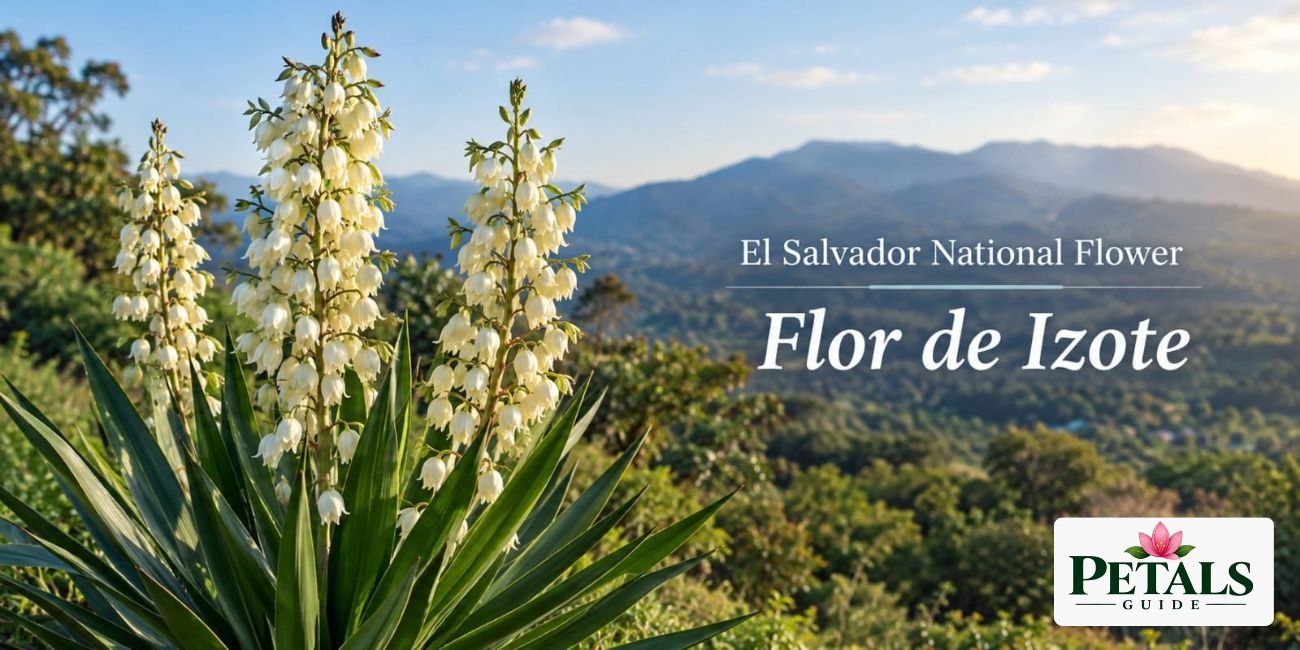
El Salvador’s national flower is flor de izote, the white bloom of the izote plant. More than just a national symbol, it is an important part of the country’s culture and traditional cooking, where its flowers have been eaten for many generations.
The izote plant features long, sword-like leaves and tall clusters of pale blooms. Its ties to Salvadoran customs, Indigenous heritage, and daily life give it a significant role among the nation’s symbols. Let’s uncover El Salvador National Flower botanical details, history, cultural significance, traditional uses, and its place in Salvadoran cuisine.
What is the National Flower of El Salvador?
The national flower of El Salvador is the flor de izote, which comes from the izote plant. This flower features clusters of white, bell-shaped blooms that stand tall above its long, sharp leaves. It is well-known throughout El Salvador and has been appreciated for both its cultural significance and practical uses.
The flor de izote was officially named the national flower of El Salvador on December 21, 1995, by the Legislative Assembly. Its significance is closely tied to the country’s traditions, Indigenous heritage, and cuisine, where the edible flowers are included in many traditional recipes.
What Is the Flor de Izote?
Flor de Izote is the Spanish name for the flowers of the izote plant, which is the national flower of El Salvador. The plant is scientifically known as Yucca gigantea, while Yucca guatemalensis is another name used for the same species in Salvadoran sources.
The izote is a tall, evergreen plant with a strong trunk and long, pointed leaves that grow in clusters. Mature plants produce tall stalks carrying groups of white flowers. Flor de Izote refers specifically to these flowers, which have been valued in El Salvador for generations and are an important part of the country’s cultural heritage.
What Does the Izote Plant and Flower Look Like
The izote plant is a tall, evergreen species with a strong, thick trunk and bunches of long, pointed leaves. These leaves are stiff, shaped like swords, and grow in clusters at the tips of the branches. A full-grown plant can reach about 5 to 10 meters high, giving it a tree-like look.
The izote flowers are creamy white to white with a soft, bell-like shape. They droop slightly from the flower stalk instead of pointing straight up. Each flower consists of six petal-like segments and measures around 3 to 4 centimeters in length. The flowers are arranged closely in large, branched bunches on tall stalks that extend above the leaves, which can reach approximately 1 to 1.5 meters in length, creating a prominent display of white blooms.
The individual flowers have a thick, shiny look with a simple, round shape. Their light color stands out against the green leaves, making the flowering stalks noticeable when the plant is in bloom.
Izote Flowering Season and Bloom Time
In El Salvador, the Izote flowering season typically takes place from March to May. During this time, the Flor de Izote grows tall stalks adorned with clusters of white flowers. This is also the traditional season when the flowers are harvested for food, making spring a significant time for El Salvador’s national flower.
The blooming period can differ in other areas where the plant is found, such as Mexico, Guatemala, Honduras, Nicaragua, Costa Rica, and Belize, based on local weather conditions. In warmer regions, Izote flowers may appear in spring and early summer, though the specific timing varies by location.
Where Can You Find the Izote Plant?
The Izote plant originates from Mexico and Central America, thriving in warm regions with distinct dry seasons. In El Salvador, it grows in rural areas, along property lines, on hills, and near farms. It is often used as a natural fence and has been seen in coffee-growing regions, where it helps prevent soil erosion and stabilizes the land.
In El Salvador, Flor de Izote is common in places like Panchimalco, where families have a long tradition of growing it, especially in the mountainous region near Amatitán. The plant is also found in rural locations around Zacatecoluca, where locals bring its flower stalks to markets during its blooming season.
This plant thrives in El Salvador’s warm climate and adapts well to various landscapes without needing constant moisture. Its ability to grow in many settings helps explain why the National Flower of El Salvador is a familiar sight not just in gardens but in farms and other cultivated spaces.
History of Flor de Izote as National Symbol
The Flor de Izote in El Salvador has a rich history that predates its recognition as a national symbol. As noted by El Salvador’s Ministry of Culture, the izote plant was commonly utilized by the country’s ancestors. Researchers suggest that Maya migrants may have brought the plant to the region, as it originally hails from Mexico and Guatemala. The term izote is derived from the Náhuat word “itzut”.
Before gaining official status, the plant had numerous traditional uses. Its flowers and young shoots were consumed, and it served purposes such as creating living fences and protecting agricultural soil. According to the Ministry of Culture, this wide range of uses contributed to its recognition as the national flower.
On December 21, 1995, the Legislative Assembly of El Salvador formally declared Flor de Izote as the nation’s official flower. This designation solidified an important element of Salvadoran culture within the country’s symbols.
Indigenous History and Cultural Heritage of Izote
The history of Izote in El Salvador is deeply intertwined with the Indigenous communities that thrived in the region long before it became recognized as the El Salvador National Flower. According to El Salvador’s Ministry of Culture, the plant was likely introduced by Maya migrants, who may have brought it from their native lands in Mexico and Guatemala. While this connection remains a possibility rather than an established fact, it highlights the plant’s significance in the region’s history.
The name izote carries Indigenous roots, derived from the Náhuat term itzut. This connection underscores the importance of Náhuat as a vital part of El Salvador’s Indigenous heritage, especially in the western communities. Traditional uses of the plant, from its edible flowers and young shoots to its practical applications in daily life, reveal how Indigenous knowledge has flowed through generations. Thus, Flor de Izote serves as a national symbol and a living testament to the rich cultural legacy that continues to shape El Salvador today.
Is the Izote Flower Edible?
The Izote flower is edible and has been a staple in traditional Salvadoran cooking for generations. Known for its slightly bitter and mild, vegetal taste, the flower’s flavor often reminds people of artichoke. This distinct bitterness is mostly found in the flower’s central parts, which are usually discarded before cooking.
To soften the flavor, many cooks choose to briefly boil or blanch the flowers. Once prepared, the Flor de Izote opens up a world of culinary possibilities. It’s particularly delightful when combined with eggs, where its unique taste adds a new layer to the dish. Using the Izote flower can elevate both traditional recipes and modern creations, offering an authentic touch that connects diners to Salvadoran heritage.
How Is Flor de Izote Prepared?
Preparing Flor de Izote begins with careful cleaning, where the individual flowers are separated from the cluster, and the inedible inner parts are discarded. After the flowers are washed, they are typically boiled in salted water until tender. This boiling process not only softens the flowers but also helps to lessen their natural bitterness.
Once the flowers have been prepared, they can be enjoyed in a variety of ways. A popular method is to sauté them with tomato, onion, and spices, creating a flavorful base for dishes. They can also be combined with beaten eggs for a delicious breakfast option or shaped into small tortitas before frying for a crispy treat.
For a refreshing twist, cooked flowers can be placed in vinegar as a curtido, offering a tangy contrast that enhances salads, soups, and traditional guisos. Each preparation method adds a unique touch to this versatile ingredient, showcasing its adaptability in Salvadoran cuisine.
Flor de Izote in Salvadoran Cuisine and Traditional Dishes
Flor de Izote plays a central role in Salvadoran cuisine, cherished for its unique flavor and versatility. One of the most beloved dishes is Flor de Izote con huevo, where the delicate flowers are sautéed and mixed with eggs, often enhanced with tomatoes, onions, and chile. This dish is typically enjoyed alongside staples like beans, cheese, and fresh tortillas, making it a comforting meal that resonates with many Salvadorans.
Beyond this, various traditional preparations highlight the flower’s culinary flexibility, such as Flor de Izote guisada, where it’s sautéed to create a vibrant side dish. Another favorite is tortitas de flor de izote, where the flowers are combined with cheese and eggs, formed into patties, and fried until golden brown.
Notably, older Salvadoran recipes celebrate stuffed Izote flowers filled with cheese and vegetables, revealing the flower’s role in family gatherings and festive meals. The flower’s presence extends further into curtido, salads, soups, pupusas, and tamales, showcasing how the El Salvador National Flower effortlessly complements a variety of dishes, enriching the country’s culinary landscape.
Nutritional Value of Flor de Izote
Flor de Izote is a treasure trove of nutrients, making it a valued addition to any diet. With only 61 calories, 2 g of protein, 13.7 g of carbohydrates, and a mere 0.3 g of fat per 100 g, it’s a low-calorie option that provides essential nutrients. Among these, vitamin C takes the spotlight, clocking in at an impressive 393 mg per 100 g. This high vitamin C content not only boosts the immune system but also acts as a powerful antioxidant.
Moreover, the nutritional composition of Flor de Izote can shift with different cooking methods. A recent study from 2024 revealed that how you prepare these flowers can enhance or diminish their health benefits. For example, while boiling or stir-frying may alter certain nutrients, a quick steam helps retain more of the valuable bioactive compounds. This finding suggests that to maximize the health benefits of Flor de Izote, mindful cooking techniques are important.
Non-Culinary Uses of the Izote Plant
The Izote plant serves as a practical living fence in El Salvador, effectively surrounding agricultural land. Its roots grow densely, helping to stabilize soil on slopes and terraces, making it vital for controlling erosion. According to research from the University of El Salvador, using Izote on hillsides not only prevents soil loss but also acts as a natural barrier for crops, enhancing agricultural productivity.
Beyond its role in farming, the fiber-producing capabilities of the Izote are noteworthy. The fibers taken from its leaves are spun into morrales, sacks, cords, and woven textiles, showing traditional craftsmanship. A Salvadoran environmental organization highlights its environmental benefits, as these fibers support communities while promoting sustainable practices.
Growing and Caring for an Izote Plant
Cultivating an Izote plant is quite straightforward when you meet its essential needs. The key factors to focus on are intense sunlight, well-draining soil, and mindful watering. These elements are crucial for Yucca gigantea, which thrives in warm climates and struggles in consistently wet soil.
- Sunlight: Position your Izote in full sun for optimal growth. It can manage some partial shade, but brighter light is generally better.
- Soil: Choose well-drained soil, especially sandy or loamy types. Steer clear of heavy soils that retain moisture.
- Watering: Once established, the plants are drought resistant and typically only require watering when the soil is dry. Avoid overwatering or letting the soil become waterlogged, as this can lead to root issues.
- Temperature: Yucca gigantea enjoys warm environments and thrives in USDA hardiness zones 10–12. Protection is needed in colder areas, as frost can harm the plant.
- Container Growing: Young Izote plants can be kept in pots with drainage holes. Use a well-draining potting mix and ensure excess water can drain from the bottom.
- Fertilizing: Izote has relatively low fertilizer requirements. For container plants, apply a balanced fertilizer during their growth period, following the instructions on the label.
- Pruning: Frequent pruning is usually not essential. Trim off any dead or damaged leaves as needed, and remove spent flower stalks if desired.
This plant faces few significant pest or disease challenges, but it can be affected by scale, mealybugs, aphids, and yucca moth borers at times. Poor drainage and excess moisture can lead to problems.
El Salvador National Flower and Other National Symbols
The Flor de Izote serves as the national flower of El Salvador and stands out as one of the nation’s important symbols. Various other symbols highlight different aspects of Salvadoran identity, culture, nature, and history.
- National Bird: Torogoz – Also known as the turquoise-browed motmot, it is well-known for its vibrant colors and cultural significance.
- National Trees: Maquilíshuat and Bálsamo – These two trees are officially designated as the national trees of El Salvador.
- National Anthem: Himno Nacional de El Salvador – The official anthem of the country.
- National Flag: Blue and white flag – The national flag consists of three horizontal stripes.
- National Coat of Arms: Escudo Nacional de El Salvador – The recognized coat of arms that symbolizes the nation and its core values.
- National Prayer: Oración a la Bandera – A patriotic prayer linked to El Salvador’s national identity.
All these symbols together reflect various elements of the country, with the National Flower of El Salvador tying the national identity to both its natural beauty and cultural legacy.
Izote Flower vs. Other Central American National Flowers
The El Salvador National Flower, Flor de Izote, differs from the national flowers of nearby Central American countries in both plant form and national role. Some are orchids, while Izote is a tree-like yucca with edible flowers.
| Country | National Flower | Scientific Name | Key Difference |
|---|---|---|---|
| El Salvador | Flor de Izote | Yucca gigantea / Yucca guatemalensis | A yucca with clusters of white flowers; its flowers are also used as a traditional food. |
| Guatemala | Monja Blanca | Lycaste skinneri var. alba | A white orchid associated with peace, purity, beauty, and art. It was declared the national flower in 1934. |
| Nicaragua | Sacuanjoche | Plumeria rubra f. acutifolia | A fragrant flowering tree also known as Flor de Mayo. It was declared the national flower in 1971. |
| Costa Rica | Guaria Morada | Guarianthe skinneri | A purple orchid that has been Costa Rica’s national flower since 1939. |
The Flor de Izote is particularly different because its flowers are part of Salvadoran cuisine, while the other examples are primarily recognized as floral or cultural symbols. Guatemala’s Monja Blanca and Costa Rica’s Guaria Morada are both orchids, whereas Nicaragua’s Sacuanjoche grows on a flowering tree.
Conclusion
The Flor de Izote is an important symbol of El Salvador, representing a plant deeply connected with the country’s culture and traditions. Its role in Salvadoran cuisine, traditional practices, and everyday life gives the national flower a meaning that goes beyond its official status.
From its long history in the region to its recognition as the National Flower of El Salvador, Izote remains closely linked with Salvadoran heritage. Learning about this flower also offers a glimpse into the natural resources, traditions, and cultural practices that have shaped life in El Salvador.
FAQs
What flower represents El Salvador?
The Flor de Izote represents El Salvador as its official national flower. It was recognized by the Legislative Assembly on December 21, 1995.
What flower is native to El Salvador?
Flor de Izote is native to the broader region of Mexico and Central America, rather than being exclusive to El Salvador. The species is therefore a native regional plant that became an important national symbol of El Salvador.
What does Flor de Izote symbolize?
Flor de Izote is associated with fertility, wealth, and the country’s biodiversity. El Salvador’s Ministry of Culture connects these meanings with the plant’s many traditional uses and versatility.
What is the national symbol of El Salvador?
El Salvador has several national symbols, including the national flag, coat of arms, national anthem, national prayer, national bird, national trees, and national flower. Flor de Izote is specifically recognized as the country’s national flower.