
If you think throwing a handful of fertilizer on your plants will do the trick, think again! Knowing How To Dose Fertilizers For Plants is a skill every gardener needs to master. Over-fertilizing can harm your green friends and ruin all your hard work. In this article, we’ll explore straightforward methods to ensure your garden receives just the right amount of nutrients, leading to lush greenery and abundant blooms.
How to Choose the Right Plant Fertilizer
Learning when and how to fertilize plants is the foundation of a vibrant garden. True fertilization in plants is about matching specific nutrient formulas to your plants’ exact growing environments and life stages:
- For Houseplants: Use a gentle indoor plant fertilizer mixed at half or quarter strength so you don’t burn roots inside pots.
- For Fast Results: A liquid fertilizer for plants works instantly and is great for thirsty container vegetables and quick rescue feeds.
- For Green Leaves: A high-nitrogen fertilizer for plants helps grow big, lush foliage on leafy crops like spinach, kale, and lawn grass.
- For Organic Gardens: A natural fertilizer for plants (like compost, bone meal, or fish emulsion) feeds the soil biology safely without harsh mineral salts.
- For Roses & Perennials: A dedicated fertilizer for rose plant varieties supplies the phosphorus and potassium needed for strong, continuous blooms.
- For Air Plants: Mist your tillandsias with a mild, urea-free air plant fertilizer so they can absorb nutrients directly through their leaves.
- For Fish Tanks: Always use a specialized, fish-safe aquarium plant fertilizer to keep submerged plants green without harming aquatic life.
Why Fertilizer Dosage Matters
Getting the fertilizer dosage right can be a game-changer for your garden. Over-fertilizing can burn plants, while under-fertilizing might leave them weak and struggling. Knowing How To Dose Fertilizers For Plants involves more than just eyeballing it, it’s about understanding the specific needs of your soil. A simple soil test for fertilizer can reveal what nutrients your plants are lacking and help you create a balanced feeding plan.
When you tailor the fertilizer to your soil fertility, you’re setting your plants up for success. Healthy, nourished plants are more resilient and can better resist pests and diseases. So instead of guessing how much to apply, taking a few minutes for soil testing can pay off big time. Your garden will thrive, and the results will speak for themselves.
What happens with too much fertilizer:
Applying too much fertilizer can seem like a quick fix for boosting soil fertility, but it often leads to more problems than benefits. When fertilizer is overused, nutrients can leach into the water supply, causing pollution and harming aquatic life. Imagine a beautiful garden turned toxic, it’s not just a loss for plants but also a threat to local ecosystems.
Here are some consequences of excess fertilizer use:
- Nutrient Imbalance: Too much of one nutrient can prevent plants from absorbing others.
- Soil Burn: Over-fertilization can damage plant roots, leading to wilting and death.
- Increased Pest Problems: A nutrient-overloaded environment can attract pests, creating a cycle of dependency on pesticides.
What happens with too little fertilizer:
When there’s too little fertilizer, your plants can suffer significantly. Imagine a garden starved of the essential nutrients it craves. Without enough soil fertility, plants can become stunted and weak, leading to poor growth and low yields. You might see yellowing leaves or even the dreaded wilting.
To avoid these issues, consider a soil test for fertilizer before planting. Understanding what your soil lacks can make all the difference.
Here are a few things to keep in mind:
- Nutrient Deficiency:Essential nutrients like nitrogen, phosphorus, and potassium may be missing, affecting overall plant health.
- Pest Vulnerability: Underfed plants are more prone to pests and diseases, making your garden an easier target.
- Poor Flavor and Quality:Yielded fruits and veggies may lack the taste and quality you desire.
Remember, healthy plants start with healthy soil. By ensuring the right balance of soil fertilizer, you set the foundation for a thriving garden.
Understanding Fertilizer Labels
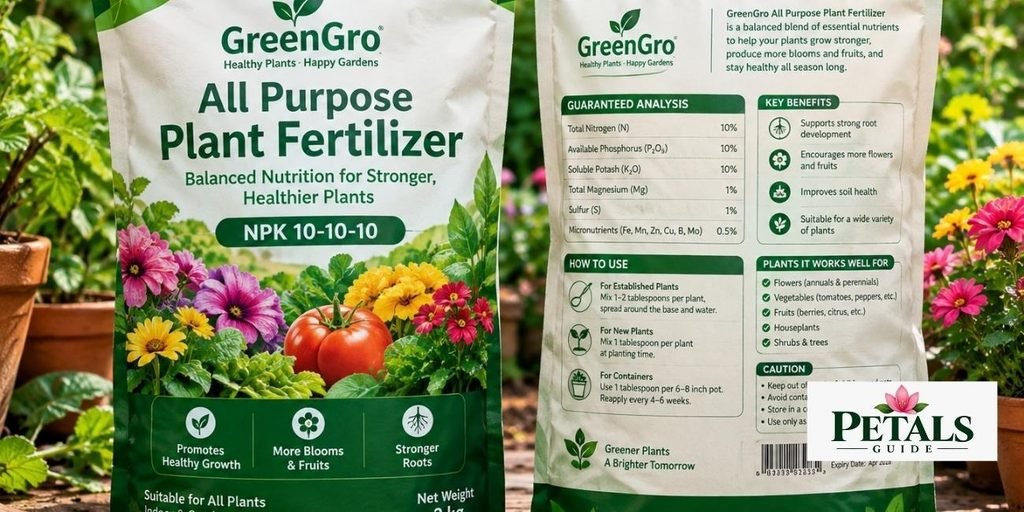
Fertilizer labels use three numbers to show the percentages of Nitrogen (for leaves), Phosphorus (for roots and blooms), and Potassium (for overall health). Reading them ensures you give your plants the exact nutrients they need without overfeeding or burning them.
How to Read Fertilizer Labels (N-P-K)
The three numbers on any fertilizer bag (like 10-10-10) show the percentage by weight of the three main nutrients: Nitrogen (N), Phosphorus (P), and Potassium (K).
A simple rule of thumb: “Up, Down, All Around.”
- N (Nitrogen) — Up: Grows lush, green leaves and stems. Great for lawns and leafy vegetables.
- P (Phosphorus) — Down: Builds strong roots and promotes flowers and fruit. Ideal for new transplants and blooming plants.
- K (Potassium) — All Around: Boosts overall health, disease resistance, and drought tolerance.
What the Numbers Mean
- The rest of the bag: A 10-10-10 bag contains 10% of each nutrient (30% total). The remaining 70% is carrier material (like clay or limestone) and minor minerals that help spread the fertilizer evenly.
- Ratios vs. Strength: A 10-10-10 and a 20-20-20 have the exact same 1:1:1 balance, but the 20-20-20 is twice as concentrated—so you use half as much.
Quick Buying Guide
- All-purpose maintenance: Balanced blend (e.g., 10-10-10).
- Lawns & leafy greens: High first number (e.g., 24-0-4).
- Flowering & root growth: High middle number (e.g., 15-30-15).
- Stress & cold prep: High last number (e.g., 5-10-15).
How to read dosage instructions:
1. How to Read Fertilizer Instructions
Reading a fertilizer label doesn’t have to be complicated. Instead of guessing, check the back of the bag or bottle for these key details:
- For Liquid Feeds: The label tells you how many teaspoons or tablespoons to mix into a gallon of water (for example, “1/2 tsp per gallon”). For indoor houseplants, start with half of that recommended amount to keep roots safe.
- For Dry Pellets or Powders: These directions tell you how many cups or ounces to spread per square foot of soil, per plant, or along garden rows.
- For Lawns: Grass fertilizer bags show the exact dial setting to use on your push spreader so you distribute the pellets evenly.
- Wait Times: Always check how long to wait between feedings (usually every 2 to 4 weeks) and avoid applying food during extreme heat.
2. How to Measure Liquid Fertilizer the Right Way
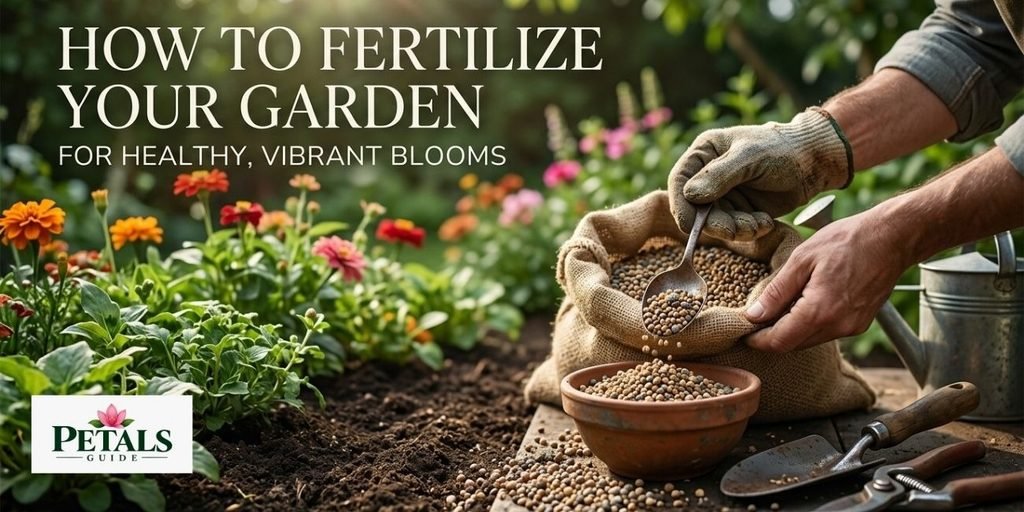
A little fertilizer goes a long way. Eyeballing it or pouring straight from the bottle makes it too easy to overdose your plants:
- Avoid Guessing: Adding “just a splash” can double the strength by accident, which quickly burns sensitive roots.
- Keep Dedicated Measuring Tools: Use a cheap set of plastic measuring spoons or a small measuring cup reserved only for plant care. Never use the spoons you cook with.
- Simple Conversions to Remember:
- 1 teaspoon (tsp) = 5 mL
- 1 tablespoon (tbsp) = 3 teaspoons (15 mL)
- 2 tablespoons = 1 fluid ounce (30 mL)
- Always Stir Well: Fill your watering can with water first, add the measured fertilizer, and give it a good stir. This ensures the nutrients blend evenly so you don’t dump a heavy concentrate on the first plant you water.
Types of Fertilizer and How to Dose Each
Quick Rule of Thumb
- Fast-acting liquids: Feed the plant directly and immediately; easy to burn roots if you use too much
- Slow-release granules & meals: Feed the soil over weeks or months; safe, gentle, and require less work.
- Always moisten soil first: Never apply liquid fertilizer to dry roots, or it will pull moisture out of the plant and scorch it.
1. Liquid & Water-Soluble Fertilizers
Powders or concentrated liquids mixed directly into water. Nutrients hit the roots instantly.
- Best For: Potted indoor plants (Monstera, Pothos), container vegetables (Tomatoes, Peppers), and quick fixes for pale, yellowing leaves.
- Typical Dose:
Indoor Houseplants: 1/4 to 1/2 teaspoon per gallon of water (dilute to 1/4 strength of the bottle label).
Outdoor Garden & Containers: 1 tablespoon per gallon of water (about half to full strength).
- How Often: Every 2 to 4 weeks during spring and summer; stop in winter.
- Pro Tip: If a plant is bone dry, water it with regular water first, wait an hour, then apply the fertilizer mix.
2. Slow-Release Pellets (Coated Beads)
Small, plastic- or resin-coated beads (like Osmocote) that release tiny doses of nutrients every time you water.
- Best For: Outdoor planters, hanging baskets, porch flowers, and low-maintenance houseplants.
- Typical Dose:
Small pots (4–6 inches): 1/2 teaspoon.
Medium pots (8–10 inches): 1 tablespoon.
Large containers (12+ inches): 2 to 3 tablespoons.
Garden beds: 1 pound per 100 square feet.
- How Often: Only once every 3 to 6 months.
- Pro Tip: Scratch the pellets into the top 1 to 2 inches of soil. Left sitting on top, they dry out in the sun and stop releasing food.
3. Quick-Release Granular Fertilizer
Uncoated mineral salts (such as standard all-purpose 10-10-10) that dissolve and sink into the soil with heavy watering.
- Best For: In-ground vegetable plots, landscape shrub borders, and turfgrass lawns.
- Typical Dose:
Vegetable Garden Beds: 1 to 1.5 pounds per 100 feet of plant row.
Shrubs & Small Trees: 1/2 to 1 cup scattered evenly under the outer branches.
Lawns: 3 to 4 pounds per 1,000 square feet using a push spreader.
- How Often: 2 to 3 times per season (early spring, mid-summer, early fall).
Pro Tip: Keep granules at least 3 inches away from the main plant stem. Always run the sprinkler or hose immediately after application to wash salts off leaves and down into the roots.
4. Organic Dry Meals (Natural Amendments)
Crushed organic matter (bone meal for phosphorus/roots, blood meal for nitrogen/green leaves, and kelp meal for stress resistance).
- Best For: Preparing vegetable beds, transplanting perennials, and building healthy, living garden soil.
- Typical Dose:
New Planting Holes: 1 to 2 tablespoons mixed thoroughly into the loose dirt at the bottom of the hole.
Garden Bed Prep: 2 to 3 pounds per 100 square feet worked into the top 6 inches of soil before planting.
- How Often: Once or twice a year (early spring at planting time, then mid-season).
- Pro Tip: These rely on soil bacteria and warm weather to break down. They will not do much in cold, early-spring mud.
5. Organic Liquids (Fish Emulsion & Liquid Seaweed)
Gentle, smelly marine concentrates that feed both the plant and beneficial soil microbes without chemical salts.
- Best For: Delicate seedlings, leafy greens (lettuce, spinach), kitchen herbs, and plants recovering from shock.
- Typical Dose: 1 to 2 tablespoons per gallon of water.
- How Often: Every 2 to 3 weeks through the growing season.
- Pro Tip: Fish emulsion is nearly impossible to burn plants with, but it has a strong fishy scent for 24 hours. Use it outdoors or keep a window open.
6. Fertilizer Spikes & Stakes
Hard-pressed cylinders of fertilizer pushed down into the dirt that slowly dissolve underground.
- Best For: Outdoor fruit trees, shade trees, and hands-off indoor potted plants.
- Typical Dose:
Indoor Houseplants: 1 to 2 small sticks near the rim of an 8-inch pot.
Fruit & Shade Trees: 1 large outdoor stake per inch of trunk thickness.
- How Often: Once in spring, and once in early autumn.
- Pro Tip: Hammer them in along the drip line (the ring directly under the outer edge of the tree’s leaf canopy), never right next to the tree trunk.
7. Foliar Sprays
A light mist of liquid fertilizer sprayed directly onto the foliage, absorbed instantly through tiny leaf pores (stomata).
- Best For: Rapid rescue when leaves turn yellow from a lack of iron or zinc, or to boost fruiting tomatoes and peppers.
- Typical Dose: Extremely weak dilution—roughly 1/8 to 1/4 label strength of a water-soluble feed.
- How Often: Once every 1 to 2 weeks until leaf color returns to normal.
- Pro Tip: Spray early in the morning before 8:00 AM. Spraying under direct, hot sunlight will magnify the sun’s rays and scorch the leaves.
Quick Selection Guide
| Fertilizer Form | Action Speed | Burn Risk | Best Spot to Use It |
| Liquid / Water-Soluble | Instant (1–2 days) | Medium to High | Houseplants & potted veggies |
| Coated Pellets | Slow (3–6 months) | Very Low | Patio pots & hanging baskets |
| Quick Granules | Fast (1–2 weeks) | High | Large outdoor gardens & lawns |
| Organic Meals | Very Slow (weeks) | None | Soil building & new planting holes |
| Fish / Kelp Liquid | Gentle (3–5 days) | Very Low | Seedlings, herbs, and tender starts |
| Spikes & Stakes | Slow (3–6 months) | Low to Medium | Fruit trees & landscape trees |
| Foliar Mist | Immediate (hours) | High in sun | Emergency yellow-leaf rescues |
How to Dose Fertilizer for Plants During Different Growth Stages
Dosing fertilizer effectively makes a world of difference in your vegetable garden. Matching nutrient ratios to your plants’ growth stages ensures healthy roots, strong foliage, and heavy harvests.
- Seedling Stage (True Leaves Only):
Do not feed newly sprouted seeds. Once seedlings develop 2 to 3 sets of true leaves, apply a gentle, dilute fertilizer (such as fish emulsion or a balanced 10-10-10 cut to 1/4 strength). This protects tender roots from salt burn while providing mild baseline nutrients. - Vegetative Stage (Leaf & Stem Growth):
- For Leafy Greens (Lettuce, Spinach, Kale): Use a nitrogen-forward fertilizer (such as 10-5-5 or blood meal) to drive tender, green foliage.
- For Fruiting Vegetables (Tomatoes, Peppers, Squash): Use a balanced feed (such as 10-10-10 or 5-5-5) at half-to-full label strength. Avoid excessively high nitrogen, which creates overgrown leaves at the expense of early flower buds.
- Flowering & Fruiting Stage (Buds to Harvest):
Shift away from high nitrogen toward higher Phosphorus (P) and Potassium (K) (such as a 5-10-10 or a tomato-specific 4-18-38 formula). Phosphorus promotes blossom formation, while potassium is essential for fruit sizing, internal structure, and disease resistance.
Always follow package directions, apply fertilizers to pre-moistened soil to prevent root burn, and remember that less is often more. Watching how your plants respond will keep your garden balanced and productive.
How to Avoid Common Fertilizer Dosing Mistakes
Understanding how to dose fertilizers for plants correctly prevents root burn, stunted plants, and wasted money. More fertilizer does not mean faster growth—excess nutrients build up toxic mineral salts that damage roots.
- Never Feed Bone-Dry Soil:
Always water your plants with plain water first. Adding fertilizer to dry soil pulls moisture out of the root system, causing immediate root scorch. - Start at Half or Quarter Strength:
Manufacturer labels often state the maximum allowable dose. For indoor plants and container vegetables, dilute water-soluble fertilizers to 1/4 to 1/2 strength to stay safe. - Match the Season, Not Just the Time of Day:
Only fertilize when plants are actively growing (spring and summer). Never fertilize plants that are dormant in winter or wilting from extreme mid-summer heatwaves. - Keep Granules Off Stems and Foliage:
When using dry pellets or powders, spread them along the outer leaf edge (the drip line). Keep them at least 2 to 3 inches away from the main stem, and water immediately to wash salts off leaves. - Test Soil Before Adding Single Nutrients:
In-ground garden soil often already has enough phosphorus or potassium. A simple soil test prevents toxic build-ups and tells you if you only need nitrogen. - Read the N-P-K Numbers:
Match the ratio to the plant type: high Nitrogen (N) for leafy greens, balanced for general growth, and higher Potassium (K) and Phosphorus (P) once vegetables start setting flowers and fruit.
Signs You Over-Fertilized
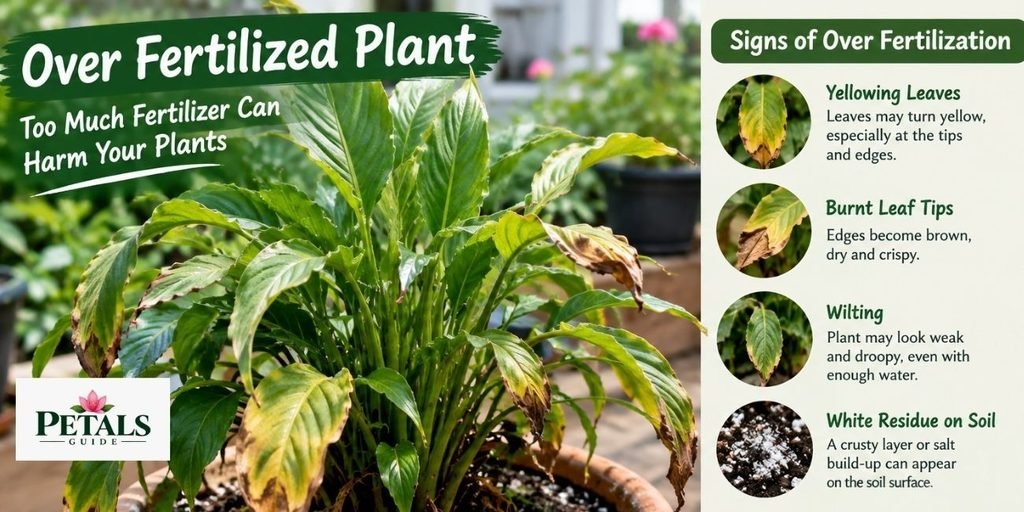
Crispy, brown leaf margins or tips (fertilizer burn).
White, chalky crust forming on the potting mix surface.
Leaves yellowing and dropping off while the soil is still wet.
Quick fix: Leach the pot by running water through it for several minutes, then stop all fertilizer for 6 to 8 weeks.
Signs You Under-Fertilized
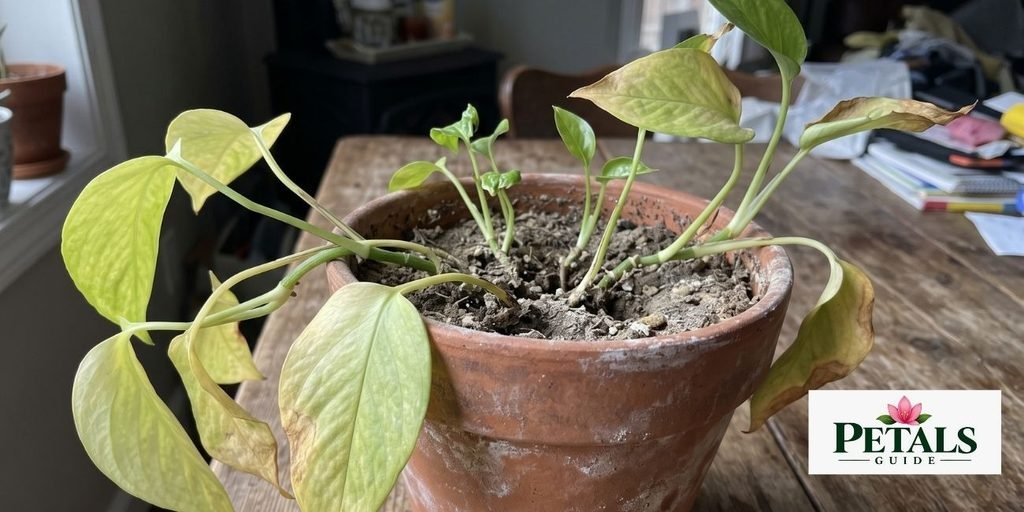
Lower/older leaves fading to pale green or light yellow.
Stunted growth, spindly stems, or failure to set flowers/fruit.
Quick fix: Water thoroughly with a mild, liquid water-soluble fertilizer at half strength.
Fertilizer Dosage Quick Reference Table
| Plant Type | Examples | Best Fertilizer Ratio (N-P-K) | Recommended Strength / Dosage | Frequency | Pro Rule for Success |
| Indoor Foliage Plants | Pothos, Monstera, Snake Plant, Philodendron | Balanced (10-10-10, 20-20-20, or 3-1-2) | 1/4 to 1/2 label strength | Every 2–4 weeks in spring & summer | Water with plain water first; stop feeding during winter dormancy. |
| Flowering Houseplants | African Violet, Peace Lily, Orchids | Moderate Bloom or Balanced (10-20-10 or 20-20-20) | 1/4 strength | Every 1–2 weeks during active growth | Flush pots with plain water monthly to remove excess salts. |
| Succulents & Cacti | Aloe Vera, Jade, Echeveria, Haworthia | Low Nitrogen/Balanced (2-7-7 or 5-10-10) | 1/4 strength | 1–2 times a year | Don’t fertilize dormant or stressed plants. |
| Potted / Container Vegetables | Tomatoes, Peppers, Eggplants | Balanced early; higher potassium later | 1/2 strength water-soluble | Every 1–2 weeks | Use consistent light feedings because watering can leach nutrients. |
| Garden / In-Ground Vegetables | Tomatoes, Zucchini, Peppers, Squash | Balanced or fruit-focused (5-10-10 or 10-10-10) | 1–1.5 lb granular per 100 ft of row | Monthly during growing season | Apply around the drip line, away from stems and foliage. |
| Leafy Greens & Brassicas | Lettuce, Spinach, Kale, Swiss Chard | High Nitrogen (10-5-5 or fish emulsion) | 1/2 strength liquid or standard organic meal | Every 2–3 weeks | Avoid excessive feeding and follow harvest recommendations. |
| Culinary Herbs | Basil, Mint, Rosemary, Thyme, Oregano | Mild Organic/Kelp (3-3-3 or 2-3-1) | 1/4 label strength | Every 4–6 weeks | Over-fertilizing can cause leggy growth and weaker flavor. |
| Outdoor Annual Flowers | Petunias, Marigolds, Zinnias, Calibrachoa | Bloom fertilizer (15-30-15 or 12-24-12) | 1/2 to full label dose | Every 1–2 weeks | Deadhead spent blooms and maintain consistent feeding. |
| Shrubs & Roses | Roses, Hydrangeas, Hibiscus | Specialized shrub/rose food (10-10-10 or 4-6-4) | 1/2–1 cup per shrub; follow label | Roses: every 4–6 weeks; shrubs: twice yearly | Stop nitrogen feeding 6–8 weeks before autumn frost. |
| Fruit & Citrus Trees | Lemon, Orange, Apple, Peach | Citrus/fruit blend with micronutrients (6-4-6 or 8-3-9) | Follow tree size; about 1 cup per inch of trunk diameter | Citrus: 3× yearly; deciduous: once in early spring | Apply beneath the canopy to the drip line, away from the trunk. |
| Lawn & Turfgrass | Fescue, Bluegrass, Bermuda | Slow-release high nitrogen, low/zero P (30-0-4 or 24-0-11) | About 0.75–1 lb N per 1,000 sq ft | 2–3 times yearly | Water thoroughly within 24 hours after spreading. |
Final Thoughts
Understanding how to dose fertilizers for plants properly can make a huge difference in the health of your plants and the beauty of your garden. By following the guidelines we’ve discussed, including testing your soil ( Soil Fertility) and observing your plants’ needs, you can nurture them without the risk of overdoing it. Remember, a little patience goes a long way; sometimes less truly is more. Keep experimenting and adjusting as your plants grow. So, grab your tools and get ready to help your garden thrive with just the right touch.
Want to learn more about specific flowers? Check out our easy guides on the:
- Puerto Rico’s National Flower
- The state flowers of Kansas
- Washington State Flower
- National Flower of Austria
FAQs
1. How much fertilizer should I give my plants?
Start with a small amount—mix water-soluble fertilizer at 1/4 to 1/2 strength (around 1/4 to 1/2 teaspoon per gallon of water) for potted plants, and follow label instructions for larger garden beds. It is always better to under-fertilize than overdo it.
2. How often should I fertilize my plants?
Most plants do well with fertilizer every 4 to 6 weeks during their growing season. Just think of it as a little lunch break for them!
3. Can I fertilize my plants in winter?
Generally, it’s best to hold off during winter when most plants are dormant. They’re cozying up and don’t need as much food then.
4. Is liquid fertilizer better than granular?
Both have their perks! Liquid fertilizers act fast, while granular types release slowly. Use what works best for your plants’ needs!
5. What if I accidentally over-fertilize?
Don’t panic! Rinse the soil gently with water to wash away excess fertilizer, and give your plant time to recover. They can be pretty forgiving!
6. Do all plants need fertilizer?
Not all! Some plants, like succulents, can thrive on very little. Do a bit of research to see what your specific plants prefer.
7. What’s the best time of day to fertilize?
Early morning or late afternoon is prime time. It gives your plants time to absorb nutrients without burning in the sun!
8. What Is the Best Fertilizer for Marijuana Plants?
The best fertilizer for marijuana plants depends on their growth stage. A balanced fertilizer containing nitrogen, phosphorus, and potassium supports healthy growth. Always follow the label instructions to avoid over-fertilizing.
9. Is Plant Food the Same as Fertilizer?
Yes, plant food and fertilizer are closely related. Plant food is a common term for products that supply nutrients, while fertilizer provides essential nutrients like nitrogen, phosphorus, and potassium to support healthy plant growth.