
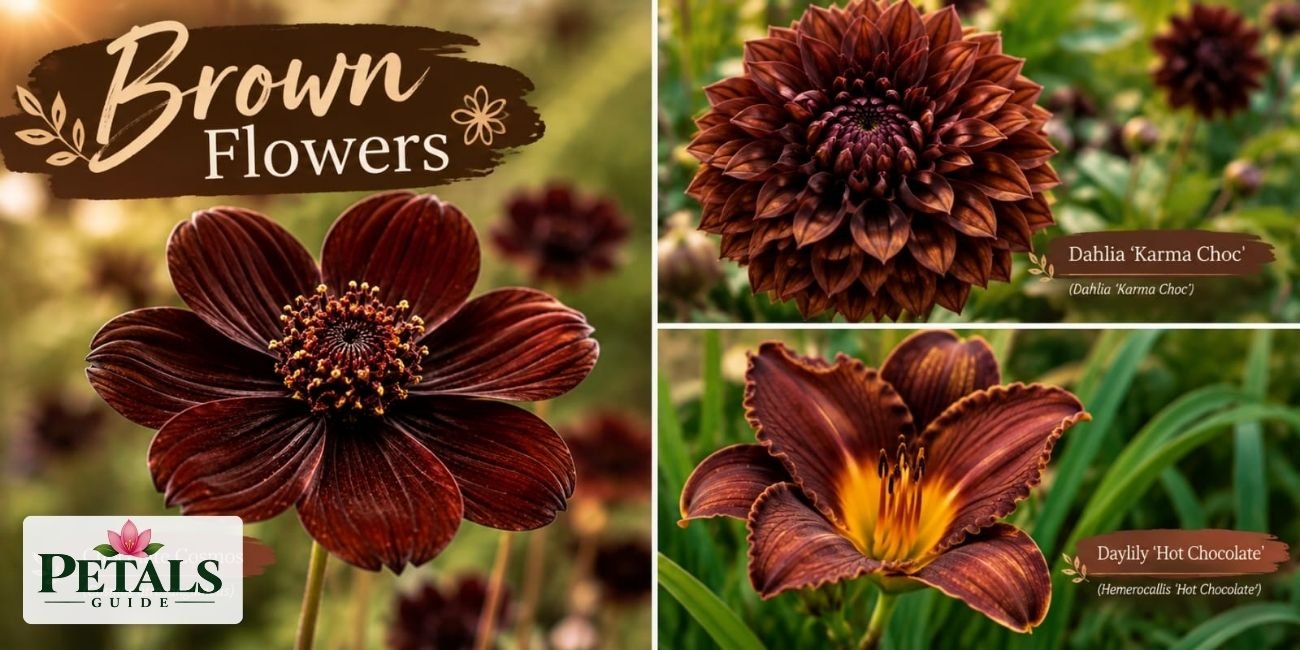
In this article, you will explore the top 20 beautiful brown flowers that can brighten your garden. While most people think of bright colors, tan flowers can bring warmth and depth to any outdoor space. Let’s find out the names of brown flowers, their beautiful blooms, and how they can be used to give a unique touch to your garden.
List of the top 20 Brown flowers Names
- Chocolate Cosmos
- Dahlia ‘Karma Choc’
- Daylily ‘Hot Chocolate’
- Cattleya Orchid ‘Mahogany’
- Brown Tulip ‘Queen of Night’
- Mocha Dendrobium Orchid
- Calla Lily ‘Hot Chocolate’
- Hellebore ‘Chocolate Soldier’
- Gladiolus ‘Espresso’
- Brown Cymbidium Orchid
- Scabiosa ‘Chocolate Scoop’
- Bearded Iris ‘Coffee Trader’
- Brown Gerbera Daisy
- Brown Chrysanthemum
- Brown Zinnia
- Brown Carnation ‘Cappuccino’
- Dahlia ‘Café au Lait’
- Echibeckia ‘Summerina Brown’
- Chocolate Lily
- Brown Rudbeckia ‘Cappuccino’
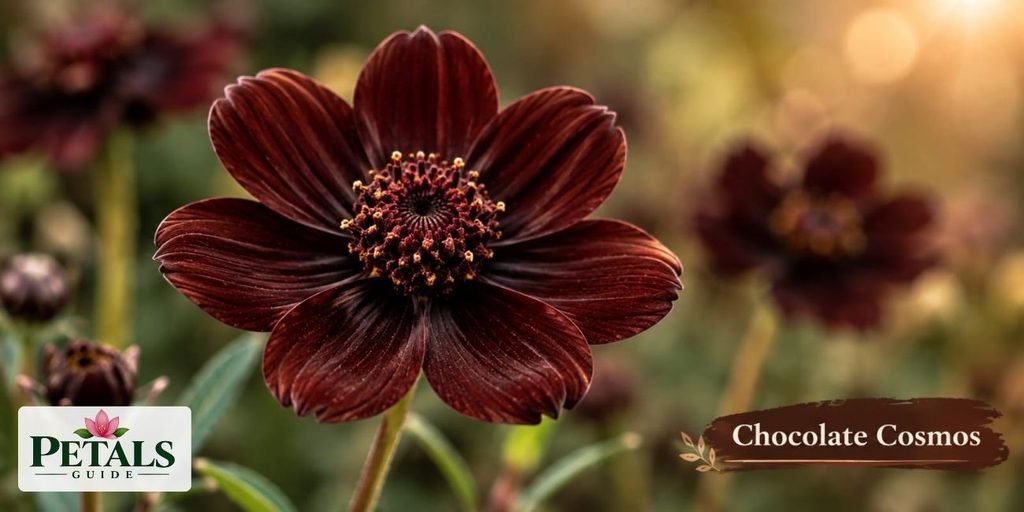
Chocolate Cosmos
- Scientific Name: Cosmos atrosanguineus
- USDA Zones: 7–10
- Sun Requirements: Full sun to partial shade
- Soil Preference: Well-drained, sandy or loamy soil
- Bloom Time: Summer to fall
- Plant Height: 24–36 inches
- Water Needs: Moderate; allow soil to dry between waterings
The Chocolate Cosmos features deep maroon to nearly black flowers with a unique shape, reminiscent of a daisy but with velvety petals. The plant emits a delightful chocolate fragrance, adding an aromatic touch to gardens.
Thriving in well-drained, sunny locations, it is perfect for borders, mixed beds, or containers. This perennial is also attractive to a range of pollinators and makes an excellent cut flower, adding visual depth to the garden while bringing more insect activity.
Interesting Fact: Chocolate Cosmos were considered extinct in the wild by the early 20th century but were rediscovered in Mexico. This discovery not only revived interest in the flower but also contributed to its popularity in gardens around the world.
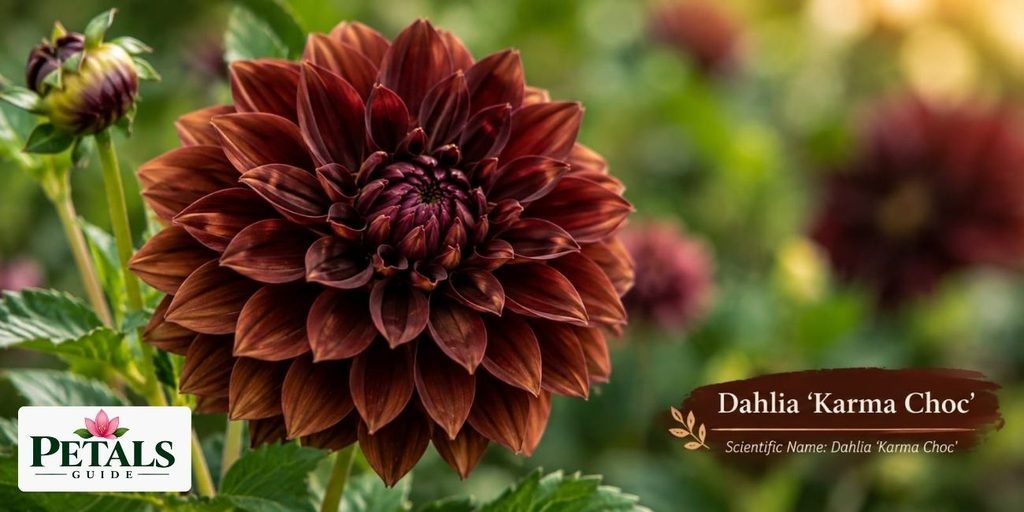
Dahlia ‘Karma Choc’
- Scientific Name: Dahlia ‘Karma Choc’
- USDA Zones: 8–10
- Sun Requirements: Full sun
- Soil Preference: Well-drained, fertile soil
- Bloom Time: Mid-summer to fall
- Plant Height: 3–4 feet
- Water Needs: Moderate
Dahlia ‘Karma Choc’ has deep chocolate-brown to maroon flowers that can appear almost black. Its fully double, waterlily-like flowers have broad, overlapping petals and measure around 4 to 6 inches across, while deep green foliage provides a clear contrast. Native dahlias come from Mexico and Central America, and this cultivated variety works well in borders, mixed flower beds, and cutting gardens, especially when paired with lighter flowers such as white and yellow.
Interesting Fact: ‘Karma Choc’ was introduced in 2007 and is known for its dark, chocolate-like flower color, which is unusual among cultivated dahlias.
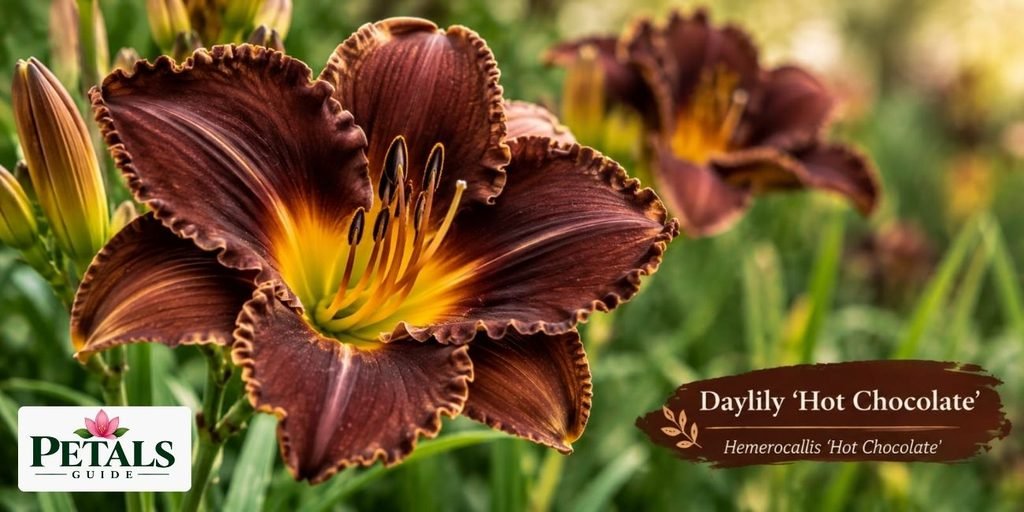
Daylily ‘Hot Chocolate’
- Scientific Name: Hemerocallis ‘Hot Chocolate’
- USDA Zones: 3–9
- Sun Requirements: Full sun to partial shade
- Soil Preference: Well-drained, fertile soil
- Bloom Time: Summer
- Plant Height: 18–24 inches
- Water Needs: Moderate
Daylily ‘Hot Chocolate’ produces rich mahogany-brown flowers with a slightly ruffled texture, measuring around 4–5 inches across. Its petals have a golden-yellow throat that creates a clear contrast, while the green, strappy foliage forms a lush backdrop. Native to Asia, this cultivar excels in both sunny and partially shaded areas, making it versatile for various gardens.
It works well in borders, cottage gardens, and mass plantings. Its adaptable nature also makes it a practical choice for different garden settings and for gardeners looking for a dark-flowered daylily.
Interesting Fact: Daylily ‘Hot Chocolate’ was introduced by hybridizer Kevin Walek in 2000 and has gained popularity for its distinctive hue and resilience, creating a niche for itself among the myriad of daylily cultivars.
Cattleya Orchid ‘Mahogany’
- Scientific Name: Cattleya hybrid ‘Mahogany’
- USDA Zones: 10–11
- Sun Requirements: Bright, indirect light
- Soil Preference: Well-draining orchid mix
- Bloom Time: Late spring to early summer
- Height: 12–18 inches
- Water Needs: Allow the growing medium to dry slightly between waterings
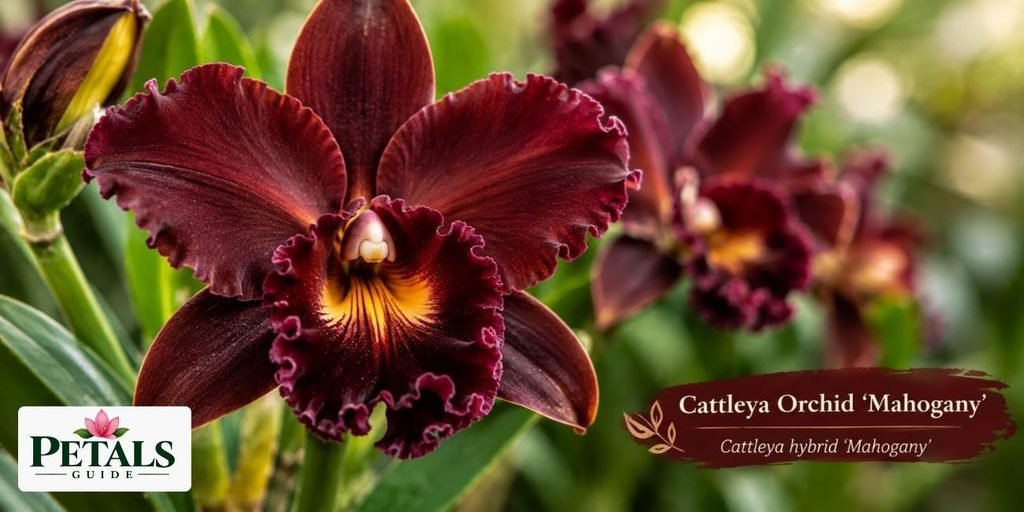
The Cattleya Orchid ‘Mahogany’ features rich, deep brown petals that create an elegant contrast with its yellow or orange lip. The blooms are large and waxy, typically reaching 4 to 6 inches across, and may have a light fragrance. Thick, leathery leaves provide a green backdrop for the flowers. This warm-growing orchid is best suited to greenhouses, indoor containers, or sheltered outdoor spaces in suitable climates. It can be used as a focal plant or enjoyed as a flowering houseplant.
Interesting Fact: Cattleya orchids are widely used in orchid breeding because they can be crossed with other related orchids to produce hybrids with unusual colors, flower shapes, and patterns.
Brown Tulip ‘Queen of Night’
- Scientific Name: Tulipa ‘Queen of Night’
- USDA Zones: 3–7
- Sun Requirements: Full sun to partial shade
- Soil Preference: Well-drained, fertile soil
- Bloom Time: Mid to late spring
- Plant Height: 12–18 inches
- Water Needs: Moderate; keep the soil evenly moist but not waterlogged
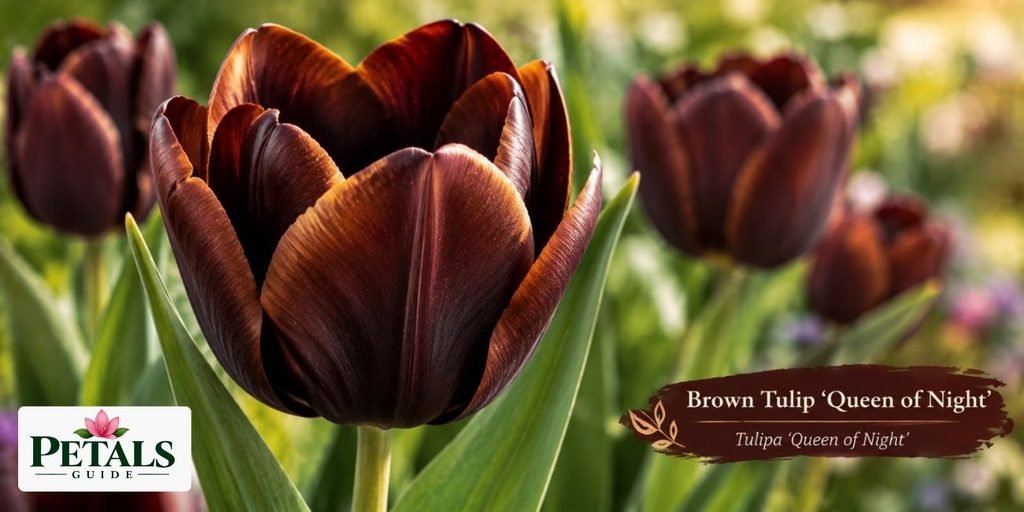
The Brown Tulip ‘Queen of Night’ is known for its deep maroon to dark purple petals that can appear almost black in certain lighting. Its elegant, cup-shaped blooms create a dramatic contrast with green foliage and lighter-colored flowers. It grows best in well-drained soil and a sunny location, making it a beautiful choice for flower beds, borders, containers, and cut-flower arrangements. Good drainage is especially important because overly wet soil can cause the bulbs to rot.
Interesting Fact: ‘Queen of Night’ is one of the darkest-colored tulips commonly grown, with its intense color giving the flowers a mysterious, almost black appearance.
Mocha Dendrobium Orchid
- Scientific Name: Dendrobium ‘Mocha’
- USDA Zones: 10–11
- Sun Requirements: Bright, indirect light
- Soil Preference: Well-draining orchid mix
- Bloom Time: Late winter to early spring
- Plant Height: 12–24 inches
- Water Needs: Moderate; allow the growing medium to partially dry between waterings
The Mocha Dendrobium Orchid produces elegant flowers in creamy mocha, brown, and warm tan shades, giving the blooms a soft, sophisticated appearance. Like other Dendrobium orchids, it prefers warm temperatures, good humidity, and excellent drainage. It works well in orchid pots, indoor collections, and sheltered tropical patios where its unusual flower color can stand out. Bright filtered light and careful watering help support healthy growth and flowering.
Interesting Fact: Dendrobium is one of the largest orchid genera, containing more than 1,000 recognized species with flowers ranging from delicate pastels to deep, dramatic shades.
Calla Lily ‘Hot Chocolate’
- Scientific Name: Zantedeschia ‘Hot Chocolate’
- USDA Zones: 8–11
- Sun Requirements: Full sun to partial shade
- Soil Preference: Rich, well-draining soil
- Bloom Time: Late spring to summer
- Plant Height: 18–24 inches
- Water Needs: Moderate; keep the soil evenly moist but not waterlogged
The Calla Lily ‘Hot Chocolate’ is prized for its rich chocolate-brown blooms, which create a dramatic contrast against its broad, green foliage. This elegant cultivar grows best in warm conditions with fertile, well-draining soil and can add a sophisticated touch to flower beds, borders, containers, and cut-flower displays. Regular moisture supports healthy growth, while good drainage helps prevent problems caused by waterlogged soil.
Interesting Fact: Calla lilies are not true lilies. They belong to the Arum family (Araceae), the same plant family that includes peace lilies and elephant ears
Hellebore ‘Chocolate Soldier’
- Scientific Name: Helleborus × hybridus ‘Chocolate Soldier’
- USDA Zones: 4 to 9
- Sun Requirements: Part shade to full shade
- Soil Preference: Well-drained, rich, and moist soil
- Bloom Time: Late winter to early spring
- Plant Height: 12 to 18 inches
- Water Needs: Moderate; keep soil consistently moist but not soggy
Helleborus ‘Chocolate Soldier’ has beautiful deep chocolate-brown flowers with subtle maroon veining. Its leathery, evergreen leaves provide a lush backdrop, making it a lovely choice for shaded and woodland gardens. This perennial grows well in fertile, well-drained soil and can be planted in borders, containers, or naturalistic garden settings. Keep the soil consistently moist, especially during dry periods, to support healthy growth and flowering.
Interesting Fact: ‘Chocolate Soldier’ is an early bloomer that can produce flowers in late winter or early spring, bringing color to the garden while many other plants are still dormant.
Gladiolus ‘Espresso’
- Scientific Name: Gladiolus ‘Espresso’
- USDA Zones: 8 to 11
- Sun Requirements: Full sun
- Soil Preference: Well-drained, fertile soil
- Bloom Time: Summer
- Plant Height: 3 to 4 feet
- Water Needs: Moderate; keep soil evenly moist but not soggy
Gladiolus ‘Espresso’ produces elegant, deep brown flowers with rich chocolate and coffee-like tones. Its tall flower spikes make it a striking addition to sunny flower beds and borders, while the long-lasting blooms are also excellent for cut-flower arrangements. This gladiolus grows best in fertile, well-drained soil with plenty of sunlight. Regular watering during active growth helps the plants develop strong stems and healthy flowers.
Interesting Fact: The name Gladiolus comes from the Latin word “gladius,” meaning sword, referring to the plant’s long, sword-shaped leaves
Brown Cymbidium Orchid
- Scientific Name: Cymbidium hybrid
- USDA Zones: 7 to 10
- Sun Requirements: Partial shade to bright, filtered light
- Soil Preference: Well-draining orchid potting mix
- Bloom Time: Late winter to early spring
- Plant Height: 2 to 3 feet
- Water Needs: Moderate; allow the potting mix to partially dry between waterings
The Brown Cymbidium Orchid showcases beautiful warm shades of brown, bronze, and chocolate, creating an elegant display indoors or outdoors. It grows well in bright, filtered light and a well-draining orchid mix, making it suitable for containers, sheltered garden spaces, and indoor displays. Its long flower spikes also make it an excellent choice for cut-flower arrangements. Water moderately and allow the growing medium to partially dry between waterings to help prevent root problems
Interesting Fact: Cymbidium orchids have been cultivated in China for more than 2,000 years and were traditionally admired as symbols of refinement, friendship, and integrity.
Scabiosa ‘Chocolate Scoop’
- Scientific Name: Scabiosa atropurpurea ‘Chocolate Scoop’
- USDA Zones: 5–9
- Sun Requirements: Full sun to partial shade
- Soil Preference: Well-drained, fertile soil
- Bloom Time: Late spring to fall
- Plant Height: 12–18 inches
- Water Needs: Moderate
Scabiosa ‘Chocolate Scoop’ produces unusual chocolate-brown flowers shaped like miniature pincushions. Each bloom measures about 2 to 3 inches across, with a soft, tufted appearance that adds interest to flower beds and arrangements. The dark flowers contrast with the plant’s green, lance-shaped foliage, creating a balanced look. This cultivar works well in borders, cottage gardens, and containers. Scabiosa flowers are also useful in cutting gardens and can provide nectar for pollinating insects.
Interesting Fact: Scabiosa flowers are commonly known as pincushion flowers because their rounded flower heads resemble small pincushions.
Bearded Iris ‘Coffee Trader’
- Scientific Name: Iris × germanica ‘Coffee Trader’
- USDA Zones: 3–9
- Sun Requirements: Full sun
- Soil Preference: Well-drained, fertile soil
- Bloom Time: Late spring to early summer
- Plant Height: About 38 inches
- Water Needs: Moderate
Bearded Iris ‘Coffee Trader’ produces medium-sized, strongly ruffled flowers in creamy coffee and caramel tones, with soft lavender-blush or violet shading around the midribs and falls. Bright tangerine beards add a warm contrast to the muted petals. The upright, sword-like foliage forms neat green fans around the flower stalks.
This tall bearded iris has sturdy stems and fragrant blooms, making it well suited to perennial borders, mixed plantings, and cutting gardens. Its unusual coffee-toned coloring gives it a distinctive appearance among bearded irises.
Interesting Fact: ‘Coffee Trader’ was bred by Australian hybridizer Barry Blyth and introduced around 2006–2007. It is known for its unusual creamy coffee coloring, strong ruffling, and sweet fragrance.
Brown Gerbera Daisy
- Scientific Name: Gerbera × hybrida
- USDA Zones: 9–11
- Sun Requirements: Full sun to partial shade
- Soil Preference: Well-draining, fertile soil
- Bloom Time: Spring to fall
- Plant Height: 12–18 inches
- Water Needs: Moderate; allow the soil to dry slightly between waterings
Brown Gerbera Daisies produce warm brown shades that can range from chocolate and bronze to amber, depending on the cultivar. Their broad petals surround a central disk that may appear dark brown or nearly black, creating a clear contrast with the flower color. The blooms rise on long, sturdy, leafless stems above a low rosette of deeply lobed green leaves.
Interesting Fact: Modern Gerbera hybrids were developed through breeding involving species such as Gerbera jamesonii and Gerbera viridifolia. Their wide range of flower colors is the result of generations of selective breeding.
Brown Chrysanthemum
- Scientific Name: Chrysanthemum spp.
- USDA Zones: 5-9
- Sun Requirements: Full sun to partial shade
- Soil Preference: Well-drained, fertile soil
- Bloom Time: Late summer to fall
- Plant Height: 1-4 feet, depending on the cultivar
- Water Needs: Moderate; keep soil consistently moist
Brown chrysanthemums display a rich palette of earthy hues, ranging from warm chocolate and copper to deep bronze. Their flowers can have different forms, including single, double, pom-pom, and incurved shapes, depending on the cultivar. Petals may be smooth, curled, or finely divided, adding variety to their appearance. The plants usually have dense, deeply lobed green foliage that forms a bushy base beneath the flowers. Cultivars such as ‘Boulou Bronze’ produce brown-bronze flowers that fit naturally into autumn garden displays.
Interesting Fact: Brown chrysanthemums are not a separate species. Their brown and bronze shades occur among cultivated chrysanthemum varieties developed through selective breeding.
Brown Zinnia
- Scientific Name: Zinnia spp.
- USDA Zones: 3-10
- Sun Requirements: Full sun
- Soil Preference: Well-drained, nutrient-rich soil
- Bloom Time: Summer to fall
- Plant Height: 1 to 3 feet
- Water Needs: Moderate; allow soil to dry between waterings
Brown zinnias showcase a rich palette of hues, ranging from warm bronze and copper to deep brownish-red. Their flowers can have daisy-like forms with broad, overlapping petals, while some varieties have fuller, layered blooms. Flower size varies among species and cultivars, with some reaching several inches across. The sturdy stems and green foliage provide a clear contrast with the warm flower colors. Species such as Zinnia haageana can produce copper, brown, orange, and red shades. Native to the Americas, zinnias grow naturally in warm regions and are widely cultivated as garden flowers.
Interesting Fact: Brown and bronze zinnias were used in Mexican floral traditions, including Day of the Dead arrangements, where warm, earthy colors can complement the traditional marigold displays.
Brown Carnation ‘Cappuccino’
- Scientific Name: Dianthus ‘Cappuccino’
- USDA Zones: 4–9
- Sun Requirements: Full sun
- Soil Preference: Well-drained, fertile soil
- Bloom Time: Spring to summer
- Plant Height: About 16–24 inches
- Water Needs: Moderate; allow soil to dry slightly between watering
The ‘Cappuccino’ carnation is known for its warm brown color, with flowers that can appear in soft coffee and light brown tones. Each bloom has a double form with serrated, fringed petals that create a full, textured appearance. The flowers are about 3 inches across and are carried on strong stems, making them useful for cut-flower arrangements. Its narrow, green-gray foliage provides a simple contrast to the brown blooms. ‘Cappuccino’ is especially valued in the commercial flower industry for its unusual color and large flowers.
Interesting Fact: ‘Cappuccino’ is commercially grown in Colombia, one of the world’s major producers of cut carnations.
Dahlia ‘Café au Lait’
- Scientific Name: Dahlia ‘Café au Lait’
- USDA Zones: 8–11
- Sun Requirements: Full sun
- Soil Preference: Fertile, moist but well-drained soil
- Bloom Time: Midsummer to autumn
- Plant Height: 3–4 feet
- Water Needs: Moderate; water regularly during dry periods
Dahlia ‘Café au Lait’ produces large, fully double flowers in soft creamy, peach, blush, and coffee-like tones. The informal decorative blooms have many broad, slightly curved petals that give each flower a full, layered appearance. The flowers can reach about 8–10 inches across, while toothed, dark green leaves form a dense backdrop on the upright stems. Originally introduced from the Netherlands, this cultivar is widely grown as a cut flower and is especially popular in wedding arrangements.
Interesting Fact: ‘Café au Lait’ dates back to the 1960s and has since produced several named sports, including ‘Café au Lait Royal’ and ‘Café au Lait Rosé’.
Echibeckia ‘Summerina Brown’
- Scientific Name: Rudbeckia × Echinacea ‘Summerina Brown’
- USDA Zones: 6–10
- Sun Requirements: Full sun
- Soil Preference: Well-drained, moderately fertile soil
- Bloom Time: Summer to fall
- Height: 18–24 inches
- Water Needs: Moderate; water weekly and more during extreme heat
Echibeckia ‘Summerina Brown’ produces large, long-lasting flowers with dark copper-brown to chocolate-brown petals surrounding a dark central cone. The daisy-like blooms can reach about 3 inches across and appear above sturdy, upright stems with rough, green leaves. This compact hybrid combines Rudbeckia hirta with Echinacea purpurea, giving it the flower form of Rudbeckia with added vigor and disease tolerance. It works well in borders, containers, and cutting gardens.
Interesting Fact: ‘Summerina Brown’ is protected under the plant patent PP25206 and belongs to the Summerina series, which was developed from the cross between Rudbeckia hirta and Echinacea purpurea.
Chocolate Lily
- Scientific Name: Fritillaria biflora
- USDA Zones: 7–9
- Sun Requirements: Full sun to bright shade
- Soil Preference: Well-drained clay or loamy soil
- Bloom Time: Late winter to spring
- Plant Height: 12–24 inches
- Water Needs: Low to moderate; reduce watering during summer dormancy
Chocolate Lily produces nodding, bell-shaped flowers in dark chocolate-brown to greenish-purple shades, sometimes with yellow-green coloring. The flowers are about 1.5–3 inches across and have six similar-looking tepals with green and purple markings. Its narrow green leaves grow along the upright stem, while the plant develops from a small bulb. Native to California and northern Baja California, it naturally grows in grasslands, woodlands, and rocky or clay soils.
Interesting Fact: Chocolate Lily has traditionally been an important food plant for some Indigenous peoples of western North America. Its small bulb produces rice-like bulblets, which gave the plant the additional name “rice root.”
Brown Rudbeckia ‘Cappuccino’
- Scientific Name: Rudbeckia hirta ‘Cappuccino’
- USDA Zones: 5-8
- Sun Requirements: Full sun to partial shade
- Soil Preference: Well-drained, average soil
- Bloom Time: Summer to fall
- Height: 18-24 inches
- Water Needs: Moderate; drought-tolerant once established
The ‘Cappuccino’ cultivar has large bronze-brown to mahogany flowers with a dark brown central cone. The petals have warm color variations, with bronze and reddish-brown tones that can blend into yellow or orange toward the tips. The daisy-like blooms can reach around 4 inches across and appear above sturdy, well-branched stems with green foliage. Native to North America through its parent species, Rudbeckia hirta, ‘Cappuccino’ works well in borders, flower beds, containers, and cutting gardens.
Interesting Fact: ‘Cappuccino’ is a tetraploid cultivar, meaning it has four sets of chromosomes instead of the usual two. It also received a Fleuroselect Gold Medal for its large bronze-brown flowers, uniform growth, strong branching, and extended flowering period.
Brown Flowers Meaning
Brown flowers have a unique meaning that many people might not know. Often seen in nature, they symbolize stability and comfort. This earthy color connects us to the ground, reminding us of roots, family, and lasting bonds. When you see brown flowers, think of how they represent a calmness in our lives, like a cozy blanket on a chilly day.
These flowers can also remind us of the beauty in simple things. Unlike brighter blooms, brown flowers have a soft charm that invites feelings of warmth and security. They can symbolize a deep connection to nature and the world around us. Whether in a garden or arranged in a bouquet, brown flowers encourage us to appreciate the quiet moments and find strength in their natural beauty.
Conclusion
Selecting from the top 20 beautiful brown flowers can transform your garden into a captivating retreat. Each flower brings its own charm, texture, and personality, making it easier to express your individuality through your gardening choices. As you plan your flower beds, consider the stunning contrasts and harmonies that brown flowers can create alongside other colors. Many of these varieties are low-maintenance, bringing both beauty and ease to your gardening routine.
FAQs
What are some examples of brown flowers for my garden?
Popular options include Joseph’s Coat, Chocolate Cosmos, and Daylily ‘Hot Chocolate’
What are the benefits of planting brown flowers in my garden?
Brown flowers add unique color, contrast, and warmth to gardens, enhancing visual interest and attracting pollinators.
Can I grow brown flowers in pots?
Yes, many brown flowers can thrive in pots, making them ideal for container gardening.